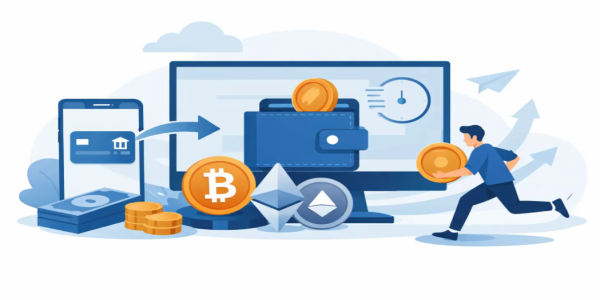
How to Fund Crypto Account Fast
Learn how to fund crypto account fast with the right payment method, fewer delays, and smarter steps to start trading without wasted time.
Speed matters when the market is moving and your account is still sitting at zero. If you are figuring out how to fund crypto account fast, the real goal is not just getting money in - it is getting tradable funds into your account without extra friction, surprise holds, or clunky verification steps.
That is where most traders lose time. They pick a funding method that looks familiar, then run straight into bank delays, card rejections, or transfer windows that do not match how crypto markets actually move. If you want fast access, you need to choose the path built for speed, not the one traditional finance trained you to trust.
How to fund crypto account fast without getting stuck
The fastest funding route usually depends on two things: the payment method you use and the platform rules behind it. A debit card can be quicker than a bank transfer, but it may come with issuer declines. A crypto deposit can be nearly instant once confirmed, but only if you already hold crypto somewhere else. Peer-to-peer funding can move fast too, especially when you want flexible payment options, but speed depends on the seller and the payment rail.
If your priority is immediate trading access, think in terms of usable balance, not just completed payment. Some methods show up quickly but still place funds on hold. Others take a bit longer to arrive but become available to trade right away. That difference matters more than the payment timestamp.
For many retail traders, the fastest path is one of three options: debit card purchase, direct crypto transfer from an external wallet, or a well-matched P2P transaction. Each has a place. The right choice depends on what you already have, how much privacy you want, and whether you are trying to enter with fiat or move existing crypto.
Start with the fastest funding method for your situation
If you already own crypto on another platform or wallet, sending it directly is often the quickest move. You skip the banking layer, avoid card authorization problems, and get closer to immediate market access. The catch is precision. One wrong network choice or wallet address can turn a fast transfer into a costly mistake.
If you are starting with cash in your bank account, a debit card is usually the fastest fiat on-ramp. It works well for traders who want to fund an account and act quickly. But there is a trade-off. Some banks and card issuers still flag crypto-related purchases, so speed can disappear if your payment gets blocked or pushed into manual review.
P2P funding works best when you want more flexibility. It can be a strong option for privacy-conscious users, people working around rigid banking limits, or traders who prefer alternative payment methods. Done right, it is fast. Done carelessly, it can slow down if you choose an inactive counterparty or unclear payment terms.
That is why the smartest traders do not ask only, “What is the fastest method?” They ask, “What is the fastest method that will actually clear for me today?”
If you already have crypto, transfer it in
This is the cleanest route for many active users. Open your destination wallet, copy the correct deposit address, confirm the supported network, and send a small test amount first if the asset or chain is unfamiliar. Once the transaction receives enough confirmations, your funds are usually ready much faster than a traditional banking transfer.
The key is matching the asset and network exactly. Sending USDT on the wrong chain, for example, can create delays or worse. Fast funding only works when accuracy comes first.
If you are using fiat, choose speed over habit
A lot of users default to bank transfer because it feels conventional. That does not make it fast. ACH timing, bank cutoffs, weekends, and internal review processes can all get in the way. Debit cards tend to win on convenience when they are supported and approved.
If your card keeps failing, the issue may not be the platform. It may be your bank treating crypto as a restricted category. In that case, switching payment methods can save more time than retrying the same transaction five times.
What slows funding down
Most delays are avoidable. The biggest one is choosing a method that does not match your urgency. If you need to buy now, a slow bank rail is the wrong tool. Another common problem is incomplete account setup. Even on platforms designed for lower friction, skipped security steps, incorrect personal details, or mismatched payment names can trigger holds.
Then there is network congestion. Crypto is fast, but not every chain is equally fast at every moment. Popular networks can slow when activity spikes, and low fees can delay confirmation. If transfer speed matters, check the network conditions before you send and avoid underpaying transaction fees on chains where speed depends on fee level.
Human error is still the biggest drag on fast funding. Wrong wallet addresses, wrong memo tags, unsupported assets, duplicate payment attempts, and rushed inputs create more delays than most users expect. Speed comes from being deliberate, not reckless.
How to fund crypto account fast and still stay in control
Fast does not mean sloppy. If you are moving money with urgency, take thirty seconds to verify the basics. Confirm the asset, network, wallet address, amount, and any reference information required. Make sure your chosen funding method gives you funds you can actually use, not just a pending balance.
This is especially important if you trade volatility, arbitrage, or short-term setups. A delayed deposit can cost more than a fee difference. Missing an entry because your payment is pending is its own hidden expense.
That is why low-friction platforms appeal to traders who value autonomy. Fewer onboarding bottlenecks, broader payment flexibility, and direct wallet functionality reduce the gap between intent and execution. When the setup is built for access, funding becomes part of the trading flow instead of an obstacle in front of it.
For users who want speed, flexibility, and privacy-first access, platforms like Budrigan Market are built around that expectation. The advantage is simple: fewer barriers between your payment method and your next trade.
Choose the right amount for your first deposit
There is a practical point many traders miss. Your first funding attempt should be large enough to matter but not so large that it creates unnecessary friction. Some payment providers react differently to unusual transaction sizes. If you are testing a new card, wallet, or P2P route, starting with a moderate amount can help you confirm the process quickly.
Once you know the funding path works smoothly, scaling up becomes easier. That is not fear - it is efficient execution.
Keep one backup funding route
If speed is part of your strategy, relying on a single method is risky. Cards fail. Banks pause transactions. Networks get busy. P2P sellers go offline. Traders who fund fast consistently usually keep a backup option ready, whether that means a second payment method, an external wallet with stablecoins, or access to multiple transfer rails.
That backup is what turns funding from a one-time action into a repeatable advantage.
The best mindset for fast funding
Treat account funding like part of your trade setup, not an afterthought. If you wait until the exact moment you want to buy, every delay feels bigger. Traders who move quickly usually prepare before the opportunity appears. They know which asset they plan to use, which funding method clears fastest for them, and which network gives them the best balance of cost and speed.
That preparation matters even more if you want unrestricted access to multiple coins or plan to shift between crypto-to-crypto and crypto-to-USD conversions. The faster your funding process, the more freedom you have to act while pricing still makes sense.
There is no single answer to how to fund crypto account fast for every user. If you already hold crypto, direct transfer is often the winner. If you are coming in with fiat, debit card funding may be your fastest route. If you want flexibility and more control over how you pay, P2P can be the right move. The common thread is choosing a platform and payment path designed for action, not delay.
When your account is funded quickly, you are not just saving time. You are protecting momentum, keeping control, and staying ready for the next opportunity the market throws at you.
Share This Post
Learn how to fund crypto account fast with the right payment method, fewer delays, and smarter steps to start trading without wasted time.
Speed matters when the market is moving and your account is still sitting at zero. If you are figuring out how to fund crypto account fast, the real goal is not just getting money in - it is getting tradable funds into your account without extra friction, surprise holds, or clunky verification steps.
That is where most traders lose time. They pick a funding method that looks familiar, then run straight into bank delays, card rejections, or transfer windows that do not match how crypto markets actually move. If you want fast access, you need to choose the path built for speed, not the one traditional finance trained you to trust.
How to fund crypto account fast without getting stuck
The fastest funding route usually depends on two things: the payment method you use and the platform rules behind it. A debit card can be quicker than a bank transfer, but it may come with issuer declines. A crypto deposit can be nearly instant once confirmed, but only if you already hold crypto somewhere else. Peer-to-peer funding can move fast too, especially when you want flexible payment options, but speed depends on the seller and the payment rail.
If your priority is immediate trading access, think in terms of usable balance, not just completed payment. Some methods show up quickly but still place funds on hold. Others take a bit longer to arrive but become available to trade right away. That difference matters more than the payment timestamp.
For many retail traders, the fastest path is one of three options: debit card purchase, direct crypto transfer from an external wallet, or a well-matched P2P transaction. Each has a place. The right choice depends on what you already have, how much privacy you want, and whether you are trying to enter with fiat or move existing crypto.
Start with the fastest funding method for your situation
If you already own crypto on another platform or wallet, sending it directly is often the quickest move. You skip the banking layer, avoid card authorization problems, and get closer to immediate market access. The catch is precision. One wrong network choice or wallet address can turn a fast transfer into a costly mistake.
If you are starting with cash in your bank account, a debit card is usually the fastest fiat on-ramp. It works well for traders who want to fund an account and act quickly. But there is a trade-off. Some banks and card issuers still flag crypto-related purchases, so speed can disappear if your payment gets blocked or pushed into manual review.
P2P funding works best when you want more flexibility. It can be a strong option for privacy-conscious users, people working around rigid banking limits, or traders who prefer alternative payment methods. Done right, it is fast. Done carelessly, it can slow down if you choose an inactive counterparty or unclear payment terms.
That is why the smartest traders do not ask only, “What is the fastest method?” They ask, “What is the fastest method that will actually clear for me today?”
If you already have crypto, transfer it in
This is the cleanest route for many active users. Open your destination wallet, copy the correct deposit address, confirm the supported network, and send a small test amount first if the asset or chain is unfamiliar. Once the transaction receives enough confirmations, your funds are usually ready much faster than a traditional banking transfer.
The key is matching the asset and network exactly. Sending USDT on the wrong chain, for example, can create delays or worse. Fast funding only works when accuracy comes first.
If you are using fiat, choose speed over habit
A lot of users default to bank transfer because it feels conventional. That does not make it fast. ACH timing, bank cutoffs, weekends, and internal review processes can all get in the way. Debit cards tend to win on convenience when they are supported and approved.
If your card keeps failing, the issue may not be the platform. It may be your bank treating crypto as a restricted category. In that case, switching payment methods can save more time than retrying the same transaction five times.
What slows funding down
Most delays are avoidable. The biggest one is choosing a method that does not match your urgency. If you need to buy now, a slow bank rail is the wrong tool. Another common problem is incomplete account setup. Even on platforms designed for lower friction, skipped security steps, incorrect personal details, or mismatched payment names can trigger holds.
Then there is network congestion. Crypto is fast, but not every chain is equally fast at every moment. Popular networks can slow when activity spikes, and low fees can delay confirmation. If transfer speed matters, check the network conditions before you send and avoid underpaying transaction fees on chains where speed depends on fee level.
Human error is still the biggest drag on fast funding. Wrong wallet addresses, wrong memo tags, unsupported assets, duplicate payment attempts, and rushed inputs create more delays than most users expect. Speed comes from being deliberate, not reckless.
How to fund crypto account fast and still stay in control
Fast does not mean sloppy. If you are moving money with urgency, take thirty seconds to verify the basics. Confirm the asset, network, wallet address, amount, and any reference information required. Make sure your chosen funding method gives you funds you can actually use, not just a pending balance.
This is especially important if you trade volatility, arbitrage, or short-term setups. A delayed deposit can cost more than a fee difference. Missing an entry because your payment is pending is its own hidden expense.
That is why low-friction platforms appeal to traders who value autonomy. Fewer onboarding bottlenecks, broader payment flexibility, and direct wallet functionality reduce the gap between intent and execution. When the setup is built for access, funding becomes part of the trading flow instead of an obstacle in front of it.
For users who want speed, flexibility, and privacy-first access, platforms like Budrigan Market are built around that expectation. The advantage is simple: fewer barriers between your payment method and your next trade.
Choose the right amount for your first deposit
There is a practical point many traders miss. Your first funding attempt should be large enough to matter but not so large that it creates unnecessary friction. Some payment providers react differently to unusual transaction sizes. If you are testing a new card, wallet, or P2P route, starting with a moderate amount can help you confirm the process quickly.
Once you know the funding path works smoothly, scaling up becomes easier. That is not fear - it is efficient execution.
Keep one backup funding route
If speed is part of your strategy, relying on a single method is risky. Cards fail. Banks pause transactions. Networks get busy. P2P sellers go offline. Traders who fund fast consistently usually keep a backup option ready, whether that means a second payment method, an external wallet with stablecoins, or access to multiple transfer rails.
That backup is what turns funding from a one-time action into a repeatable advantage.
The best mindset for fast funding
Treat account funding like part of your trade setup, not an afterthought. If you wait until the exact moment you want to buy, every delay feels bigger. Traders who move quickly usually prepare before the opportunity appears. They know which asset they plan to use, which funding method clears fastest for them, and which network gives them the best balance of cost and speed.
That preparation matters even more if you want unrestricted access to multiple coins or plan to shift between crypto-to-crypto and crypto-to-USD conversions. The faster your funding process, the more freedom you have to act while pricing still makes sense.
There is no single answer to how to fund crypto account fast for every user. If you already hold crypto, direct transfer is often the winner. If you are coming in with fiat, debit card funding may be your fastest route. If you want flexibility and more control over how you pay, P2P can be the right move. The common thread is choosing a platform and payment path designed for action, not delay.
When your account is funded quickly, you are not just saving time. You are protecting momentum, keeping control, and staying ready for the next opportunity the market throws at you.