How to Swap Coins Between Wallets Fast
Learn how to swap coins between wallets fast, avoid common mistakes, manage fees, and move crypto with more control and less friction.
You do not need a complicated exchange workflow to move from one coin to another. If you are figuring out how to swap coins between wallets, the real goal is simple: keep control of your assets, avoid unnecessary delays, and get from the coin you hold to the coin you want without turning the process into a paperwork project.
That is exactly why wallet-to-wallet swaps matter. For traders who want speed, privacy, and fewer restrictions, swapping directly between compatible wallets can feel a lot closer to how crypto was supposed to work in the first place.
How to swap coins between wallets without the usual friction
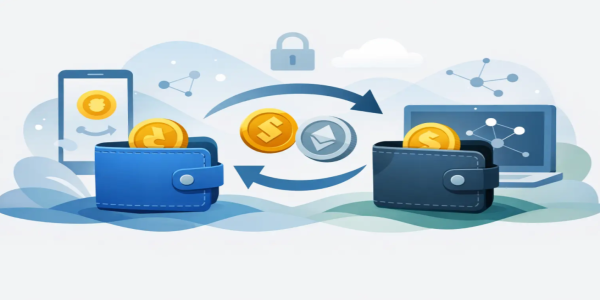
At a basic level, swapping coins between wallets means exchanging one cryptocurrency for another while moving value from your current wallet setup into a destination wallet that supports the asset you want to receive. Sometimes that happens inside one wallet app with a built-in swap feature. Other times it happens through a decentralized app, a swap service, or a trading platform that lets you convert and withdraw quickly.
The exact path depends on three things: the coins involved, the blockchain networks they run on, and whether your wallet supports direct swaps. If you are swapping USDT on Ethereum for BTC, that process looks different from swapping SOL for USDC on Solana. Crypto gives you freedom, but it also expects you to pay attention.
The fastest way to think about it is this: you are not just sending coins from Wallet A to Wallet B. You are converting one asset into another, and the route only works if the sending side, network, and receiving side all match the transaction you are trying to make.
Start with the one detail that breaks most swaps
Before you do anything else, check network compatibility. This is where people lose time, and sometimes money.
A wallet address can support a certain coin only on a specific chain. USDT alone can exist on Ethereum, Tron, BNB Smart Chain, Solana, and others. If you send an asset on the wrong network, your funds may not arrive where you expect. In some cases they can be recovered, but recovery is never something you want to depend on.
You also need to confirm whether the destination wallet can receive the coin in its native format. Bitcoin cannot be sent to an Ethereum token address. A wrapped token is not the same as the native coin. Small differences matter.
That sounds technical, but the working rule is simple: match the coin, match the chain, match the wallet support.
The three most common ways to swap coins between wallets
The easiest method is an in-wallet swap. Many modern wallets let you choose the asset you want to exchange, review the rate, confirm the fee, and receive the new coin in the same interface. This is usually the most beginner-friendly option because the wallet handles much of the routing for you.
The second method is using a decentralized exchange through your wallet. In that setup, you connect your wallet, choose the trading pair, approve the token if needed, and submit the swap on-chain. This gives you more flexibility and often more token options, but you need to understand gas fees, slippage, and network congestion.
The third method is using a crypto trading platform that supports fast conversion and withdrawal. This can make sense if your wallet does not support the pair you want, or if you want access to more than one network and a wider range of assets. For users who care about speed and less friction, this route can be the most practical.
A practical step-by-step process
If you want the cleanest answer to how to swap coins between wallets, follow this order.
First, identify the coin you currently hold, the coin you want, and the network each one uses. If you are moving between ecosystems, check whether you need a bridge, a wrapped asset, or a platform that supports cross-chain conversion.
Second, confirm your receiving wallet supports the destination asset. Do not assume support just because the wallet supports crypto generally. Wallets vary by chain, token standard, and swap functionality.
Third, make sure you have enough of the native gas token to complete the transaction. On Ethereum that usually means ETH. On Solana it means SOL. On BNB Smart Chain it means BNB. A lot of swaps fail because the user holds the token being swapped but not the gas token needed to approve or finalize the trade.
Fourth, review the exchange rate and total fees before confirming. This includes network fees, swap fees, and possible spread. Fast does not always mean cheap. Sometimes waiting a little or changing networks can save money.
Fifth, send a small test amount if the transaction is large or if you are using a new wallet, chain, or service. Experienced traders do this for a reason. Crypto rewards confidence, not carelessness.
Once the test clears, complete the full swap. Then verify the transaction hash and check that the received amount matches your expectation after fees.
Fees, speed, and why the cheapest option is not always the best
There is always a trade-off. If you prioritize the lowest visible fee, you may end up with slower settlement, weaker rates, or more complexity. If you prioritize pure speed, you may pay more in spread or gas.
Network traffic matters too. Swapping on Ethereum during heavy activity can cost far more than making a similar move on a lower-fee chain. That does not make one chain better in every case. It just means timing and network choice affect your result.
This is where more flexible trading access becomes valuable. If you can choose from multiple assets and routes without getting trapped in a long verification queue, you can move when the market makes sense, not when a platform finally lets you.
Common mistakes that cost users money
The biggest mistake is sending to the wrong network. The second is overlooking gas fees. The third is chasing speed without checking the actual output amount.
Another common issue is slippage. When a coin has low liquidity or the market is moving fast, the final amount received can change between the time you review the swap and the time it executes. Some platforms let you set slippage tolerance manually. If that setting is too low, the transaction may fail. If it is too high, you might accept a worse trade than expected.
Approval permissions also matter when you use decentralized apps. If you approve token spending carelessly, you may expose your wallet to unnecessary risk. Revoke permissions you no longer need and avoid interacting with unknown contracts.
And then there is the simple problem of rushing. Crypto gives you freedom, but it does not hand out refunds because you clicked too fast.
When a direct wallet swap is not the right move
Sometimes the wallet-to-wallet route is not the smartest option. If your current wallet does not support the pair, if the liquidity is poor, or if cross-chain movement is involved, a trading platform may give you a cleaner path.
That is especially true for users who want access to more assets, faster conversion, and fewer onboarding barriers. A platform like Budrigan Market can make more sense when you want to move from one coin to another quickly without turning a simple trade into a compliance marathon. The advantage is not just convenience. It is momentum. When opportunity shows up, delay is expensive.
Still, direct swaps remain useful when you want to stay self-custodial throughout the process and your wallet already supports the assets and networks involved. It depends on whether your priority is maximum control inside your own wallet or broader access with faster execution options.
Security matters more when speed matters
The faster you move, the more disciplined you need to be. Always double-check wallet addresses, contract details, and token symbols. Scam tokens often imitate real ones with nearly identical names.
Use trusted wallet software, protect your recovery phrase offline, and avoid signing transactions you do not fully understand. If a platform or app pressures you with fake urgency, stop. Real opportunity does not require blind trust.
For larger balances, it is worth separating trading funds from long-term holdings. Use one wallet for active movement and another for storage. That way, a mistake during a swap does not put your entire portfolio at risk.
The smartest way to think about swapping
Learning how to swap coins between wallets is really about learning how crypto moves. Once you understand networks, fees, wallet support, and execution routes, the process stops feeling complicated. It becomes a decision about speed, cost, privacy, and control.
That is the real advantage. You are not waiting for a gatekeeper to decide whether you can act. You are choosing the route that fits your trade, your timeline, and your level of independence.
The next time you need to move from one asset to another, slow down just enough to verify the details, then move with purpose. In crypto, freedom works best when it is paired with precision.
Share This Post
Learn how to swap coins between wallets fast, avoid common mistakes, manage fees, and move crypto with more control and less friction.
You do not need a complicated exchange workflow to move from one coin to another. If you are figuring out how to swap coins between wallets, the real goal is simple: keep control of your assets, avoid unnecessary delays, and get from the coin you hold to the coin you want without turning the process into a paperwork project.
That is exactly why wallet-to-wallet swaps matter. For traders who want speed, privacy, and fewer restrictions, swapping directly between compatible wallets can feel a lot closer to how crypto was supposed to work in the first place.
How to swap coins between wallets without the usual friction
At a basic level, swapping coins between wallets means exchanging one cryptocurrency for another while moving value from your current wallet setup into a destination wallet that supports the asset you want to receive. Sometimes that happens inside one wallet app with a built-in swap feature. Other times it happens through a decentralized app, a swap service, or a trading platform that lets you convert and withdraw quickly.
The exact path depends on three things: the coins involved, the blockchain networks they run on, and whether your wallet supports direct swaps. If you are swapping USDT on Ethereum for BTC, that process looks different from swapping SOL for USDC on Solana. Crypto gives you freedom, but it also expects you to pay attention.
The fastest way to think about it is this: you are not just sending coins from Wallet A to Wallet B. You are converting one asset into another, and the route only works if the sending side, network, and receiving side all match the transaction you are trying to make.
Start with the one detail that breaks most swaps
Before you do anything else, check network compatibility. This is where people lose time, and sometimes money.
A wallet address can support a certain coin only on a specific chain. USDT alone can exist on Ethereum, Tron, BNB Smart Chain, Solana, and others. If you send an asset on the wrong network, your funds may not arrive where you expect. In some cases they can be recovered, but recovery is never something you want to depend on.
You also need to confirm whether the destination wallet can receive the coin in its native format. Bitcoin cannot be sent to an Ethereum token address. A wrapped token is not the same as the native coin. Small differences matter.
That sounds technical, but the working rule is simple: match the coin, match the chain, match the wallet support.
The three most common ways to swap coins between wallets
The easiest method is an in-wallet swap. Many modern wallets let you choose the asset you want to exchange, review the rate, confirm the fee, and receive the new coin in the same interface. This is usually the most beginner-friendly option because the wallet handles much of the routing for you.
The second method is using a decentralized exchange through your wallet. In that setup, you connect your wallet, choose the trading pair, approve the token if needed, and submit the swap on-chain. This gives you more flexibility and often more token options, but you need to understand gas fees, slippage, and network congestion.
The third method is using a crypto trading platform that supports fast conversion and withdrawal. This can make sense if your wallet does not support the pair you want, or if you want access to more than one network and a wider range of assets. For users who care about speed and less friction, this route can be the most practical.
A practical step-by-step process
If you want the cleanest answer to how to swap coins between wallets, follow this order.
First, identify the coin you currently hold, the coin you want, and the network each one uses. If you are moving between ecosystems, check whether you need a bridge, a wrapped asset, or a platform that supports cross-chain conversion.
Second, confirm your receiving wallet supports the destination asset. Do not assume support just because the wallet supports crypto generally. Wallets vary by chain, token standard, and swap functionality.
Third, make sure you have enough of the native gas token to complete the transaction. On Ethereum that usually means ETH. On Solana it means SOL. On BNB Smart Chain it means BNB. A lot of swaps fail because the user holds the token being swapped but not the gas token needed to approve or finalize the trade.
Fourth, review the exchange rate and total fees before confirming. This includes network fees, swap fees, and possible spread. Fast does not always mean cheap. Sometimes waiting a little or changing networks can save money.
Fifth, send a small test amount if the transaction is large or if you are using a new wallet, chain, or service. Experienced traders do this for a reason. Crypto rewards confidence, not carelessness.
Once the test clears, complete the full swap. Then verify the transaction hash and check that the received amount matches your expectation after fees.
Fees, speed, and why the cheapest option is not always the best
There is always a trade-off. If you prioritize the lowest visible fee, you may end up with slower settlement, weaker rates, or more complexity. If you prioritize pure speed, you may pay more in spread or gas.
Network traffic matters too. Swapping on Ethereum during heavy activity can cost far more than making a similar move on a lower-fee chain. That does not make one chain better in every case. It just means timing and network choice affect your result.
This is where more flexible trading access becomes valuable. If you can choose from multiple assets and routes without getting trapped in a long verification queue, you can move when the market makes sense, not when a platform finally lets you.
Common mistakes that cost users money
The biggest mistake is sending to the wrong network. The second is overlooking gas fees. The third is chasing speed without checking the actual output amount.
Another common issue is slippage. When a coin has low liquidity or the market is moving fast, the final amount received can change between the time you review the swap and the time it executes. Some platforms let you set slippage tolerance manually. If that setting is too low, the transaction may fail. If it is too high, you might accept a worse trade than expected.
Approval permissions also matter when you use decentralized apps. If you approve token spending carelessly, you may expose your wallet to unnecessary risk. Revoke permissions you no longer need and avoid interacting with unknown contracts.
And then there is the simple problem of rushing. Crypto gives you freedom, but it does not hand out refunds because you clicked too fast.
When a direct wallet swap is not the right move
Sometimes the wallet-to-wallet route is not the smartest option. If your current wallet does not support the pair, if the liquidity is poor, or if cross-chain movement is involved, a trading platform may give you a cleaner path.
That is especially true for users who want access to more assets, faster conversion, and fewer onboarding barriers. A platform like Budrigan Market can make more sense when you want to move from one coin to another quickly without turning a simple trade into a compliance marathon. The advantage is not just convenience. It is momentum. When opportunity shows up, delay is expensive.
Still, direct swaps remain useful when you want to stay self-custodial throughout the process and your wallet already supports the assets and networks involved. It depends on whether your priority is maximum control inside your own wallet or broader access with faster execution options.
Security matters more when speed matters
The faster you move, the more disciplined you need to be. Always double-check wallet addresses, contract details, and token symbols. Scam tokens often imitate real ones with nearly identical names.
Use trusted wallet software, protect your recovery phrase offline, and avoid signing transactions you do not fully understand. If a platform or app pressures you with fake urgency, stop. Real opportunity does not require blind trust.
For larger balances, it is worth separating trading funds from long-term holdings. Use one wallet for active movement and another for storage. That way, a mistake during a swap does not put your entire portfolio at risk.
The smartest way to think about swapping
Learning how to swap coins between wallets is really about learning how crypto moves. Once you understand networks, fees, wallet support, and execution routes, the process stops feeling complicated. It becomes a decision about speed, cost, privacy, and control.
That is the real advantage. You are not waiting for a gatekeeper to decide whether you can act. You are choosing the route that fits your trade, your timeline, and your level of independence.
The next time you need to move from one asset to another, slow down just enough to verify the details, then move with purpose. In crypto, freedom works best when it is paired with precision.