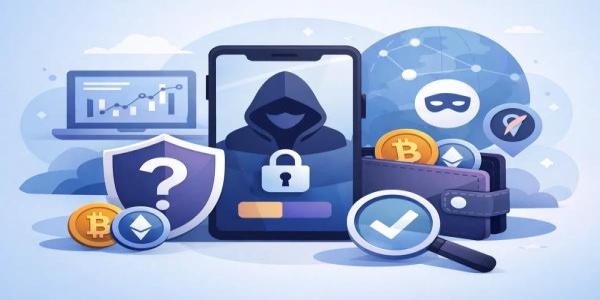
Anonymous Crypto Wallet App: What to Look For
Looking for an anonymous crypto wallet app? Learn what privacy-minded traders should expect from speed, control, security, and trading access.
Most crypto users do not leave because they stopped believing in digital assets. They leave because the process gets in their way. Long signups, identity checks before basic access, delayed deposits, limited coin support, and constant friction turn a fast market into a waiting room. That is exactly why interest in an anonymous crypto wallet app keeps growing.
For privacy-focused traders, the wallet is not just a storage tool. It is the front line of control. It decides how quickly you can move, how much personal information you need to expose, and whether you can act on an opportunity before it disappears. If your wallet slows you down or boxes you into someone else’s rules, it is working against you.
Why an anonymous crypto wallet app matters
The biggest appeal is simple: freedom to transact without turning every transfer, swap, or deposit into an application process. Many users are not asking for complexity. They want direct access to crypto, the ability to manage funds privately, and fewer barriers between decision and execution.
That matters even more in volatile markets. A trader watching a price gap between platforms, a buyer sending funds peer-to-peer, or a user converting crypto to USD does not want to wait through unnecessary steps. Privacy and speed often go together. When a wallet app strips away excess onboarding and keeps the interface focused, it becomes more than convenient. It becomes useful in the moments that actually count.
There is also a practical reality here. Not every user wants their financial activity tied to a growing trail of documents, screenshots, and platform requests. Anonymity does not automatically mean invisibility, and no serious user should pretend otherwise. Blockchain activity can still be analyzed. But reducing the amount of personal data handed over to platforms is still a meaningful advantage.
What an anonymous crypto wallet app should actually do
A lot of apps market themselves as private, but the real test is whether they reduce friction without cutting away the tools traders need. The best option is not the one with the loudest promise. It is the one that gives you usable privacy, fast access, and enough flexibility to keep up with your strategy.
Fast setup without document drag
If a wallet claims anonymity but still forces a full verification process before you can do anything meaningful, the pitch falls apart. A strong privacy-first app should let users get started quickly, fund an account with minimal delay, and move into trading or transfers without a bureaucratic detour.
That does not mean every function will always be unrestricted on every platform. It depends on the service model, region, and transaction type. But the general standard is clear: less document drag, faster entry, more control.
Real wallet utility, not just basic storage
A wallet app should not trap users in a narrow experience. Holding crypto is only one part of the equation. Many users also want to convert assets, send funds peer-to-peer, monitor balances across multiple coins, and react quickly to price moves.
That is where utility separates serious platforms from cosmetic ones. If you need three different apps just to store, trade, and convert your crypto, the system is already too fragmented. An effective wallet experience brings those actions closer together so your assets stay accessible, not stranded.
Broad asset support
Choice matters. Privacy-focused users are often active users, and active users rarely stay inside one or two coins forever. If a wallet only supports a small list of major assets, it limits your ability to rotate into opportunities, diversify quickly, or move across market segments.
A better anonymous crypto wallet app should support a wide range of cryptocurrencies and make movement between them straightforward. That is especially valuable for traders who look for arbitrage, short-term volatility, or lower-friction access to emerging assets.
Flexible funding and conversion options
Many users do not want to be locked into one rigid funding method. They want to move between crypto and fiat, top up fast, and choose the path that fits their situation. Wallet apps that support crypto-to-crypto conversion, crypto-to-USD movement, and flexible payment options give users room to act instead of forcing them into slow, limited rails.
This is one of the most overlooked features in the privacy conversation. An app can protect your access model, but if funding is clumsy, the experience still breaks down. Convenience is not separate from control. It is part of it.
The trade-off: privacy versus trust signals
Privacy-first crypto tools are attractive for obvious reasons, but serious users should think clearly about trade-offs. A lower-friction wallet app can give you faster access and more autonomy, but you still need signs that the platform is built for real use.
That includes a clean interface, reliable transaction flow, transparent feature set, and clear explanation of what the wallet can and cannot do. A platform does not become trustworthy because it asks for more paperwork. At the same time, it does not become trustworthy just because it promises anonymity.
The smarter move is to look for balance. You want privacy features, but you also want functional design, consistent performance, and enough product depth to support actual trading behavior. Hype is easy. Execution is harder.
Who benefits most from an anonymous crypto wallet app
This kind of app is not just for one type of user. It appeals to anyone tired of being slowed down by overbuilt exchange systems.
Beginner traders often want a simpler path into crypto without feeling interrogated before they make their first move. Intermediate users want more flexibility, especially if they are managing multiple assets or moving funds often. Peer-to-peer users care about clean transfers and control over how they transact. Arbitrage-minded traders care about speed, access, and the ability to respond when spreads open up.
The common thread is independence. These users are not looking for a lecture. They are looking for tools that let them act.
How to evaluate an anonymous crypto wallet app without wasting time
Start with the onboarding flow. If setup feels heavier than promised, that is a red flag. Then look at what you can do once you are inside. Can you store, transfer, convert, and trade in one place, or are the features thin?
Next, check asset range and transaction flexibility. A wallet that supports more than just the biggest names gives you more room to move. Finally, look at the user experience. Fast markets punish hesitation, and clunky design creates hesitation.
This is where platforms built around access rather than gatekeeping stand out. If the product is designed for users who value anonymity, broad coin support, trading freedom, and fast activation, the difference shows up quickly. Budrigan Market is built around that exact mindset, giving users a more direct route into crypto activity without the usual exchange friction.
Anonymous crypto wallet app features that move the needle
A privacy-minded wallet should make you feel more in control, not more confused. That usually comes down to a few core strengths working together.
First, it should reduce unnecessary onboarding barriers. Second, it should support meaningful action after signup, including wallet use, trading access, peer-to-peer transfers, and conversions. Third, it should respect the reality that users want options - more assets, more payment flexibility, and fewer artificial restrictions.
When those pieces are in place, the wallet stops being a passive container. It becomes part of your trading edge.
That edge matters because crypto rewards speed, attention, and flexibility. If your app gives you private access but weak execution, it will eventually cost you. If it gives you features but buries them behind delays and friction, it will cost you too. The stronger choice is a wallet app that treats privacy and usability as connected, not competing, goals.
The bigger shift behind privacy-first wallet demand
More users are moving away from the idea that every financial action should require permission, delay, and disclosure. That shift is not about rebellion for its own sake. It is about efficiency. People want to participate in markets on their own terms.
That is why the rise of the anonymous crypto wallet app is bigger than a product trend. It reflects a change in expectations. Users want access without excess. They want speed without unnecessary hoops. They want tools that match the pace of crypto itself.
If that is what you want too, then the right wallet app is not the one with the most noise around it. It is the one that gets out of your way and lets you move when opportunity shows up.
Share This Post
Recent Posts
-

How to Trade Altcoins Efficiently With a Plan
14 Sep 2026
-

A Guide to Decentralized Crypto Exchanges
14 Sep 2026
-

What the Future of No KYC Exchanges Looks Like
14 Sep 2026
-

A Practical Guide to Crypto Arbitrage Trading
14 Sep 2026
-

Anonymous Crypto Wallet Options for More Control
10 Sep 2026