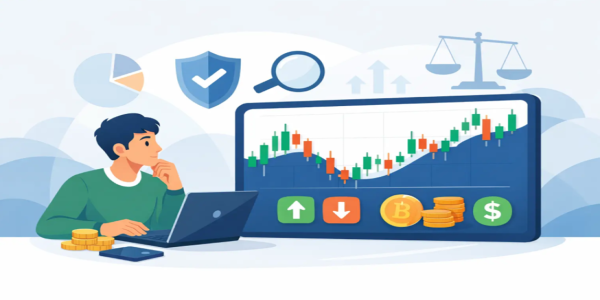
Can Beginners Use Spot Trading Safely?
Can beginners use spot trading without getting lost? Learn how spot markets work, the risks, and how to start with more control and confidence.
A lot of first-time crypto traders make the same mistake - they assume every market works like a casino until they know better. That is exactly why so many new users ask, can beginners use spot trading? The short answer is yes. In many cases, spot trading is the most straightforward place to start because you are simply buying or selling an asset at the current market price, without the added complexity of leverage, liquidation mechanics, or contract expiration.
That does not mean spot trading is risk-free. Crypto still moves fast, and beginners can still lose money if they chase hype, trade emotionally, or buy assets they do not understand. But if your goal is direct market access with fewer moving parts, spot trading is usually the cleaner entry point.
Why spot trading makes sense for beginners
Spot trading is simple by design. You buy a coin, and you own it. You sell a coin, and the trade is complete. There is no borrowing to increase position size, no margin calls, and no forced liquidation because the market moved against you too quickly.
For beginners, that matters. Complexity is where expensive mistakes start. When a trader is still learning how order books, price swings, and execution work, adding leverage on top of that can turn a small misunderstanding into a major loss. Spot trading strips the process back to the basics.
It also teaches the right habits early. New traders learn how to read price movement, place market and limit orders, manage position size, and think in percentages instead of fantasy returns. Those lessons carry over into every other part of crypto.
Can beginners use spot trading successfully?
Yes, but success depends less on experience and more on behavior. A beginner with a calm plan usually does better than an overconfident trader chasing fast gains.
The biggest advantage for new users is control. In spot markets, you choose when to enter and when to exit. If the asset drops, you are not automatically closed out because you borrowed money you cannot support. You still face downside risk, but you have more room to think, adjust, and learn.
That said, not every beginner should trade actively. Some people are better off starting slowly with small purchases, watching the market, and making fewer decisions. Spot trading gives you that flexibility. You can use it for active trades, or you can use it as a simple way to buy and hold assets you believe in.
What beginners usually get wrong about spot trading
The phrase "safer than leveraged trading" gets repeated so often that some new users hear "safe." Those are not the same thing.
Spot trading removes certain risks, but it does not remove market risk. If you buy a volatile coin at the top of a hype cycle, the fact that it is a spot trade will not protect you from a sharp decline. Ownership is not a shield against bad timing.
Beginners also tend to confuse accessibility with ease. A platform can make trading fast and frictionless, but that does not replace judgment. Easy access is a benefit only if you use it with discipline. Otherwise, convenience turns into impulsive trading.
Another common mistake is overtrading. New users often believe more trades mean more chances to win. Usually, it means more fees, more emotional decisions, and more opportunities to enter weak positions. In spot trading, patience often beats activity.
How spot trading works for a first-time user
At its core, spot trading is the direct exchange of one asset for another. You might trade USD for Bitcoin, Bitcoin for Ethereum, or one altcoin for another. Once the order is filled, the asset is yours at that price.
Most beginners start with either a market order or a limit order. A market order executes at the best available current price. It is fast, but the exact fill price can shift in fast-moving markets. A limit order lets you choose the price you are willing to pay or accept. It gives you more control, but the trade may not execute if the market never reaches that price.
That distinction matters because beginners often focus only on the coin they want and ignore how they enter. Good execution is part of trading. Learning the difference between speed and price control is one of the first useful skills a beginner can build.
Can beginners use spot trading on volatile assets?
They can, but they should be realistic about what volatility does. Fast price movement creates opportunity, but it also amplifies mistakes. A coin that jumps 20% in a day can also drop 20% just as quickly.
For a beginner, high-volatility spot trading is manageable only if position sizes stay small and expectations stay grounded. This is not the place for all-in thinking. If one trade can wreck your confidence or your account, the position is too large.
A better approach is to treat early trades as skill-building. Learn how prices move. Learn how your emotions react when a chart turns red. Learn whether you are making decisions from a plan or from fear of missing out. Spot trading gives you the space to learn these lessons without the added pressure of leverage.
What makes a spot trading platform beginner-friendly
A beginner does not need a platform loaded with institutional complexity. They need speed, clarity, and enough flexibility to act without getting buried in process.
That means a clean interface, easy access to a wide range of assets, fast execution, and a funding process that does not feel like a bureaucratic obstacle course. For many users, privacy and fewer onboarding barriers matter too. If getting started feels like applying for a mortgage, plenty of beginners will quit before they ever place a trade.
This is where platforms built for direct access stand out. Budrigan Market is designed for users who want to move quickly, trade freely, and avoid the usual friction that slows down entry. That matters for beginners because the easier it is to understand the mechanics, the faster you can focus on the decision itself.
Still, speed should support discipline, not replace it. A smooth platform experience helps, but beginners still need a plan for what to buy, how much to risk, and when to exit.
How much should a beginner start with?
Less than you are tempted to.
That is not a glamorous answer, but it is the right one. Beginners should start with an amount small enough that mistakes are affordable. Your first trades are part education, part market exposure. If you begin with money you cannot comfortably lose, every price move feels bigger than it should, and your decisions get worse.
Small size gives you psychological room. It lets you practice without panic. It also helps you separate the quality of your process from the size of your emotions.
There is no perfect dollar amount for everyone. It depends on your financial situation, your goals, and your tolerance for volatility. What matters is this: your opening position should be small enough that one bad trade does not knock you out of the game.
A realistic beginner mindset for spot trading
The best beginners do not arrive trying to look like pros. They arrive ready to learn.
That means ignoring the fantasy of overnight wealth and focusing on consistency instead. It means understanding that some trades will lose, some entries will be early, and some exits will be imperfect. The goal is not flawless timing. The goal is better decisions over time.
It also means respecting the market. Crypto rewards initiative, but it punishes recklessness. Spot trading gives beginners a more direct and manageable way into the market, but it still demands patience, self-control, and basic risk awareness.
So, can beginners use spot trading? Absolutely. For many people, it is the smartest place to begin because it offers real market access without the extra hazards that come with leveraged products. Start small, stay selective, and let your first goal be competence. Confidence tends to follow when your process finally does.
Share This Post
Can beginners use spot trading without getting lost? Learn how spot markets work, the risks, and how to start with more control and confidence.
A lot of first-time crypto traders make the same mistake - they assume every market works like a casino until they know better. That is exactly why so many new users ask, can beginners use spot trading? The short answer is yes. In many cases, spot trading is the most straightforward place to start because you are simply buying or selling an asset at the current market price, without the added complexity of leverage, liquidation mechanics, or contract expiration.
That does not mean spot trading is risk-free. Crypto still moves fast, and beginners can still lose money if they chase hype, trade emotionally, or buy assets they do not understand. But if your goal is direct market access with fewer moving parts, spot trading is usually the cleaner entry point.
Why spot trading makes sense for beginners
Spot trading is simple by design. You buy a coin, and you own it. You sell a coin, and the trade is complete. There is no borrowing to increase position size, no margin calls, and no forced liquidation because the market moved against you too quickly.
For beginners, that matters. Complexity is where expensive mistakes start. When a trader is still learning how order books, price swings, and execution work, adding leverage on top of that can turn a small misunderstanding into a major loss. Spot trading strips the process back to the basics.
It also teaches the right habits early. New traders learn how to read price movement, place market and limit orders, manage position size, and think in percentages instead of fantasy returns. Those lessons carry over into every other part of crypto.
Can beginners use spot trading successfully?
Yes, but success depends less on experience and more on behavior. A beginner with a calm plan usually does better than an overconfident trader chasing fast gains.
The biggest advantage for new users is control. In spot markets, you choose when to enter and when to exit. If the asset drops, you are not automatically closed out because you borrowed money you cannot support. You still face downside risk, but you have more room to think, adjust, and learn.
That said, not every beginner should trade actively. Some people are better off starting slowly with small purchases, watching the market, and making fewer decisions. Spot trading gives you that flexibility. You can use it for active trades, or you can use it as a simple way to buy and hold assets you believe in.
What beginners usually get wrong about spot trading
The phrase "safer than leveraged trading" gets repeated so often that some new users hear "safe." Those are not the same thing.
Spot trading removes certain risks, but it does not remove market risk. If you buy a volatile coin at the top of a hype cycle, the fact that it is a spot trade will not protect you from a sharp decline. Ownership is not a shield against bad timing.
Beginners also tend to confuse accessibility with ease. A platform can make trading fast and frictionless, but that does not replace judgment. Easy access is a benefit only if you use it with discipline. Otherwise, convenience turns into impulsive trading.
Another common mistake is overtrading. New users often believe more trades mean more chances to win. Usually, it means more fees, more emotional decisions, and more opportunities to enter weak positions. In spot trading, patience often beats activity.
How spot trading works for a first-time user
At its core, spot trading is the direct exchange of one asset for another. You might trade USD for Bitcoin, Bitcoin for Ethereum, or one altcoin for another. Once the order is filled, the asset is yours at that price.
Most beginners start with either a market order or a limit order. A market order executes at the best available current price. It is fast, but the exact fill price can shift in fast-moving markets. A limit order lets you choose the price you are willing to pay or accept. It gives you more control, but the trade may not execute if the market never reaches that price.
That distinction matters because beginners often focus only on the coin they want and ignore how they enter. Good execution is part of trading. Learning the difference between speed and price control is one of the first useful skills a beginner can build.
Can beginners use spot trading on volatile assets?
They can, but they should be realistic about what volatility does. Fast price movement creates opportunity, but it also amplifies mistakes. A coin that jumps 20% in a day can also drop 20% just as quickly.
For a beginner, high-volatility spot trading is manageable only if position sizes stay small and expectations stay grounded. This is not the place for all-in thinking. If one trade can wreck your confidence or your account, the position is too large.
A better approach is to treat early trades as skill-building. Learn how prices move. Learn how your emotions react when a chart turns red. Learn whether you are making decisions from a plan or from fear of missing out. Spot trading gives you the space to learn these lessons without the added pressure of leverage.
What makes a spot trading platform beginner-friendly
A beginner does not need a platform loaded with institutional complexity. They need speed, clarity, and enough flexibility to act without getting buried in process.
That means a clean interface, easy access to a wide range of assets, fast execution, and a funding process that does not feel like a bureaucratic obstacle course. For many users, privacy and fewer onboarding barriers matter too. If getting started feels like applying for a mortgage, plenty of beginners will quit before they ever place a trade.
This is where platforms built for direct access stand out. Budrigan Market is designed for users who want to move quickly, trade freely, and avoid the usual friction that slows down entry. That matters for beginners because the easier it is to understand the mechanics, the faster you can focus on the decision itself.
Still, speed should support discipline, not replace it. A smooth platform experience helps, but beginners still need a plan for what to buy, how much to risk, and when to exit.
How much should a beginner start with?
Less than you are tempted to.
That is not a glamorous answer, but it is the right one. Beginners should start with an amount small enough that mistakes are affordable. Your first trades are part education, part market exposure. If you begin with money you cannot comfortably lose, every price move feels bigger than it should, and your decisions get worse.
Small size gives you psychological room. It lets you practice without panic. It also helps you separate the quality of your process from the size of your emotions.
There is no perfect dollar amount for everyone. It depends on your financial situation, your goals, and your tolerance for volatility. What matters is this: your opening position should be small enough that one bad trade does not knock you out of the game.
A realistic beginner mindset for spot trading
The best beginners do not arrive trying to look like pros. They arrive ready to learn.
That means ignoring the fantasy of overnight wealth and focusing on consistency instead. It means understanding that some trades will lose, some entries will be early, and some exits will be imperfect. The goal is not flawless timing. The goal is better decisions over time.
It also means respecting the market. Crypto rewards initiative, but it punishes recklessness. Spot trading gives beginners a more direct and manageable way into the market, but it still demands patience, self-control, and basic risk awareness.
So, can beginners use spot trading? Absolutely. For many people, it is the smartest place to begin because it offers real market access without the extra hazards that come with leveraged products. Start small, stay selective, and let your first goal be competence. Confidence tends to follow when your process finally does.