Can You Buy Crypto Privately? Yes - Here’s How
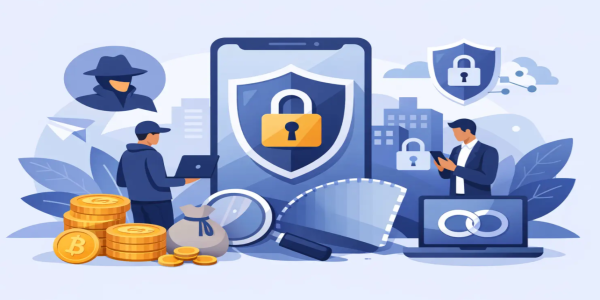
Can you buy crypto privately? Yes - if you choose the right methods, wallets, and platforms. Learn what private crypto buying really means.
Privacy in crypto usually disappears the moment an exchange asks for your passport, a selfie, and three business days of patience. That is why so many traders ask, can you buy crypto privately without getting trapped in the same gatekeeping that pushed them away from traditional finance in the first place? The short answer is yes, but private crypto buying is not the same as invisible crypto buying, and that distinction matters.
If your goal is faster access, fewer barriers, and more control over how you fund and move assets, private crypto buying is absolutely possible. You just need to understand what privacy really means, where the trade-offs are, and which methods actually reduce your exposure instead of just sounding anonymous in marketing copy.
Can you buy crypto privately in practice?
Yes, you can buy crypto privately in practice, but the level of privacy depends on how you buy, how you pay, and where you store your assets afterward. Most mainstream exchanges are built around identity collection. They want full customer profiles, document uploads, banking history, and ongoing monitoring. That creates a clear record tying your real-world identity to your wallet activity.
Private crypto buying works differently. Instead of handing over a complete identity package upfront, users look for methods with lower onboarding friction, more flexible payment options, and fewer personal data requirements. That can include peer-to-peer transactions, decentralized trading environments, direct wallet transfers, and select exchanges that prioritize access over bureaucracy.
The key point is simple: privacy exists on a spectrum. Some methods protect you from excessive data collection. Others reduce banking visibility. A few can limit how much personal information is tied to the initial purchase. None of that means your activity becomes magically untraceable forever. Blockchain transactions still leave records. Private buying is about reducing unnecessary exposure, not pretending records do not exist.
What private crypto buying actually means
A lot of people use the word private when they really mean one of three things: anonymous signup, discreet payment methods, or wallet control after purchase. Those are related, but they are not identical.
Anonymous signup means a platform lets you start trading without forcing heavy identity verification before you can move. That is often the first priority for users who want speed and independence. Discreet payment methods matter because your bank transfer, card purchase, or third-party app can create its own paper trail even if the exchange asks for very little. Wallet control matters because if you leave funds sitting on a custodial platform, your privacy is only as strong as that platform’s systems and policies.
So when someone asks, can you buy crypto privately, the better question is how much privacy they want at each stage. Entry matters. Funding matters. Storage matters. Exit matters too.
The most common ways to buy crypto with more privacy
Peer-to-peer buying is one of the most direct options. Instead of purchasing from a large centralized operator, you trade with another user. This can give you more payment flexibility and less onboarding friction. It also puts more responsibility on you. You need to verify the trade terms, understand escrow protections, and avoid offers that look too good to be real.
Decentralized exchange models can also support more private trading, especially for users who already hold crypto and want to swap between assets without routing everything through a compliance-heavy account. This approach is especially attractive to active traders who value speed, broad market access, and control over their funds.
Some platforms also position themselves around low-friction access, fast setup, and minimal onboarding barriers. For traders who are tired of delays, restrictive approval processes, and rigid account limits, that can be a major advantage. Budrigan Market fits that demand by focusing on faster access, broad coin availability, and a more confidential trading experience for users who want fewer obstacles between intent and execution.
Cash-based or alternative payment methods may offer more discretion than direct bank-linked purchases, but convenience often drops as privacy rises. That is the recurring trade-off. The more distance you create from traditional financial rails, the more careful you need to be about fees, pricing, and counterparty trust.
Where privacy breaks down
People often assume the exchange is the whole story. It is not. Privacy can break down long before or long after the purchase itself.
If you use a bank card tied to your legal name, that creates one layer of visibility. If you send purchased coins straight into a wallet that has already interacted with fully identified accounts, that creates another. If you reuse wallet addresses carelessly, your transaction history becomes easier to map. Even something as simple as leaving funds on a platform instead of transferring them to your own wallet can reduce your control.
This is why private buying is not just about the point of sale. It is about behavior. The platform matters, but so does the wallet setup, the payment path, and the way you move funds after the trade.
Can you buy crypto privately and still stay safe?
Yes, but safety and privacy have to work together. Chasing anonymity without basic caution is how people get scammed.
Start with the platform or transaction structure. If there is no clear process, no transparent pricing, and no obvious protection against bad counterparties, the privacy angle is not worth much. Fast access should not mean blind trust. A smart trader looks for a clean interface, understandable transaction flow, and enough operational clarity to avoid preventable mistakes.
Next comes wallet discipline. If you buy crypto privately but keep it in an environment you do not control, you are still dependent on someone else’s rules. Self-managed wallets give you more independence, and independence is part of the point.
Then there is the issue of coin choice. Not every asset offers the same practical privacy profile. Some traders simply want to avoid handing over unnecessary personal documents while buying widely used assets like Bitcoin, Ethereum, or stablecoins. Others care more about how transactions appear on-chain. Your strategy should match your actual goal instead of chasing a vague idea of secrecy.
Why more traders are looking for private access
The demand is not hard to understand. A lot of traders are not trying to hide wrongdoing. They are trying to avoid friction, delays, data harvesting, and arbitrary restrictions. They want to react to the market when opportunity appears, not after an approval queue clears.
That is especially true for retail users who are juggling spot trades, P2P deals, quick conversions, or arbitrage opportunities. If a platform treats every login like a compliance interview, agility disappears. Privacy-conscious access is attractive because it restores speed and control.
There is also a trust issue. Many users no longer want to hand over sensitive personal documents to every platform they test. Data leaks happen. Account freezes happen. Rules change. For traders who value independence, reducing the amount of personal information spread across multiple services feels less like paranoia and more like common sense.
What to check before you use any private buying method
The first thing to check is what the platform actually requires. Some services advertise ease of access but still introduce verification demands later, especially at withdrawal or higher transaction levels. Read the process before you fund anything.
The second is payment flexibility. More options usually mean more control, but they can also mean more pricing variation. Compare the real cost, not just the headline rate.
The third is withdrawal control. If you cannot move assets quickly into your own wallet, your privacy and flexibility are weaker than they look.
Finally, be realistic about legal and tax obligations where you live. Privacy and compliance are not the same issue. Choosing a low-friction platform does not erase your responsibilities. It simply gives you more control over access and exposure.
The real answer to can you buy crypto privately
Yes, you can buy crypto privately, and for many users it is one of the clearest ways to reclaim speed, flexibility, and control in a market that has become crowded with barriers. But the best results come from thinking beyond the purchase itself. Privacy is built through smarter platform choices, cleaner wallet habits, and fewer unnecessary disclosures at every step.
If you want freedom in crypto, do not wait for traditional platforms to become less restrictive. Choose methods that respect your time, protect your information, and let you move when the market moves. Private access is not about disappearing. It is about staying in control.
Share This Post
Recent Posts
-
No KYC Crypto Trading Explained
27 Apr 2026
-
Anonymous Altcoin Trading Guide for Fast Starts
27 Apr 2026
-
Crypto Conversion Versus Spot Trading
27 Apr 2026
-
Guide to Fiat On Ramp Options
24 Apr 2026
-
Guide to Fast Crypto Transfers
24 Apr 2026