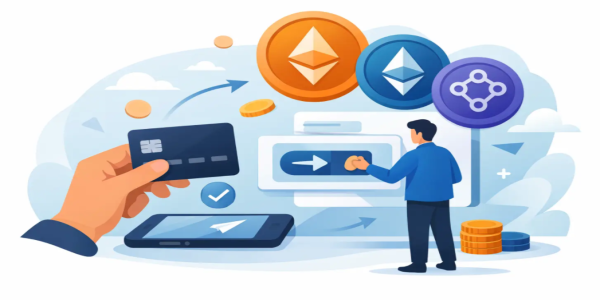
How to Buy Altcoins With Card Fast
Learn how to buy altcoins with card fast, safely, and with less friction. Compare fees, limits, timing, and the best way to start trading now.
The moment an altcoin starts moving, delays get expensive. If you want market access right now, learning how to buy altcoins with card is one of the fastest ways to go from idea to execution without getting stuck in slow bank rails or drawn-out funding steps.
For a lot of traders, card purchases are the cleanest entry point. You pick your coin, enter an amount, complete payment, and move straight into holding, converting, or trading. That speed matters when you're trying to catch momentum, react to news, or build a position without waiting days for a transfer to clear.
Why buying altcoins with a card appeals to so many traders
Card payments solve a simple problem - they remove friction. Bank transfers can be cheaper in some cases, but they are rarely the fastest option. If your priority is immediate access, a debit or credit card usually wins.
That said, speed is not the only reason people choose this route. Card purchases feel familiar. Most users already understand how card checkouts work, which lowers the barrier for first-time buyers. For privacy-conscious traders and people tired of exchanges that turn a basic purchase into a compliance obstacle course, a low-friction on-ramp is part of the appeal.
There is a trade-off, though. Card transactions often come with higher processing fees than bank transfers, and some banks still flag crypto-related activity. So the best choice depends on what you value more at that moment: lower cost or faster execution.
How to buy altcoins with card step by step
The actual process is simple when the platform is built for speed. First, choose the altcoin you want to buy. This sounds obvious, but it helps to know whether you're planning to hold a large-cap coin, rotate into smaller-cap tokens, or convert later into another asset. Your purchase method should match your strategy.
Next, enter the amount you want to spend and review the quoted price. Before you approve anything, check the total cost, including card processing fees, conversion spreads, and any network charges if the asset will be sent to a wallet. A cheap-looking price can become expensive once all the costs are added.
Then add your card details and confirm the transaction. Depending on your card issuer, you may need to complete a bank authentication step. Once approved, the crypto is typically credited to your exchange balance or wallet, where you can hold it, swap it, or trade it into another asset.
On a platform built around fast access, this can take minutes rather than days. That is why so many active users prefer card funding when timing matters more than shaving off every last fee.
What to check before you buy altcoins with a card
The fastest payment method is not always the smartest unless you know what you're paying for. Start with fees. There are usually three layers to watch: the processor fee for using the card, the exchange rate or spread, and the blockchain fee if you move the coin off-platform. If you only look at one number, you can miss the real cost.
You should also check purchase limits. Some platforms and card issuers cap how much you can spend in a single transaction or over 24 hours. If you plan to buy in size, those limits can affect your timing.
Supported coins matter too. Not every platform offers direct card purchases for the same assets. Sometimes you can buy a major cryptocurrency with your card first, then convert it into a smaller altcoin. That extra step is common, but it changes your cost basis and can expose you to short-term price movement during the conversion.
Finally, pay attention to settlement speed. Some platforms advertise card purchases but still delay access to trading or withdrawals. If your goal is immediate market action, make sure the funds are usable right away.
Debit card vs credit card for altcoin purchases
Debit cards are usually the smoother choice. They tend to be accepted more often, and they pull directly from available funds, which reduces the chance of a declined transaction. For buyers who want control and simplicity, debit is often the practical option.
Credit cards can work, but they come with more variables. Some issuers treat crypto purchases as cash advances, which can trigger extra charges and immediate interest. Others block crypto transactions completely. If you use a credit card, check your issuer's rules first so a quick buy does not turn into an expensive surprise.
For most users, the question is less about which card is technically better and more about which one your bank will process consistently at a reasonable total cost.
Safety matters when learning how to buy altcoins with card
Fast access should not mean careless buying. Before completing any card purchase, confirm that the platform clearly shows the amount of crypto you will receive, the fees involved, and the final charge to your card. If pricing feels vague, walk away.
It also helps to use a platform that gives you flexibility after the purchase. You may want to hold your altcoins, convert them into another coin, move them into a wallet, or react quickly if the market shifts. Freedom after funding is just as important as speed during checkout.
Protect your account with a strong password and any available security settings. Even if the purchase process is designed to be quick, your account still needs basic protection. Convenience should help you move faster, not leave you exposed.
The most common reasons card purchases fail
A failed payment does not always mean something is wrong with your account. Often, the bank is the problem. Many card issuers automatically flag crypto-related transactions, especially if the merchant is new to you or the purchase is larger than your usual spending pattern.
Billing mismatches can also cause problems. If the address tied to your card does not match what you enter during checkout, the payment may be rejected. International processing can trigger blocks too, depending on your bank.
Sometimes the issue is simpler: your card has insufficient available balance, online transactions are disabled, or the card type is not supported. If a purchase fails, contact your bank before trying repeatedly. Multiple attempts can trigger more fraud flags, not fewer.
Is buying altcoins with a card the cheapest way?
Usually not. It is often the fastest and easiest, but not the cheapest. Bank transfers and some peer-to-peer methods may have lower direct costs. If you are investing on a set schedule and speed is not critical, those methods can make more sense.
But there is another side to this. A cheaper funding method that takes two or three days may cost you more if the coin runs before your money arrives. In crypto, the lowest fee is not always the lowest real cost. Timing has value.
That is why experienced traders think in terms of context. If you are averaging into positions over time, lower-cost funding can be smart. If you want immediate entry, card funding may be worth the premium.
Choosing the right platform for card-based altcoin buying
If your goal is direct, low-friction access, the platform matters more than the card itself. Look for one that supports a wide range of altcoins, gives you clear pricing before payment, and lets you act on your funds quickly after purchase. A cluttered workflow defeats the whole point.
This is where user experience becomes a competitive edge. Traders want fewer barriers between decision and execution. They want to buy, convert, and trade without unnecessary delays or bloated onboarding. Budrigan Market speaks directly to that demand by focusing on speed, broad asset access, and a more open trading experience for users who value flexibility.
The best platform is not always the one with the loudest brand or the most polished ad campaign. It is the one that gets you funded fast, shows you the true cost upfront, and gives you room to move once your altcoins land.
When buying altcoins with a card makes the most sense
This method works best when speed, convenience, and flexibility matter more than squeezing out the absolute lowest fee. It is a strong fit for first-time buyers who want a familiar payment option, active traders responding to live market conditions, and anyone who wants to skip the delays tied to traditional funding methods.
It can be less ideal for very large purchases if your card issuer has strict limits or if the total fees become too high relative to your position size. In those cases, splitting purchases or using another funding route may be smarter.
The key is to treat card buying as a tool, not a default. Use it when it gives you an edge. If you want fast entry into the altcoin market without getting buried in friction, it is one of the most practical ways to get moving.
Opportunity in crypto rarely waits for perfect timing. If you're ready to act, choose a platform with transparent pricing, check the real cost, and make your card purchase work for your strategy instead of slowing it down.
Share This Post
Learn how to buy altcoins with card fast, safely, and with less friction. Compare fees, limits, timing, and the best way to start trading now.
The moment an altcoin starts moving, delays get expensive. If you want market access right now, learning how to buy altcoins with card is one of the fastest ways to go from idea to execution without getting stuck in slow bank rails or drawn-out funding steps.
For a lot of traders, card purchases are the cleanest entry point. You pick your coin, enter an amount, complete payment, and move straight into holding, converting, or trading. That speed matters when you're trying to catch momentum, react to news, or build a position without waiting days for a transfer to clear.
Why buying altcoins with a card appeals to so many traders
Card payments solve a simple problem - they remove friction. Bank transfers can be cheaper in some cases, but they are rarely the fastest option. If your priority is immediate access, a debit or credit card usually wins.
That said, speed is not the only reason people choose this route. Card purchases feel familiar. Most users already understand how card checkouts work, which lowers the barrier for first-time buyers. For privacy-conscious traders and people tired of exchanges that turn a basic purchase into a compliance obstacle course, a low-friction on-ramp is part of the appeal.
There is a trade-off, though. Card transactions often come with higher processing fees than bank transfers, and some banks still flag crypto-related activity. So the best choice depends on what you value more at that moment: lower cost or faster execution.
How to buy altcoins with card step by step
The actual process is simple when the platform is built for speed. First, choose the altcoin you want to buy. This sounds obvious, but it helps to know whether you're planning to hold a large-cap coin, rotate into smaller-cap tokens, or convert later into another asset. Your purchase method should match your strategy.
Next, enter the amount you want to spend and review the quoted price. Before you approve anything, check the total cost, including card processing fees, conversion spreads, and any network charges if the asset will be sent to a wallet. A cheap-looking price can become expensive once all the costs are added.
Then add your card details and confirm the transaction. Depending on your card issuer, you may need to complete a bank authentication step. Once approved, the crypto is typically credited to your exchange balance or wallet, where you can hold it, swap it, or trade it into another asset.
On a platform built around fast access, this can take minutes rather than days. That is why so many active users prefer card funding when timing matters more than shaving off every last fee.
What to check before you buy altcoins with a card
The fastest payment method is not always the smartest unless you know what you're paying for. Start with fees. There are usually three layers to watch: the processor fee for using the card, the exchange rate or spread, and the blockchain fee if you move the coin off-platform. If you only look at one number, you can miss the real cost.
You should also check purchase limits. Some platforms and card issuers cap how much you can spend in a single transaction or over 24 hours. If you plan to buy in size, those limits can affect your timing.
Supported coins matter too. Not every platform offers direct card purchases for the same assets. Sometimes you can buy a major cryptocurrency with your card first, then convert it into a smaller altcoin. That extra step is common, but it changes your cost basis and can expose you to short-term price movement during the conversion.
Finally, pay attention to settlement speed. Some platforms advertise card purchases but still delay access to trading or withdrawals. If your goal is immediate market action, make sure the funds are usable right away.
Debit card vs credit card for altcoin purchases
Debit cards are usually the smoother choice. They tend to be accepted more often, and they pull directly from available funds, which reduces the chance of a declined transaction. For buyers who want control and simplicity, debit is often the practical option.
Credit cards can work, but they come with more variables. Some issuers treat crypto purchases as cash advances, which can trigger extra charges and immediate interest. Others block crypto transactions completely. If you use a credit card, check your issuer's rules first so a quick buy does not turn into an expensive surprise.
For most users, the question is less about which card is technically better and more about which one your bank will process consistently at a reasonable total cost.
Safety matters when learning how to buy altcoins with card
Fast access should not mean careless buying. Before completing any card purchase, confirm that the platform clearly shows the amount of crypto you will receive, the fees involved, and the final charge to your card. If pricing feels vague, walk away.
It also helps to use a platform that gives you flexibility after the purchase. You may want to hold your altcoins, convert them into another coin, move them into a wallet, or react quickly if the market shifts. Freedom after funding is just as important as speed during checkout.
Protect your account with a strong password and any available security settings. Even if the purchase process is designed to be quick, your account still needs basic protection. Convenience should help you move faster, not leave you exposed.
The most common reasons card purchases fail
A failed payment does not always mean something is wrong with your account. Often, the bank is the problem. Many card issuers automatically flag crypto-related transactions, especially if the merchant is new to you or the purchase is larger than your usual spending pattern.
Billing mismatches can also cause problems. If the address tied to your card does not match what you enter during checkout, the payment may be rejected. International processing can trigger blocks too, depending on your bank.
Sometimes the issue is simpler: your card has insufficient available balance, online transactions are disabled, or the card type is not supported. If a purchase fails, contact your bank before trying repeatedly. Multiple attempts can trigger more fraud flags, not fewer.
Is buying altcoins with a card the cheapest way?
Usually not. It is often the fastest and easiest, but not the cheapest. Bank transfers and some peer-to-peer methods may have lower direct costs. If you are investing on a set schedule and speed is not critical, those methods can make more sense.
But there is another side to this. A cheaper funding method that takes two or three days may cost you more if the coin runs before your money arrives. In crypto, the lowest fee is not always the lowest real cost. Timing has value.
That is why experienced traders think in terms of context. If you are averaging into positions over time, lower-cost funding can be smart. If you want immediate entry, card funding may be worth the premium.
Choosing the right platform for card-based altcoin buying
If your goal is direct, low-friction access, the platform matters more than the card itself. Look for one that supports a wide range of altcoins, gives you clear pricing before payment, and lets you act on your funds quickly after purchase. A cluttered workflow defeats the whole point.
This is where user experience becomes a competitive edge. Traders want fewer barriers between decision and execution. They want to buy, convert, and trade without unnecessary delays or bloated onboarding. Budrigan Market speaks directly to that demand by focusing on speed, broad asset access, and a more open trading experience for users who value flexibility.
The best platform is not always the one with the loudest brand or the most polished ad campaign. It is the one that gets you funded fast, shows you the true cost upfront, and gives you room to move once your altcoins land.
When buying altcoins with a card makes the most sense
This method works best when speed, convenience, and flexibility matter more than squeezing out the absolute lowest fee. It is a strong fit for first-time buyers who want a familiar payment option, active traders responding to live market conditions, and anyone who wants to skip the delays tied to traditional funding methods.
It can be less ideal for very large purchases if your card issuer has strict limits or if the total fees become too high relative to your position size. In those cases, splitting purchases or using another funding route may be smarter.
The key is to treat card buying as a tool, not a default. Use it when it gives you an edge. If you want fast entry into the altcoin market without getting buried in friction, it is one of the most practical ways to get moving.
Opportunity in crypto rarely waits for perfect timing. If you're ready to act, choose a platform with transparent pricing, check the real cost, and make your card purchase work for your strategy instead of slowing it down.