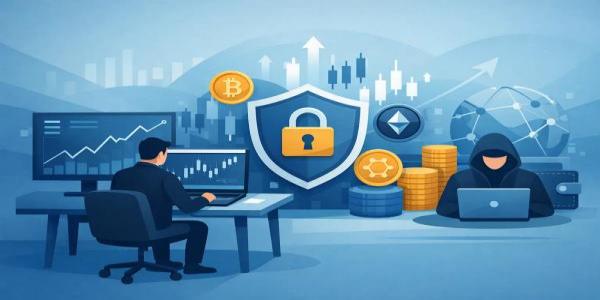
How to Start Private Crypto Trading
Learn how to start private crypto trading with less friction, faster access, smarter funding choices, and practical habits for trading discreetly.
If you want to know how to start private crypto trading, the real question is not just where to click first. It is how to trade without handing over more personal data, time, and control than necessary. For many traders, privacy is the point. Speed is a close second.
Mainstream exchanges often turn a simple idea - buy, sell, swap, and move assets - into a long approval process. That works for some people. For others, it kills momentum and adds exposure they never wanted. Private crypto trading appeals to users who want faster access, more autonomy, and fewer barriers between a market opportunity and the trade itself.
What private crypto trading actually means
Private crypto trading does not mean invisible trading or guaranteed anonymity under every condition. That is where beginners get tripped up. In practice, it usually means using platforms and methods that reduce personal data exposure, limit unnecessary account friction, and give you more control over how you fund, trade, and store assets.
That can include choosing exchanges with minimal onboarding, using dedicated wallets instead of leaving everything on a platform, avoiding oversharing transaction details, and being deliberate about how funds move between fiat and crypto. Privacy is rarely one single switch. It is a set of choices.
The trade-off is simple. The more freedom and speed you want, the more responsibility you take on. You need to think about wallet security, funding methods, platform trust, and how fast you can react if something goes wrong.
How to start private crypto trading without making rookie mistakes
The fastest way to get started is not to chase every privacy tool at once. Start with a clean setup, a clear plan, and a platform built for low-friction access.
1. Pick a platform that matches your goals
If your goal is private crypto trading, you need a platform that does not force a compliance-heavy experience from the first step. Look for a trading environment that supports quick access, broad coin selection, simple wallet functions, and flexible funding options.
This is where many users waste time. They sign up for a massive exchange built for institutional comfort, then realize they are stuck in verification queues, limited pair access, or rigid withdrawal policies. If you care about privacy and speed, choose a platform designed around trader control.
Budrigan Market is built for that kind of user - someone who wants direct access to crypto trading, peer-to-peer transactions, wallet functionality, and conversion tools without the usual drag.
2. Create a separate trading identity
Private trading starts before your first order. Use a dedicated email for trading activity and keep it separate from your personal and work accounts. This reduces overlap between your financial activity and your broader digital identity.
You do not need to turn this into an extreme privacy operation. You just need clean separation. Mixing everything together makes tracking, security, and account recovery messier later.
3. Set up a wallet strategy early
A lot of beginners think the exchange account is the whole system. It is not. If you want more control, use wallets intentionally.
For active trading, keeping a portion of funds accessible on-platform may make sense. For assets you are not using right away, a separate wallet gives you more control over storage. The right balance depends on your style. If you trade daily, convenience matters. If you hold for weeks or months, custody matters more.
The mistake is leaving every asset in one place just because it feels easier.
4. Choose your funding path carefully
Privacy changes based on how you enter the market. Bank transfers, debit cards, peer-to-peer purchases, and crypto deposits all create different levels of speed and exposure.
If you already hold crypto elsewhere, funding with crypto can be the cleanest starting point. If you need fiat on-ramp access, look for flexible payment methods and straightforward conversion options. If you prefer person-to-person flexibility, P2P trading may fit better.
There is no universal best method. Card payments are convenient but can leave a clearer trail. P2P options can offer more flexibility but require more attention to counterparty risk. Crypto deposits are efficient if you already have assets, but they are not helpful if you are starting from zero.
Build your first private trading workflow
Once your account and funding method are ready, your next move is to build a repeatable routine. Privacy is stronger when your process is consistent.
Start small and test everything
Do not begin with a large transfer or your first high-risk trade. Send a small amount, execute a basic transaction, and confirm you understand the platform flow. Test deposits, swaps, conversions, and withdrawals before scale is involved.
This protects you from the beginner habit of assuming every interface works the way you expect. It also helps you spot fees, timing differences, and wallet behavior early.
Focus on liquid pairs first
Private trading does not mean random trading. Start with assets and pairs that have enough liquidity to enter and exit without weird price movement. Thin markets can look attractive, especially when a move is already underway, but they are harder to manage.
If your aim is fast execution and control, liquidity matters more than hype. A clean trade in a liquid market usually beats chasing a dramatic coin chart you cannot exit properly.
Keep your sizing disciplined
Privacy can create a false sense of freedom. Just because access is easier does not mean every trade deserves size. Set a fixed amount for your first phase of trading and treat it as working capital, not a lottery ticket.
This matters even more if you are experimenting with multiple features like spot, P2P, conversions, or binary trading. New traders lose money when they confuse access with edge.
Protect your privacy without killing usability
There is a point where privacy habits become useful, and a point where they become self-sabotage. The goal is practical discretion, not unnecessary complexity.
Use strong account security
A private setup still needs strong passwords, device hygiene, and account protection. If your device is sloppy or your credentials are weak, your privacy plan is already broken.
This is the boring part, but it matters. Fast access only works in your favor if you keep control of the account.
Avoid broadcasting your trades
Many traders leak more than they realize. They share screenshots, wallet balances, timestamps, or trade commentary in group chats and social feeds. Then they wonder why privacy disappears.
If private crypto trading matters to you, stop turning your activity into content. Quiet operators usually keep more optionality.
Separate trading funds from personal spending
It is easier to stay organized and discreet when your trading capital has a defined purpose. Blending trading money with everyday spending makes your activity harder to track, manage, and protect.
Simple structure wins here. Know what is for trading, what is for storage, and what is for cashing out.
Know the trade-offs before you scale
The appeal of private trading is obvious - less friction, faster execution, and more independence. But freedom always comes with trade-offs.
You may get quicker access, but you also need better judgment. You may avoid some onboarding delays, but you still need to assess platform quality, transaction terms, and security habits. You may gain flexibility across more than 150 assets, but not every asset deserves your capital.
That is why the best private traders are not just privacy-conscious. They are process-conscious. They know when to move fast and when to slow down.
A realistic path for beginners
If you are just starting, keep it simple for the first 30 days. Open access on a low-friction platform. Fund the account with an amount you can afford to learn with. Trade a few liquid pairs. Practice moving funds between platform and wallet. Test conversions. Learn the interface until it feels automatic.
You do not need to become an advanced operator on day one. You need a setup that lets you act when you see an opportunity and stay in control while doing it.
Private crypto trading is attractive because it cuts through the noise. Fewer barriers. More choice. Faster action. But the real advantage is not secrecy for its own sake. It is the ability to trade on your terms.
Start with a platform that respects that. Keep your workflow clean. Protect your access. Stay selective with your trades. Financial freedom usually does not begin with a giant move. It begins with a smarter first one.
Share This Post
Recent Posts
-
-
What Is Self Custody Crypto and Why It Matters
19 Sep 2026
-

Crypto Trading Access Trends Reshaping Markets
19 Sep 2026
-

How to Trade Altcoins Efficiently With a Plan
14 Sep 2026
-

A Guide to Decentralized Crypto Exchanges
14 Sep 2026