P2P Crypto Trading Safe for Beginners?
P2p crypto trading safe? Yes, if you use escrow, verify payment, and choose the right platform. Learn the real risks and smart safeguards.
The fastest way to lose money in crypto is to treat trust like a shortcut. That is exactly why people ask, is p2p crypto trading safe? The honest answer is yes - but only when you understand what protects you, what does not, and how quickly a rushed trade can turn into a bad one.
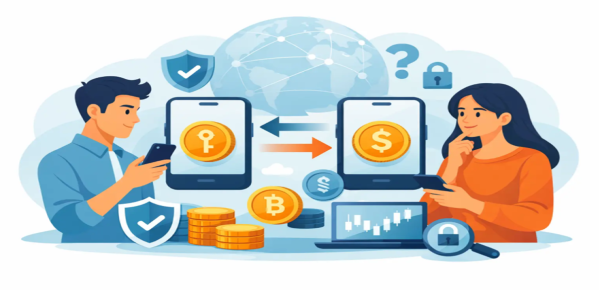
P2P crypto trading gives you something many users want right now: direct access. You are not waiting around for traditional banking rails, rigid account reviews, or limited funding methods to decide whether you can move. You choose an offer, choose a payment method, and trade directly with another person. That freedom is the appeal. It is also where the risk lives.
Is P2P Crypto Trading Safe?
P2P crypto trading is safe in the same way cash deals, marketplace sales, and direct online transactions can be safe. The structure matters, but your behavior matters just as much. A well-designed platform can reduce risk with escrow, trade monitoring, clear dispute processes, and transparent seller history. It cannot protect someone who ignores warning signs, confirms payment too early, or moves a deal off-platform to save a few minutes.
The biggest mistake beginners make is assuming that P2P is either completely dangerous or completely secure. Neither is true. P2P is a tool. Used correctly, it offers speed, flexibility, and privacy that many centralized exchanges do not. Used carelessly, it creates an opening for scams, chargebacks, fake payment proofs, and social engineering.
That trade-off is worth understanding because for many users, the upside is real. P2P can offer broader payment options, faster execution, and fewer barriers between intent and action. If you value control, it can feel like a better fit than compliance-heavy exchanges that slow everything down.
What Actually Makes P2P Trading Safer
The most important safety layer in P2P trading is escrow. When the platform holds the seller's crypto during the transaction, neither side has full control until the terms are met. That changes everything. Without escrow, you are relying almost entirely on the other person's word. With escrow, there is at least a system that can prevent the seller from disappearing after you send funds.
The second major safety factor is platform transparency. You want to see trade history, completion rates, account age, and payment terms before you commit. Reputation is not a guarantee, but it helps you filter out obvious risk. A trader with a long record of completed orders is usually a safer choice than a brand-new account offering a deal that looks too good.
The third factor is discipline. Good traders follow the process every time. They read the trade terms. They use payment methods they understand. They verify that money has actually arrived, not just that someone uploaded a screenshot. They keep all communication inside the platform so there is a record if something goes wrong.
This is where platforms built around speed and access need to get the balance right. Fast onboarding and flexible payments are attractive, but safety still depends on clear trade flow, visible terms, and escrow-based execution. Freedom works best when the rules of the trade are still enforced.
The Real Risks in P2P Crypto Trading
Most P2P losses do not happen because blockchain technology failed. They happen because someone exploited the human side of the trade.
Fake payment confirmation is one of the oldest tricks. A buyer sends an edited receipt or screenshot that makes it look like money has been sent. An impatient seller releases the crypto before the payment actually clears. Once the crypto is gone, the seller has little room to recover.
Chargeback risk is another issue, especially with reversible payment methods. Some buyers complete a trade, receive crypto, and then dispute the original fiat transaction through their bank or payment provider. That is why many experienced traders price different payment methods differently. Instant and reversible do not always mean low risk.
There is also the off-platform trap. A trader asks you to continue on Telegram, WhatsApp, or text because it will be faster or cheaper. That is usually where protection disappears. If the conversation and agreement leave the platform, the dispute process gets weaker and your evidence gets messy.
Then there is pricing manipulation. A deal can look attractive until you notice hidden conditions in the terms, delays in release, or payment windows designed to pressure you into mistakes. Low prices attract attention. Clear terms protect money.
How to Trade P2P Without Getting Burned
If you are new, start small. That is not fear talking. That is smart execution. A small first trade lets you test the seller, the payment rail, and the platform flow without risking more than necessary. The goal of your first few trades is not maximum profit. It is learning the process under live conditions.
Choose traders with a strong completion rate and visible history. That does not mean only trading with the oldest account on the board. It means avoiding unnecessary uncertainty. If two offers are close, take the one from the trader with clearer terms and a more proven record.
Always read the trade instructions before opening the order. Some sellers require exact payment references. Others only accept transfers from accounts matching the buyer's registered name. If you ignore those details, you can create a dispute even when your payment is legitimate.
Never release crypto based on a screenshot, a promise, or pressure. Check your actual bank or payment app balance. Confirm settlement yourself. If the funds are pending, delayed, or unclear, wait. Speed matters in crypto, but false urgency is a scammer's best weapon.
Keep every message on the platform. If a trader tries to move the conversation elsewhere, that is a reason to pause, not cooperate. On-platform records give support teams something to review if the trade breaks down.
Finally, understand the payment method you are using. Bank transfer, cash deposit, wallet payment, and fintech apps all carry different levels of reversibility and fraud exposure. Safety is not just about who you trade with. It is also about how the money moves.
Is P2P Crypto Trading Safe Compared to Regular Exchanges?
That depends on what kind of risk you are trying to avoid.
Traditional exchanges reduce person-to-person fraud because you are not negotiating directly with another user for every trade. But they introduce other friction points: account restrictions, delayed verification, frozen withdrawals, narrower funding access, and less flexibility around how you buy and sell. For privacy-focused users or people who want fewer barriers, that can be a serious drawback.
P2P removes much of that friction. It gives users more payment options, more direct pricing opportunities, and often faster access to market activity. For arbitrage-minded traders, that flexibility can create real opportunity. But it also shifts more responsibility onto the user. You are not just clicking buy on an order book. You are participating in a transaction with another party, and details matter.
That is why the safest approach is not to ask which model is universally better. Ask which model fits your goals and whether you are prepared to follow the process. If you want control, flexibility, and broader access, P2P can absolutely be the right move. If you want everything standardized and hands-off, you may prefer a more traditional exchange experience.
Who Should Use P2P Trading?
P2P makes sense for users who want fast market entry, broader payment freedom, and more control over how they trade. It is especially attractive for privacy-conscious buyers, users in regions with limited banking convenience, and traders looking for pricing inefficiencies between local payment markets and crypto rates.
It may not be ideal for someone who is unwilling to read terms, compare counterparties, or verify payment status carefully. P2P rewards attention. If you treat it casually, the market will punish that.
For users who want both access and structure, a platform that combines direct trading with clear escrow mechanics can offer the best middle ground. Budrigan Market speaks to that kind of user - someone who wants fewer barriers without giving up control of the transaction flow.
The Bottom Line on P2P Safety
So, is p2p crypto trading safe? Yes, when the platform uses escrow and the trader uses common sense. No, if you rush, skip verification, or let another user pull you outside the system designed to protect the trade.
That is the real answer most people need. P2P is not safe because it is trendy. It is safe when rules are followed, payments are verified, and freedom is matched with discipline. If you want the speed and flexibility of direct crypto trading, the opportunity is real. Just make sure your caution moves as fast as your ambition.
Share This Post
P2p crypto trading safe? Yes, if you use escrow, verify payment, and choose the right platform. Learn the real risks and smart safeguards.
The fastest way to lose money in crypto is to treat trust like a shortcut. That is exactly why people ask, is p2p crypto trading safe? The honest answer is yes - but only when you understand what protects you, what does not, and how quickly a rushed trade can turn into a bad one.
P2P crypto trading gives you something many users want right now: direct access. You are not waiting around for traditional banking rails, rigid account reviews, or limited funding methods to decide whether you can move. You choose an offer, choose a payment method, and trade directly with another person. That freedom is the appeal. It is also where the risk lives.
Is P2P Crypto Trading Safe?
P2P crypto trading is safe in the same way cash deals, marketplace sales, and direct online transactions can be safe. The structure matters, but your behavior matters just as much. A well-designed platform can reduce risk with escrow, trade monitoring, clear dispute processes, and transparent seller history. It cannot protect someone who ignores warning signs, confirms payment too early, or moves a deal off-platform to save a few minutes.
The biggest mistake beginners make is assuming that P2P is either completely dangerous or completely secure. Neither is true. P2P is a tool. Used correctly, it offers speed, flexibility, and privacy that many centralized exchanges do not. Used carelessly, it creates an opening for scams, chargebacks, fake payment proofs, and social engineering.
That trade-off is worth understanding because for many users, the upside is real. P2P can offer broader payment options, faster execution, and fewer barriers between intent and action. If you value control, it can feel like a better fit than compliance-heavy exchanges that slow everything down.
What Actually Makes P2P Trading Safer
The most important safety layer in P2P trading is escrow. When the platform holds the seller's crypto during the transaction, neither side has full control until the terms are met. That changes everything. Without escrow, you are relying almost entirely on the other person's word. With escrow, there is at least a system that can prevent the seller from disappearing after you send funds.
The second major safety factor is platform transparency. You want to see trade history, completion rates, account age, and payment terms before you commit. Reputation is not a guarantee, but it helps you filter out obvious risk. A trader with a long record of completed orders is usually a safer choice than a brand-new account offering a deal that looks too good.
The third factor is discipline. Good traders follow the process every time. They read the trade terms. They use payment methods they understand. They verify that money has actually arrived, not just that someone uploaded a screenshot. They keep all communication inside the platform so there is a record if something goes wrong.
This is where platforms built around speed and access need to get the balance right. Fast onboarding and flexible payments are attractive, but safety still depends on clear trade flow, visible terms, and escrow-based execution. Freedom works best when the rules of the trade are still enforced.
The Real Risks in P2P Crypto Trading
Most P2P losses do not happen because blockchain technology failed. They happen because someone exploited the human side of the trade.
Fake payment confirmation is one of the oldest tricks. A buyer sends an edited receipt or screenshot that makes it look like money has been sent. An impatient seller releases the crypto before the payment actually clears. Once the crypto is gone, the seller has little room to recover.
Chargeback risk is another issue, especially with reversible payment methods. Some buyers complete a trade, receive crypto, and then dispute the original fiat transaction through their bank or payment provider. That is why many experienced traders price different payment methods differently. Instant and reversible do not always mean low risk.
There is also the off-platform trap. A trader asks you to continue on Telegram, WhatsApp, or text because it will be faster or cheaper. That is usually where protection disappears. If the conversation and agreement leave the platform, the dispute process gets weaker and your evidence gets messy.
Then there is pricing manipulation. A deal can look attractive until you notice hidden conditions in the terms, delays in release, or payment windows designed to pressure you into mistakes. Low prices attract attention. Clear terms protect money.
How to Trade P2P Without Getting Burned
If you are new, start small. That is not fear talking. That is smart execution. A small first trade lets you test the seller, the payment rail, and the platform flow without risking more than necessary. The goal of your first few trades is not maximum profit. It is learning the process under live conditions.
Choose traders with a strong completion rate and visible history. That does not mean only trading with the oldest account on the board. It means avoiding unnecessary uncertainty. If two offers are close, take the one from the trader with clearer terms and a more proven record.
Always read the trade instructions before opening the order. Some sellers require exact payment references. Others only accept transfers from accounts matching the buyer's registered name. If you ignore those details, you can create a dispute even when your payment is legitimate.
Never release crypto based on a screenshot, a promise, or pressure. Check your actual bank or payment app balance. Confirm settlement yourself. If the funds are pending, delayed, or unclear, wait. Speed matters in crypto, but false urgency is a scammer's best weapon.
Keep every message on the platform. If a trader tries to move the conversation elsewhere, that is a reason to pause, not cooperate. On-platform records give support teams something to review if the trade breaks down.
Finally, understand the payment method you are using. Bank transfer, cash deposit, wallet payment, and fintech apps all carry different levels of reversibility and fraud exposure. Safety is not just about who you trade with. It is also about how the money moves.
Is P2P Crypto Trading Safe Compared to Regular Exchanges?
That depends on what kind of risk you are trying to avoid.
Traditional exchanges reduce person-to-person fraud because you are not negotiating directly with another user for every trade. But they introduce other friction points: account restrictions, delayed verification, frozen withdrawals, narrower funding access, and less flexibility around how you buy and sell. For privacy-focused users or people who want fewer barriers, that can be a serious drawback.
P2P removes much of that friction. It gives users more payment options, more direct pricing opportunities, and often faster access to market activity. For arbitrage-minded traders, that flexibility can create real opportunity. But it also shifts more responsibility onto the user. You are not just clicking buy on an order book. You are participating in a transaction with another party, and details matter.
That is why the safest approach is not to ask which model is universally better. Ask which model fits your goals and whether you are prepared to follow the process. If you want control, flexibility, and broader access, P2P can absolutely be the right move. If you want everything standardized and hands-off, you may prefer a more traditional exchange experience.
Who Should Use P2P Trading?
P2P makes sense for users who want fast market entry, broader payment freedom, and more control over how they trade. It is especially attractive for privacy-conscious buyers, users in regions with limited banking convenience, and traders looking for pricing inefficiencies between local payment markets and crypto rates.
It may not be ideal for someone who is unwilling to read terms, compare counterparties, or verify payment status carefully. P2P rewards attention. If you treat it casually, the market will punish that.
For users who want both access and structure, a platform that combines direct trading with clear escrow mechanics can offer the best middle ground. Budrigan Market speaks to that kind of user - someone who wants fewer barriers without giving up control of the transaction flow.
The Bottom Line on P2P Safety
So, is p2p crypto trading safe? Yes, when the platform uses escrow and the trader uses common sense. No, if you rush, skip verification, or let another user pull you outside the system designed to protect the trade.
That is the real answer most people need. P2P is not safe because it is trendy. It is safe when rules are followed, payments are verified, and freedom is matched with discipline. If you want the speed and flexibility of direct crypto trading, the opportunity is real. Just make sure your caution moves as fast as your ambition.