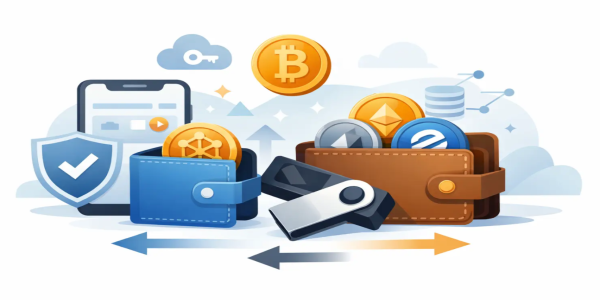
Which Crypto Wallet Suits Beginners Best?
Wondering which crypto wallet suits beginners? Compare wallet types, security, ease of use, and features to choose your first wallet with confidence.
The first wallet decision usually happens fast. You buy your first crypto, the platform asks where to store it, and suddenly one wrong click feels expensive. If you're asking which crypto wallet suits beginners, the right answer is not the most advanced wallet - it's the one you will actually understand, secure, and use with confidence.
For most new users, the best starting point is a wallet that keeps setup simple, makes sending and receiving clear, and doesn't bury basic actions under technical jargon. Beginners do not need maximum complexity on day one. They need control without confusion.
Which crypto wallet suits beginners in real life?
A beginner-friendly wallet usually gets three things right. It is easy to set up, easy to back up, and easy to recover if your device is lost. That matters more than flashy features.
There are two broad categories to know: custodial wallets and non-custodial wallets. A custodial wallet means a platform holds the keys for you. A non-custodial wallet means you hold the keys yourself, usually through a recovery phrase. If you want pure convenience, custodial wallets feel easier. If you want more independence and privacy, non-custodial wallets give you more direct control.
That trade-off is the whole game. Convenience reduces friction. Control increases responsibility. Beginners usually do best when they choose a wallet that matches how hands-on they really want to be.
Start with the question that actually matters
Most wallet comparisons start with features. Beginners should start with behavior.
If you plan to buy small amounts, learn slowly, and mostly hold, a simple mobile wallet or a clean exchange wallet can be enough at first. If you plan to move funds often, experiment with different coins, or prioritize privacy and self-custody early, a non-custodial wallet is the stronger fit.
If you already know you panic when apps get technical, do not force yourself into an advanced wallet just because experienced traders say it's better. A wallet only protects you if you can use it correctly.
The main wallet types beginners will see
Mobile wallets
For many first-time users, mobile wallets are the easiest entry point. They are familiar, quick to install, and designed for everyday access. Sending and receiving crypto from a phone feels intuitive because it mirrors how people already use banking and payment apps.
The upside is speed. The downside is that your phone becomes a security target. If your device is compromised and you have poor backup habits, recovery can become stressful fast.
Web or exchange wallets
These are often the first wallets beginners touch because they come built into trading platforms. They lower the barrier to entry and make buying, selling, and storing crypto feel immediate. That convenience is a major reason they attract new users.
But easier access comes with a trade-off. You rely more heavily on the platform's systems and policies. If your goal is fast market access with minimal friction, this route can make sense early on. If your goal is full self-custody from the start, it may feel too dependent on a third party.
Desktop wallets
Desktop wallets sit in the middle. They can offer more features and visibility than mobile wallets without feeling as limited as a web wallet. Some beginners like them because the larger screen makes addresses, balances, and transaction details easier to review.
Still, they are not always the easiest first choice. If your computer habits are messy, with lots of downloads and weak security practices, a desktop wallet may not be the safest place to begin.
Hardware wallets
These are often called the gold standard for long-term storage because they keep private keys offline. That is a real advantage, especially for larger balances.
For complete beginners, though, hardware wallets can feel like too much too soon. They cost money, add steps, and require more discipline. If you are storing a small amount while learning the basics, a hardware wallet may be more protection than you need right away. If you plan to hold serious value, it becomes much more compelling.
What makes a wallet beginner-friendly
The best beginner wallet is not just simple. It reduces the chance of mistakes.
A clear interface matters because crypto transactions do not come with easy reversals. You want a wallet that shows balances clearly, labels network options well, and makes receiving addresses easy to verify. Confusing design is not a minor issue in crypto. It can cost real money.
Backup also matters. A wallet that walks you through storing your recovery phrase properly is better for a beginner than one that assumes you already know what a seed phrase is. Education built into the experience is a real advantage.
Support for multiple assets helps too, especially if you do not want to manage separate apps for different coins. But more assets are only useful if the wallet stays easy to navigate. Too many tabs, chains, and token menus can overwhelm a new user.
Security without turning crypto into homework
Security advice in crypto often swings to extremes. Beginners hear that they must do everything perfectly or risk losing everything. That pressure pushes some people away before they even start.
A better approach is to build security in layers. Use strong login credentials. Turn on two-factor authentication when available. Store your recovery phrase offline, not in screenshots or cloud notes. Double-check wallet addresses before sending funds. These habits cover a lot of risk without making the process feel impossible.
This is also where beginners should be honest about themselves. If you are likely to lose a paper backup, forget passwords, or rush transactions, pick a wallet setup that reduces those failure points. The smartest wallet is the one that fits your habits, not someone else's ideal setup.
Which crypto wallet suits beginners who want freedom and speed?
If fast access matters most, beginners often lean toward a wallet connected to a trading platform or a lightweight mobile wallet. That setup keeps the learning curve low and gives you quick access to buying, converting, and transferring assets.
For users who care about privacy, independence, and fewer barriers between funding and trading, the best path is often a simple non-custodial wallet paired with a platform that does not bury access under unnecessary friction. That gives you more control while still keeping the experience practical. Budrigan Market speaks directly to that kind of user - someone who wants to move, trade, and manage crypto without the usual drag.
Still, speed should not override clarity. A beginner wallet should make each action obvious. If a wallet is fast but easy to misuse, it is not beginner-friendly.
Red flags beginners should avoid
A wallet can look polished and still be a bad fit. If basic actions feel unclear during setup, that confusion usually gets worse once real money is involved.
Be cautious with wallets that overload users with staking prompts, DeFi integrations, token offers, and advanced settings before they explain the basics. More features are not always more value for a first-time user. They can create distraction and increase the odds of a mistake.
Also avoid treating social hype as proof of quality. The wallet that trends online may be built for active traders, not newcomers. Your first wallet should reduce stress, not impress people on crypto forums.
A practical way to choose your first wallet
Think in stages, not permanent decisions. Your first wallet does not need to be your forever wallet.
If you are starting small and want the easiest path, begin with a user-friendly mobile or platform wallet that supports the coins you care about. Learn how to receive funds, send a test transaction, back up access, and review network details. Once that feels normal, decide whether you want to graduate to stronger self-custody or cold storage.
If you already know you value autonomy over convenience, start with a beginner-friendly non-custodial wallet and take backup seriously from the first day. Write down the recovery phrase, store it safely offline, and practice moving a small amount before doing anything larger.
That is the real beginner move - not chasing the most advanced option, but choosing a wallet you can operate safely from day one.
Crypto rewards people who stay in control. The easiest way to get there is not by doing everything at once. It is by choosing a wallet that makes your next step feel clear, not risky.
Share This Post
Wondering which crypto wallet suits beginners? Compare wallet types, security, ease of use, and features to choose your first wallet with confidence.
The first wallet decision usually happens fast. You buy your first crypto, the platform asks where to store it, and suddenly one wrong click feels expensive. If you're asking which crypto wallet suits beginners, the right answer is not the most advanced wallet - it's the one you will actually understand, secure, and use with confidence.
For most new users, the best starting point is a wallet that keeps setup simple, makes sending and receiving clear, and doesn't bury basic actions under technical jargon. Beginners do not need maximum complexity on day one. They need control without confusion.
Which crypto wallet suits beginners in real life?
A beginner-friendly wallet usually gets three things right. It is easy to set up, easy to back up, and easy to recover if your device is lost. That matters more than flashy features.
There are two broad categories to know: custodial wallets and non-custodial wallets. A custodial wallet means a platform holds the keys for you. A non-custodial wallet means you hold the keys yourself, usually through a recovery phrase. If you want pure convenience, custodial wallets feel easier. If you want more independence and privacy, non-custodial wallets give you more direct control.
That trade-off is the whole game. Convenience reduces friction. Control increases responsibility. Beginners usually do best when they choose a wallet that matches how hands-on they really want to be.
Start with the question that actually matters
Most wallet comparisons start with features. Beginners should start with behavior.
If you plan to buy small amounts, learn slowly, and mostly hold, a simple mobile wallet or a clean exchange wallet can be enough at first. If you plan to move funds often, experiment with different coins, or prioritize privacy and self-custody early, a non-custodial wallet is the stronger fit.
If you already know you panic when apps get technical, do not force yourself into an advanced wallet just because experienced traders say it's better. A wallet only protects you if you can use it correctly.
The main wallet types beginners will see
Mobile wallets
For many first-time users, mobile wallets are the easiest entry point. They are familiar, quick to install, and designed for everyday access. Sending and receiving crypto from a phone feels intuitive because it mirrors how people already use banking and payment apps.
The upside is speed. The downside is that your phone becomes a security target. If your device is compromised and you have poor backup habits, recovery can become stressful fast.
Web or exchange wallets
These are often the first wallets beginners touch because they come built into trading platforms. They lower the barrier to entry and make buying, selling, and storing crypto feel immediate. That convenience is a major reason they attract new users.
But easier access comes with a trade-off. You rely more heavily on the platform's systems and policies. If your goal is fast market access with minimal friction, this route can make sense early on. If your goal is full self-custody from the start, it may feel too dependent on a third party.
Desktop wallets
Desktop wallets sit in the middle. They can offer more features and visibility than mobile wallets without feeling as limited as a web wallet. Some beginners like them because the larger screen makes addresses, balances, and transaction details easier to review.
Still, they are not always the easiest first choice. If your computer habits are messy, with lots of downloads and weak security practices, a desktop wallet may not be the safest place to begin.
Hardware wallets
These are often called the gold standard for long-term storage because they keep private keys offline. That is a real advantage, especially for larger balances.
For complete beginners, though, hardware wallets can feel like too much too soon. They cost money, add steps, and require more discipline. If you are storing a small amount while learning the basics, a hardware wallet may be more protection than you need right away. If you plan to hold serious value, it becomes much more compelling.
What makes a wallet beginner-friendly
The best beginner wallet is not just simple. It reduces the chance of mistakes.
A clear interface matters because crypto transactions do not come with easy reversals. You want a wallet that shows balances clearly, labels network options well, and makes receiving addresses easy to verify. Confusing design is not a minor issue in crypto. It can cost real money.
Backup also matters. A wallet that walks you through storing your recovery phrase properly is better for a beginner than one that assumes you already know what a seed phrase is. Education built into the experience is a real advantage.
Support for multiple assets helps too, especially if you do not want to manage separate apps for different coins. But more assets are only useful if the wallet stays easy to navigate. Too many tabs, chains, and token menus can overwhelm a new user.
Security without turning crypto into homework
Security advice in crypto often swings to extremes. Beginners hear that they must do everything perfectly or risk losing everything. That pressure pushes some people away before they even start.
A better approach is to build security in layers. Use strong login credentials. Turn on two-factor authentication when available. Store your recovery phrase offline, not in screenshots or cloud notes. Double-check wallet addresses before sending funds. These habits cover a lot of risk without making the process feel impossible.
This is also where beginners should be honest about themselves. If you are likely to lose a paper backup, forget passwords, or rush transactions, pick a wallet setup that reduces those failure points. The smartest wallet is the one that fits your habits, not someone else's ideal setup.
Which crypto wallet suits beginners who want freedom and speed?
If fast access matters most, beginners often lean toward a wallet connected to a trading platform or a lightweight mobile wallet. That setup keeps the learning curve low and gives you quick access to buying, converting, and transferring assets.
For users who care about privacy, independence, and fewer barriers between funding and trading, the best path is often a simple non-custodial wallet paired with a platform that does not bury access under unnecessary friction. That gives you more control while still keeping the experience practical. Budrigan Market speaks directly to that kind of user - someone who wants to move, trade, and manage crypto without the usual drag.
Still, speed should not override clarity. A beginner wallet should make each action obvious. If a wallet is fast but easy to misuse, it is not beginner-friendly.
Red flags beginners should avoid
A wallet can look polished and still be a bad fit. If basic actions feel unclear during setup, that confusion usually gets worse once real money is involved.
Be cautious with wallets that overload users with staking prompts, DeFi integrations, token offers, and advanced settings before they explain the basics. More features are not always more value for a first-time user. They can create distraction and increase the odds of a mistake.
Also avoid treating social hype as proof of quality. The wallet that trends online may be built for active traders, not newcomers. Your first wallet should reduce stress, not impress people on crypto forums.
A practical way to choose your first wallet
Think in stages, not permanent decisions. Your first wallet does not need to be your forever wallet.
If you are starting small and want the easiest path, begin with a user-friendly mobile or platform wallet that supports the coins you care about. Learn how to receive funds, send a test transaction, back up access, and review network details. Once that feels normal, decide whether you want to graduate to stronger self-custody or cold storage.
If you already know you value autonomy over convenience, start with a beginner-friendly non-custodial wallet and take backup seriously from the first day. Write down the recovery phrase, store it safely offline, and practice moving a small amount before doing anything larger.
That is the real beginner move - not chasing the most advanced option, but choosing a wallet you can operate safely from day one.
Crypto rewards people who stay in control. The easiest way to get there is not by doing everything at once. It is by choosing a wallet that makes your next step feel clear, not risky.