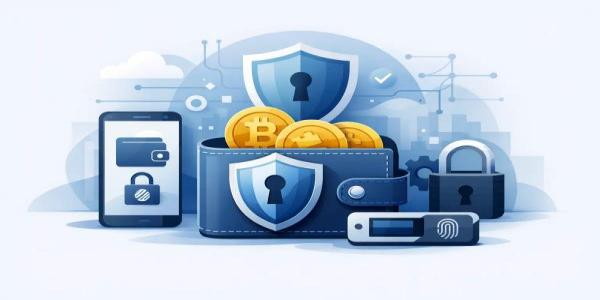
A Practical Guide to Crypto Wallet Security
A practical guide to crypto wallet security for traders who want safer access, stronger habits, and fewer costly mistakes in fast-moving markets.
The fastest way to lose crypto is not a bad trade. It’s a bad security habit. A solid guide to crypto wallet security matters because one weak password, one fake app, or one rushed click can wipe out months of gains with no reversal button.
If you trade often, move funds across wallets, use P2P, or chase price gaps across markets, security cannot be an afterthought. Speed matters, but control matters more. The goal is simple: keep access fast while making theft a lot harder.
What crypto wallet security really means
Wallet security is not just about picking a wallet brand and hoping for the best. It’s the system you build around your keys, devices, recovery methods, and daily habits. In crypto, ownership comes down to control of private keys or recovery phrases. If someone gets that access, they do not need your permission to move funds.
That is why the real risk is rarely just “hackers” in the abstract. It’s phishing pages that look real, malware on a phone you also use for everything else, screenshots of seed phrases, reused passwords, and blind trust in convenience.
A good setup should do two things at once. It should make your assets hard to steal, and it should make your own access reliable when you need it most.
A guide to crypto wallet security starts with wallet choice
Not every wallet should do the same job. The right choice depends on how often you move funds and how much you are protecting.
Hot wallets stay connected to the internet. They are better for active trading, fast transfers, and frequent swaps. They are convenient, but convenience always increases exposure. If you keep too much in a hot wallet, you are accepting more risk than many traders realize.
Cold wallets store keys offline. They are slower to use, but that friction is a feature. For longer-term holdings or larger balances, cold storage gives you a stronger line of defense against phishing and device compromise.
For most users, the smart move is not choosing one or the other. It’s splitting roles. Keep trading funds in a hot wallet or exchange wallet and move reserves to cold storage. Think of it like cash in your pocket versus cash in a safe.
Use separate wallets for separate purposes
One wallet for everything is easy, but it creates a single point of failure. A better approach is to segment your assets. Use one wallet for active trading, another for longer-term storage, and a separate one for experimental DeFi, NFT activity, or unknown token interactions.
That way, if one wallet is exposed through a malicious contract or fake site, the rest of your funds are not automatically in play.
Protect your seed phrase like it controls your future
Because it does.
Your recovery phrase is the master key to your wallet. Anyone who has it can restore your wallet elsewhere and drain it. No support team, no exchange, no blockchain can reverse that. If your phrase is exposed, the threat is not theoretical.
Never store your seed phrase in cloud notes, email drafts, messaging apps, or screenshots. Those options feel convenient right up until your phone is compromised or your account is breached. Paper storage is better than digital shortcuts, but paper can still burn, fade, or get thrown away.
The best approach depends on your risk tolerance. Some traders use a written copy in a secure physical location. Others use metal backup tools for durability. What matters is that your phrase stays offline, private, and recoverable by you.
Do not overshare your security setup
Privacy-conscious traders often focus on transactional privacy but forget operational privacy. If people know you hold crypto, know where you trade, or know you use self-custody, you are already sharing more than you think.
Do not tell friends, groups, or online followers where your backup is stored, what wallet you use for your main balance, or how much you hold. The less attention you attract, the fewer attack angles you create.
Your devices are part of your wallet security
A secure wallet on an infected phone is still a weak setup.
If possible, use a dedicated device for crypto activity. That may sound extreme, but for active traders it is one of the cleanest upgrades you can make. A phone or laptop used only for trading, wallet access, and account management has a much smaller attack surface than one loaded with random apps, browser extensions, and public Wi-Fi history.
Keep your operating system updated. Remove apps you do not use. Avoid sideloaded software. Be cautious with browser extensions, especially wallet-related ones. Fake extensions and clipboard malware are common ways users lose funds without realizing how it happened.
Public Wi-Fi is another weak point. If you are signing transactions, accessing account dashboards, or handling wallet recovery, do it on a trusted connection.
Passwords and 2FA still matter
Crypto users sometimes overfocus on wallets and underfocus on account security. If you use a trading platform, an email account, or any service connected to your funds, weak credentials are still one of the easiest ways in.
Use unique passwords for every crypto-related account. Password reuse turns one leak into a chain reaction. A password manager can help, especially if you manage multiple wallets, exchange logins, and backup accounts.
For two-factor authentication, app-based 2FA is usually stronger than SMS. Text-based codes are better than nothing, but they are more vulnerable to SIM swap attacks. If your email, exchange account, and reset methods are all tied together carelessly, one successful account takeover can cascade fast.
The biggest threat is often phishing
Most crypto theft is not cinematic. It is ordinary deception done well.
You get a message about a wallet update. A fake support account asks you to verify your seed phrase. A sponsored search result leads to a cloned login page. A browser pop-up says your wallet is out of sync. These attacks work because they catch people in motion.
Slow down before every high-stakes action. Double-check URLs. Do not trust links in direct messages. Do not connect your wallet to sites you do not understand. If a platform or wallet ever asks for your seed phrase outside of recovery, stop immediately.
Watch what you sign
Many users now understand not to share a seed phrase. Fewer understand the danger of signing malicious transactions or approvals. Wallet drainers often rely on users approving access they never meant to grant.
Read permission prompts carefully. If a token approval asks for unlimited access, ask whether that makes sense for what you are doing. If you interact with smart contracts regularly, review and revoke old permissions from time to time using tools you trust.
Build a security routine that matches your trading style
The best guide to crypto wallet security is not about paranoia. It is about building habits that fit the way you actually move.
If you trade daily, keep only working capital in your active wallet. If you hold for months, prioritize cold storage and backup reliability. If you use P2P or move across chains often, verify addresses carefully and send test transactions when the amount is meaningful.
Security always has trade-offs. More protection can mean more steps, more devices, and slower access. But less protection can mean one mistake costs everything. The right setup is the one you will actually maintain.
For traders who want fast access without unnecessary friction, platform choice matters too. A cleaner interface, fewer confusing workflows, and straightforward wallet tools can reduce user error. That is one reason many privacy-first users look for options like Budrigan Market at https://budriganmarket.com, where access and usability are built for speed. Even then, your own habits remain the front line.
Red flags that mean your wallet setup needs work
If your seed phrase lives in your phone gallery, your setup needs work. If your exchange password is reused elsewhere, your setup needs work. If you click wallet links from social media replies, keep all your funds in one connected wallet, or have never tested your backup process, your setup needs work.
The good news is that most of these fixes are simple. Create separation between storage and trading. Move sensitive backups offline. Upgrade your passwords. Turn on stronger 2FA. Start treating transaction signing like real money, because it is.
Crypto gives you freedom. That freedom is the point. But freedom without security is just exposure dressed up as convenience.
Take one hour today and tighten your setup. Future you will be glad you did.
Share This Post
Recent Posts
-

What Makes Peer Payments Private and Secure?
23 Sep 2026
-

Decentralized Exchange Order Book Guide
23 Sep 2026
-

Best Order Types for Beginners to Trade Smart
23 Sep 2026
-

Peer Payment Dispute Resolution Guide for Crypto
23 Sep 2026
-
Stablecoin Conversion Steps for Faster Trading
23 Sep 2026