Crypto Conversion Fees Explained Clearly
Crypto conversion fees can quietly cut into every trade. Learn how they work, what affects them, and how to keep more of your crypto.
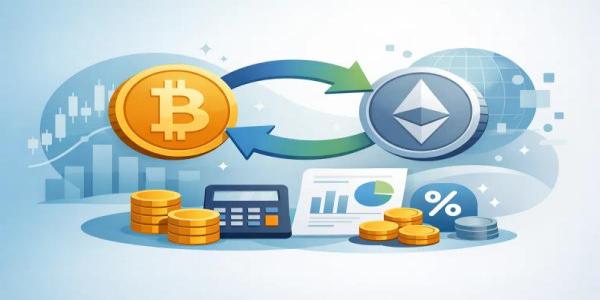
That quick swap from BTC to USDT can cost more than it looks. Crypto conversion fees often show up as a spread, a flat charge, or a rate that moves just enough to shave value off your transaction. If you trade often, move between coins, or cash out to USD, those small costs stop being small fast.
For traders who want speed and freedom, conversion costs matter because they affect every decision after entry. A market can move in your favor and you can still give back part of the win on the way in or out. That is why understanding the fee behind the button matters just as much as picking the right asset.
What crypto conversion fees actually include
A lot of traders hear the word fee and think there is one clear charge. In practice, crypto conversion fees can come from more than one place. Sometimes the platform shows a visible commission. Sometimes the real cost is tucked into the exchange rate. Sometimes it is both.
If you convert one crypto into another, the platform may apply a direct conversion charge. On top of that, the quoted rate may include a spread, which is the gap between the market price and the rate you actually receive. That spread is easy to ignore because it does not always look like a line-item fee, but it still affects your outcome.
The same goes for crypto-to-USD conversions. You may see one number before confirming the trade, but that number can reflect liquidity, market volatility, payment rails, and the platform’s own pricing model. The result is simple: the cost of converting is not always just what is labeled fee.
Why crypto conversion fees vary so much
Not all conversions are equal. Swapping BTC to ETH is different from selling a low-liquidity token into USD. The fee changes because the risk and execution path change.
Liquidity is one of the biggest drivers. High-volume pairs usually have tighter pricing because there are more buyers and sellers. Lower-volume pairs can carry wider spreads, especially when the market is moving fast. If you are converting obscure coins or acting during a sharp market swing, your cost may rise even if the posted commission stays the same.
Speed also changes the math. Instant conversion is convenient, but convenience usually has a price. When a platform guarantees a quick quote, it is managing execution risk for you. That can lead to a higher spread than what an advanced trader might get by placing limit orders on an active market.
Payment method can matter too. If your conversion touches fiat, added processing costs may show up in the final rate. Card-based purchases, bank-linked funding, and third-party payment channels do not cost platforms the same amount to process, so they do not cost users the same amount either.
The hidden difference between a fee and a bad rate
This is where many users lose money without realizing it. A platform can advertise low fees and still give you a weak conversion rate. Technically, that is not dishonest if the pricing is disclosed. But from your side, the result is the same - you receive less crypto or less cash than expected.
A clean way to judge a conversion is to compare the quoted amount you will receive against the live market value at that moment. If the gap is meaningful, that difference is part of your real cost. Whether it appears as commission or spread does not matter to your balance.
This matters even more for beginners because convenience is attractive. Fast swaps feel simple. Simplicity is good, but not when it quietly turns every transaction into an expensive habit.
When paying higher conversion fees can still make sense
Lower is not always better. There are times when paying more is worth it.
If the market is moving hard and you need to exit volatility fast, a slightly higher conversion cost may be acceptable. The same is true when you want direct access to a wide range of assets without getting stuck in long verification queues or restricted workflows. Control, speed, and access have value. Traders who understand that trade-off can make smarter decisions than traders who only chase the lowest posted number.
The point is not to avoid fees at all costs. The point is to know what you are paying for. If you are paying for immediate execution, broad coin access, or fewer barriers between decision and trade, that may be a rational choice. Problems start when users pay premium pricing without realizing it.
How to keep crypto conversion fees under control
The easiest win is to stop treating conversion as an afterthought. Before you confirm a trade, look at the amount you are sending, the amount you are receiving, and the market rate behind it. A few seconds of attention can protect a lot of value over time.
It also helps to stick with liquid pairs when possible. If your goal is to move from one niche asset to another, converting through a major intermediary asset can sometimes produce a better outcome than forcing a direct low-volume swap. It depends on the pricing structure, but it is worth checking.
Timing matters. During calm periods, spreads are often tighter. During sudden pumps, crashes, or news-driven spikes, conversion costs can widen. If your move is not urgent, waiting for the market to settle may save money.
Trade size matters too. Very small conversions can feel harmless, but fixed fees or rounded spreads can hit them hard. Very large conversions may trigger more slippage if liquidity is thin. There is no perfect universal size. The best move is to review the final quote instead of assuming the rate scales cleanly.
Crypto conversion fees for active traders vs casual users
Casual users usually care about convenience first. They want to fund fast, swap fast, and move on. For them, a slightly higher fee may be acceptable if the process is smooth and the platform supports the payment methods and assets they need.
Active traders should be more demanding. If you convert regularly to capture opportunities, rebalance positions, or move in and out of stablecoins, fees become part of your trading strategy. A difference of one percent on repeated conversions can seriously reduce your edge.
That is why smart traders look at total cost, not just headline cost. They want clear pricing, strong execution, and enough flexibility to act when timing matters. On a platform built for fast market access, that balance can be more valuable than the compliance-heavy friction common on traditional exchanges.
What to check before you convert
Before any swap, ask a few direct questions. Are you seeing the final amount you will receive? Is the rate locked or can it move before completion? Is there a separate network fee involved after the conversion? Are you converting because it supports your strategy, or just because it feels convenient in the moment?
Those questions are simple, but they change behavior. They help you move from reactive clicks to deliberate trading. That is how you protect upside.
For privacy-focused users, speed-focused traders, and anyone tired of being slowed down by gatekeeping, conversion should feel clear and immediate, not confusing. A platform like Budrigan Market appeals to that mindset because access matters. But access works best when users understand the real economics of every move they make.
The smarter way to think about conversion costs
Crypto conversion fees are not just an annoying expense. They are part of your execution quality. They shape how much capital reaches the next trade, how efficiently you rotate assets, and how much profit you actually keep.
If you want more freedom in the market, start by getting sharper about friction. Watch the rate, not just the label. Respect the spread, not just the commission. And every time you convert, make sure the speed and convenience you are getting are worth the price you are paying.
The traders who keep more are usually not the loudest. They are the ones who notice the small leaks early and stop them before they become expensive habits.
Share This Post
Recent Posts
-

What Makes Peer Payments Private and Secure?
23 Sep 2026
-
Decentralized Exchange Order Book Guide
23 Sep 2026
-

Best Order Types for Beginners to Trade Smart
23 Sep 2026
-

Peer Payment Dispute Resolution Guide for Crypto
23 Sep 2026
-
Stablecoin Conversion Steps for Faster Trading
23 Sep 2026