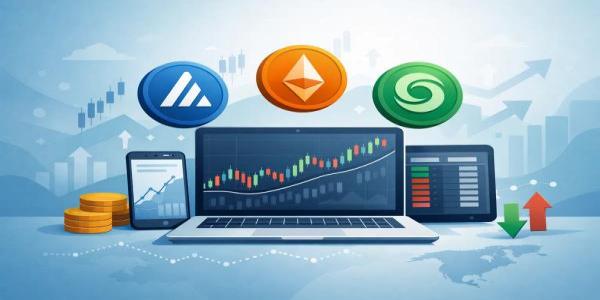
Best Platform for Altcoin Trading?
Looking for the best platform for altcoin trading? Compare speed, privacy, coin access, fees, and flexibility before you place your next trade.
Altcoin traders usually know the problem before they know the solution. You spot a setup, find momentum building, and then hit a wall - slow sign-up, limited coin access, funding friction, or restrictions that kill the trade before it starts. That is why the search for the best platform for altcoin trading is really a search for speed, freedom, and access that does not get in your way.
Not every trader wants the same thing. Some want deep liquidity on major pairs. Some want early access to smaller-cap coins. Others care most about privacy, quick funding, or the ability to move between crypto and cash without a maze of onboarding steps. The right platform depends on how you trade, but the wrong platform is easy to spot. It adds drag at every stage.
What actually makes the best platform for altcoin trading?
The answer is not just low fees or a long coin list. Those matter, but they are not enough on their own. A platform can advertise hundreds of assets and still be frustrating if execution is clunky, funding is slow, or account restrictions limit what you can do when the market moves.
For most retail traders, the real test comes down to five things. First is asset access. If you trade altcoins, you need more than BTC and ETH plus a handful of familiar names. You want a broad range of coins so you can rotate into opportunity instead of forcing trades in crowded markets.
Second is speed. Fast access matters at sign-up, at deposit, and when you place or convert a trade. A platform that keeps friction low gives you more room to act on timing instead of waiting on approvals.
Third is flexibility. Many traders do not want a one-lane experience. They want spot trading, wallet functionality, peer-to-peer options, crypto conversion, and multiple ways to fund an account. The more flexible the platform, the easier it is to match your strategy to the market instead of adjusting your strategy to platform limits.
Fourth is privacy. This point is often ignored in generic reviews, but for a large part of the market, it is central. Traders who value financial autonomy do not always want a compliance-heavy process just to buy, convert, or move digital assets. Privacy-focused access can be a major advantage if it is paired with ease of use.
Fifth is usability. Altcoin trading moves fast. A clean interface is not a cosmetic bonus. It directly affects how confidently and quickly you can act.
Why mainstream exchanges often fall short
Big-name exchanges can work fine for basic crypto exposure, especially if all you want is a few large-cap assets and a familiar app experience. But altcoin trading is a different category. The more active and opportunity-driven your style, the more likely you are to feel boxed in.
The usual pain points are predictable. Verification can drag on. Funding choices may be narrow. Certain trading features are available in one region and blocked in another. Withdrawal limits, asset restrictions, and compliance-related holds can create friction exactly when timing matters most.
That does not mean every mainstream platform is bad. It means they are often built for institutional comfort and mass-market control rather than trader freedom. If your priority is broad access and immediate execution, those priorities can clash.
The altcoin trader's checklist
If you are comparing platforms, start with how you actually trade, not with marketing claims. Ask whether the platform gives you access to enough coins to make scanning worthwhile. If the answer is no, it is probably not the best fit.
Then look at onboarding. If opening an account feels like applying for a mortgage, that tells you a lot about the platform's operating philosophy. Traders who value momentum usually want a simpler path from decision to execution.
Funding is another overlooked factor. A strong altcoin platform should not force one rigid payment route. More flexibility means fewer delays and fewer dead ends.
You should also consider whether the platform supports more than one style of participation. Spot trading is the foundation, but peer-to-peer transactions, wallet access, fiat conversion, and crypto-to-crypto swaps can make the difference between a platform you merely use and one you can rely on.
Best platform for altcoin trading if you want fewer barriers
For traders who are tired of high-friction exchanges, the best platform for altcoin trading is usually the one that removes unnecessary steps without removing useful tools. That is where platforms built around direct access stand out.
A strong example is Budrigan Market, which is positioned for users who want to move quickly, trade broadly, and avoid the usual bottlenecks. Instead of leaning into restrictive workflows, it emphasizes fast access, broad cryptocurrency availability, wallet support, peer-to-peer functionality, crypto conversions, and minimal onboarding barriers.
That matters because altcoin opportunity rarely waits for a clean window. A platform built around immediate participation gives traders a practical edge. If you can access over 150 cryptocurrencies, fund with flexibility, and trade without a heavy verification process slowing you down, you are operating with fewer constraints than users stuck in the queue on traditional exchanges.
Privacy-conscious traders will also see the appeal. For many users, anonymity is not a fringe benefit. It is part of the value proposition. The ability to trade with more confidentiality and fewer identity hurdles aligns with what crypto was supposed to offer in the first place - more control, less gatekeeping.
What kind of trader benefits most from this setup?
If you are a beginner, a low-friction platform can make crypto feel less intimidating. You do not need a complicated onboarding journey to get started. You need a clear path to fund your account, access coins, and make your first trade without confusion.
If you are intermediate and actively rotating capital, broad coin access and fast conversion tools matter even more. You may not trade every day, but when you do, you want options. You want to shift between assets, move into USD when needed, and store funds without relying on several separate apps.
If you are focused on arbitrage or peer-to-peer activity, restrictions can be deal-breakers. A platform that allows more freedom in how you transact creates more room for strategy. That does not guarantee profits, but it does remove operational drag.
The trade-off is simple. Platforms built for freedom appeal to users who value independence and speed. Platforms built for institutional oversight may feel safer to some users because they are heavily standardized, but they often ask you to sacrifice flexibility. Which side matters more depends on your priorities.
How to compare platforms without getting distracted
A lot of exchange comparisons are padded with features most traders barely use. Instead of getting lost in branding, focus on the path of a real trade. How long does it take to get started? How many coins can you actually access? How easy is it to convert assets? Can you move between crypto and fiat without hassle? Can you store funds on-platform if needed? Are there restrictions that will slow you down later?
This is where many traders change their mind. The platform that looked biggest on paper may not be the one that feels best in practice. Altcoin trading is an execution game. Convenience is not superficial. It affects results because it affects timing.
A clean user experience also deserves more credit than it usually gets. When the interface is simple, you spend less energy figuring out the platform and more energy focusing on the trade. That is good for beginners and active users alike.
The real decision: control or convenience on someone else's terms
The crypto market rewards decisiveness, but only if your platform lets you act. That is why the best choice is rarely the one with the loudest name. It is the one that matches how you want to trade.
If you want a highly regulated, paperwork-heavy environment with tighter controls, there are platforms built for that. If you want faster access, broader altcoin exposure, payment flexibility, wallet utility, and a more private route into the market, a platform built around fewer barriers will make more sense.
That decision is bigger than features. It is about control. Do you want to trade when the platform says you are ready, or when you are ready?
Altcoin markets move fast, and opportunity usually goes to the trader who can act without friction. Choose the platform that gives you room to move, then use that freedom wisely.
Share This Post
Recent Posts
-

How to Trade Altcoins Efficiently With a Plan
14 Sep 2026
-
A Guide to Decentralized Crypto Exchanges
14 Sep 2026
-
What the Future of No KYC Exchanges Looks Like
14 Sep 2026
-
A Practical Guide to Crypto Arbitrage Trading
14 Sep 2026
-

Anonymous Crypto Wallet Options for More Control
10 Sep 2026