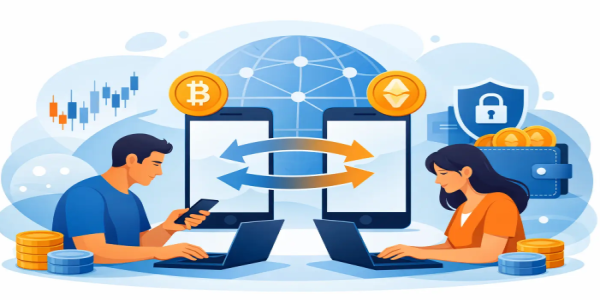
Peer to Peer Crypto Trading Platform Guide
See what makes a peer to peer crypto trading platform fast, private, and flexible - and how to choose one that fits your trading style.
A slow signup can kill a good trade. If you have ever watched a price move while an exchange asks for more documents, more waiting, and more limits, you already understand why a peer to peer crypto trading platform matters. It puts speed, control, and payment flexibility back in the hands of the trader.
For many users, that is the real shift. Not just buying or selling crypto, but doing it without the usual maze of restrictions. A strong P2P platform gives you direct access to other users, faster funding options, and a simpler path from intent to execution. If your goal is privacy, opportunity, or just less friction, that difference is hard to ignore.
What a peer to peer crypto trading platform actually does
At its core, a peer to peer crypto trading platform connects buyers and sellers directly. Instead of relying only on a centralized order flow, users can post offers, choose payment methods, set rates, and complete trades with other participants on the platform. The exchange still provides the marketplace, wallet support, and transaction framework, but the trade itself happens between peers.
That model changes the experience in a few important ways. First, it opens up payment flexibility. Bank transfers, digital wallets, card-based funding, and local payment methods often become part of the process. Second, it creates more room for traders who want to move quickly without going through a long institutional onboarding sequence. Third, it gives users more control over pricing and trade terms.
This is why P2P trading attracts more than one type of user. Beginners like the simplicity of direct buying. Privacy-focused users like having fewer barriers. Active traders like the ability to spot pricing gaps and arbitrage opportunities. The same platform can serve all three, but only if it is designed for speed and access rather than red tape.
Why traders are moving away from traditional exchange friction
Mainstream exchanges have scale, but they also tend to come with delays, restrictions, and rigid workflows. That setup may work for institutions or long-term account holders who do not mind waiting. It is a poor fit for traders who want immediate access.
The problem is not just verification. It is the full chain of friction that follows. Deposit limits, region-based restrictions, blocked payment methods, narrow coin access, and compliance-heavy account reviews can all get in the way of a simple transaction. When markets move fast, that kind of delay has a real cost.
A peer to peer crypto trading platform offers a different path. It is built around access first. You get closer to the market, closer to counterparties, and closer to execution. That does not mean every P2P experience is identical. Some platforms are clunky, underpowered, or too thin on liquidity. But when the model is done well, it feels like trading without unnecessary gates.
The features that separate a good platform from a weak one
Speed gets attention first, but it should not be the only thing you look at. The best platforms combine fast access with enough structure to make trading feel clear and reliable.
A useful P2P exchange starts with straightforward account access and a clean interface. If placing an order, funding a wallet, or converting between assets takes too many clicks, the platform is already working against you. Simplicity matters because most users are not looking for a lecture. They want to move funds, compare offers, and trade.
Payment choice is another major factor. A platform becomes more practical when it supports multiple ways to fund or settle trades. This matters for convenience, but it also matters for reach. More payment flexibility usually means more active participants and more trade opportunities.
Asset coverage matters too. A platform with a wide range of coins gives users more room to act on market opportunities instead of being pushed into the same limited pairings. That is especially useful for traders who move between major assets and emerging tokens, or who want crypto-to-crypto and crypto-to-USD conversion in one place.
Then there is privacy. For a lot of users, this is not a side benefit. It is the reason they started looking beyond traditional exchanges in the first place. A platform that emphasizes confidential trading, minimal onboarding barriers, and unrestricted access speaks directly to that demand.
Still, there is a trade-off worth being honest about. More freedom puts more responsibility on the user. You need to pay attention to pricing, counterparties, and transaction details. A good platform makes that easier, but it does not remove the need for judgment.
How a peer to peer crypto trading platform supports real trading freedom
Trading freedom is a phrase that gets used a lot, but it only means something when it shows up in the actual experience.
It means you can fund your account without getting trapped in a long approval cycle. It means you can move between crypto assets or convert into USD without switching between multiple services. It means you can act on a price difference while it still exists.
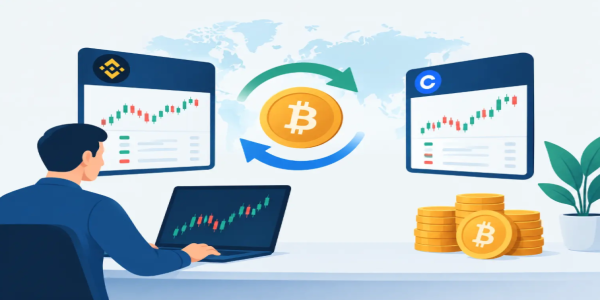
This is also where P2P becomes attractive for arbitrage-minded traders. When users can access different payment channels, different counterparties, and a broad set of assets, they can respond to inefficiencies faster. That does not guarantee profit. Spread quality, timing, and platform activity all matter. But it creates the kind of environment where opportunity is possible instead of blocked.
For privacy-conscious users, freedom looks slightly different. It is less about exploiting price gaps and more about avoiding unnecessary exposure. They want to transact, store assets, and convert value without handing over more personal information than the transaction requires. A platform built around anonymity and low-friction access speaks directly to that need.
Who this model works best for
A peer to peer crypto trading platform is not only for advanced traders. It fits a surprisingly wide range of users.
Newer users often benefit because the path is simpler. They can choose an offer, use a familiar payment method, and get access to crypto without navigating a large institutional interface. They still need to understand the basics of price and risk, but the process itself can feel less intimidating.
Intermediate users usually care more about flexibility. They want more coin options, more control over how they fund trades, and fewer restrictions on when and how they can move. For this group, P2P is often the point where crypto starts feeling practical.
Then there are users who simply do not want the traditional exchange experience at all. They want privacy, fast access, wallet functionality, and room to trade without being slowed down by compliance-heavy workflows. For them, the appeal is direct. Less waiting. Less friction. More control.
What to look for before you choose a platform
Not every platform that says it offers P2P trading is worth your time. Look at how quickly you can get started, how clear the trading flow is, and whether the asset selection matches how you actually trade.
Check whether the platform supports spot trading alongside peer-to-peer transactions. That combination makes it easier to shift strategies without moving funds elsewhere. Wallet access also matters. If you can store, convert, and trade within the same ecosystem, the experience gets much smoother.
You should also look closely at limits and restrictions. Some platforms advertise flexibility but still box users in with narrow transaction caps or limited payment support. Others are built for openness from the start. That difference will show up quickly once you begin trading.
If your priority is speed, privacy, and broad market access, a platform like Budrigan Market is positioned around exactly that promise. It focuses on fast entry, anonymous transactions, flexible funding, and access to a wide range of digital assets without the usual delays that push traders to the sidelines.
Why this space keeps growing
The demand behind P2P crypto is not random. It comes from a basic user expectation that keeps getting stronger: if someone wants to access a digital market, they should be able to do it without unnecessary friction.
That expectation is not going away. As more traders look for alternatives to slow, heavily gated platforms, peer-to-peer exchanges will keep gaining attention. The winners will be the platforms that make access simple while still giving users the tools to move with confidence.
If you are tired of waiting for permission to trade, pay attention to how the platform is built. The right one does not just give you another place to buy crypto. It gives you a faster route to act when the market opens up.
Share This Post
Recent Posts
-
How to Trade Altcoins Efficiently With a Plan
14 Sep 2026
-
A Guide to Decentralized Crypto Exchanges
14 Sep 2026
-
What the Future of No KYC Exchanges Looks Like
14 Sep 2026
-
A Practical Guide to Crypto Arbitrage Trading
14 Sep 2026
-

Anonymous Crypto Wallet Options for More Control
10 Sep 2026