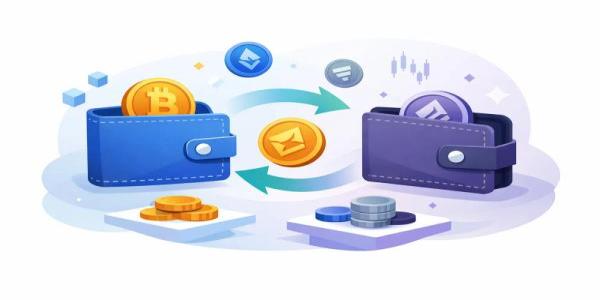
How Crypto Wallet Swaps Work
Learn how crypto wallet swaps work, what happens behind the scenes, which fees matter, and how to trade faster with fewer exchange barriers.
Most traders first notice wallet swaps at the exact moment speed matters. You hold one coin, the market moves, and you want another asset now - not after opening three apps, moving funds to an exchange, waiting on confirmations, and dealing with extra friction. That is why understanding how crypto wallet swaps work matters. A good swap flow turns a clunky multi-step trade into a direct conversion inside the wallet or connected trading interface.
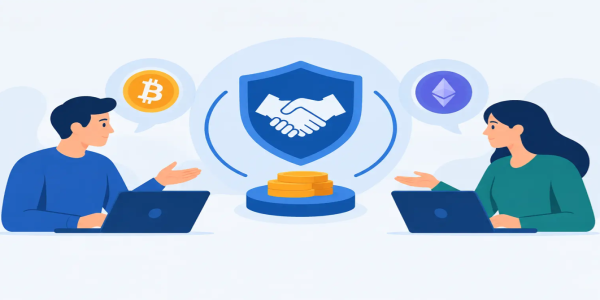
At a basic level, a wallet swap lets you exchange one cryptocurrency for another without manually placing a traditional order on a standard exchange screen. You choose the asset you want to sell, choose the asset you want to receive, enter the amount, review the rate and fees, then approve the transaction. Behind that simple front end, though, several moving parts determine the price you get, the speed of execution, and the risks you take.
How crypto wallet swaps work behind the screen
A wallet swap is not magic. It is routing.
When you request a swap, the wallet or trading platform checks where liquidity is available for that pair. Sometimes it connects to a decentralized exchange pool. Sometimes it routes through an internal liquidity source, a market maker, an aggregator, or even multiple venues at once to find the best available rate. The system then calculates how much of Asset B you should receive for your Asset A after network costs, spread, platform fees, and possible slippage.
If you accept the quote, the transaction is prepared for signing. Your wallet signs with your private key, which proves you authorize the movement of funds. Once signed and broadcast to the relevant blockchain, validators or miners confirm the transaction. After confirmation, the original asset leaves your wallet and the new asset arrives.
That sounds simple because the user experience is supposed to feel simple. The complexity sits in the routing, pricing, settlement, and timing. For traders who value speed and independence, that simplification is the point.
The real flow of a wallet swap
The easiest way to understand wallet swaps is to break the process into the steps that actually happen.
First, the wallet checks whether the token pair can be swapped directly. If there is no direct market, it may route through an intermediate asset. For example, a swap from one smaller token to another might pass through USDT, ETH, or BTC to complete the conversion.
Second, the platform estimates the exchange rate. That estimate is based on current liquidity, market depth, and routing options. In fast markets, this quote can change quickly.
Third, you review the transaction. This is where many users move too fast. The preview usually shows the estimated amount received, gas or network cost, service fee if any, and slippage tolerance. If the market moves beyond the allowed slippage, the trade may fail or the amount received may change depending on the swap settings.
Fourth, you approve the swap. On some networks, you may need a separate token approval before the actual swap can occur. This is common with token standards that require permission for a smart contract to spend funds on your behalf.
Fifth, the swap settles on-chain or through the platform’s internal execution path. Once complete, the received asset appears in your wallet balance, though in some cases you may need to refresh or manually add the token view.
Why wallet swaps feel faster than traditional exchange trading
The appeal is obvious. Wallet swaps reduce steps between intent and execution.
A traditional exchange workflow often means depositing crypto, waiting for account crediting, placing an order, managing the spread between bid and ask, then withdrawing to self-custody if you want control of your funds. A wallet swap compresses that process. For users who want immediate access to opportunities, privacy, and fewer onboarding hurdles, this model is attractive.
That does not mean swaps are always cheaper or better. It depends on the pair, the network, and the size of the trade. For large orders, a traditional order book can sometimes provide better pricing. For smaller or urgent conversions, wallet swaps often win on convenience.
Fees that matter more than most users realize
The quoted rate is only part of the story. The actual cost of a wallet swap usually includes three layers.
The first is the network fee. This pays for blockchain processing and can vary sharply depending on congestion. On some chains it is negligible. On others it can make small swaps uneconomical.
The second is the spread. Even if a platform says the process is easy, the execution price may include a margin between the market rate and the offered rate. That spread is often the hidden cost users miss.
The third is the service or routing fee. Some wallets or swap providers charge a visible fee for aggregation or execution. Others build most of their compensation into the rate.
The smart move is not to chase the lowest headline fee. It is to compare total received value after every cost is included.
Slippage is where expectations and reality collide
If you have ever approved a swap and received less than expected, slippage was probably involved.
Slippage happens when the market moves or liquidity shifts between the moment you get a quote and the moment the trade executes. Thin markets, volatile tokens, and larger order sizes all increase slippage risk. A low slippage setting can protect your price, but it can also cause failed transactions. A high setting makes execution more likely, but you may get a worse fill.
This is one of the biggest trade-offs in wallet swaps. Speed and flexibility are powerful, but they do not remove market reality. If you are swapping into a low-liquidity token during a sharp move, the quote on the screen may not be the final result.
Security matters because swaps move fast
The freedom of wallet swaps comes with responsibility. You are often interacting directly with smart contracts, routing engines, or platform execution systems. If you approve the wrong token, send funds on the wrong network, or interact with a bad contract, recovery may be impossible.
That is why smart traders slow down at the approval screen. Check the token symbol, the network, the wallet address, the quoted amount, and the final amount expected. Convenience should never mean carelessness.
It also helps to understand custody. Some wallet swaps are fully non-custodial, meaning you keep control of your assets until execution. Others may involve temporary custody or internal platform conversion. Neither model is automatically better in every situation. Non-custodial swaps offer direct control. Platform-based swaps can offer smoother execution, simpler interfaces, and broader access for users who want fewer steps.
When a wallet swap makes sense
Wallet swaps are strongest when you want quick conversion, direct access to new positions, or a cleaner path between assets without the overhead of traditional exchange workflows. They are especially useful for active traders moving between market opportunities, privacy-conscious users who want less friction, and newcomers who do not want to learn a full order book before making a simple trade.
They are less ideal when you are executing very large trades into shallow markets, when gas fees are unusually high, or when precision pricing matters more than convenience. In those cases, a more manual trading route may be worth the extra effort.
How to use crypto wallet swaps more effectively
The best users treat swaps as a tool, not a shortcut for every situation. Check liquidity before swapping into obscure assets. Watch network activity if fees are volatile. Start with a smaller amount if you are using a new route or token. And always compare the estimated received amount against your actual goal, not just the headline rate.
If your priority is fast access, broad asset choice, and fewer barriers between funding and trading, a platform built around friction-light execution can make a real difference. That is part of the appeal behind services like Budrigan Market, where users are looking for speed, control, and more direct paths into crypto activity without the usual delays.
The bigger point about how crypto wallet swaps work
Wallet swaps are really about reducing distance between decision and action. You are not just exchanging Coin A for Coin B. You are choosing a trading experience: less waiting, less platform friction, and more control over how you move through the market.
That freedom is valuable, but only when paired with attention. The traders who get the most from wallet swaps are not the ones who click fastest. They are the ones who understand price impact, fee layers, network conditions, and execution risk well enough to move fast without moving blindly.
The next time the market opens a window, you do not need a more complicated process. You need a clearer one.
Share This Post
Recent Posts
-
What Makes Peer Payments Private and Secure?
23 Sep 2026
-
Decentralized Exchange Order Book Guide
23 Sep 2026
-
Best Order Types for Beginners to Trade Smart
23 Sep 2026
-
Peer Payment Dispute Resolution Guide for Crypto
23 Sep 2026
-
Stablecoin Conversion Steps for Faster Trading
23 Sep 2026