How P2P Crypto Deals Settle Fast
Learn how p2p crypto deals settle, what actually happens between payment and release, and how to avoid delays, disputes, and failed trades.
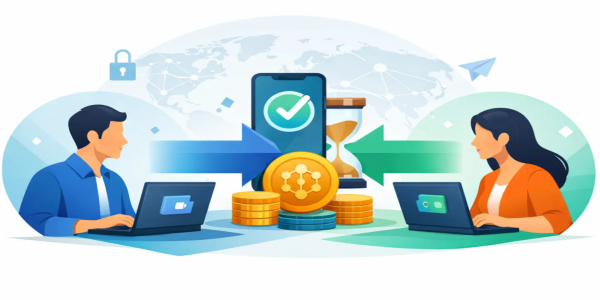
A P2P trade can look instant from the outside, but the real action happens in the handoff between payment and crypto release. If you want to understand how p2p crypto deals settle, you need to look at the mechanics that sit between buyer intent, seller confirmation, and final asset delivery.
That matters because settlement is where trust is either created or destroyed. In a good P2P market, the process feels quick, clear, and controlled. In a bad one, funds hang in limbo, proof gets disputed, and a simple trade turns into a waiting game. For traders who want speed without giving up control, settlement is the part worth understanding.
How P2P crypto deals settle in practice
At the simplest level, a P2P crypto trade settles when two things happen: the buyer completes the agreed payment off-chain or through a chosen payment method, and the seller releases the crypto held for the trade. That sounds basic, but the order matters.
On most platforms, the seller's crypto is locked in escrow when the order starts. This protects the buyer from paying first and then hoping the seller sends the coins later. Once the buyer marks the payment as sent and provides whatever proof the platform requires, the seller checks that the money arrived correctly. If everything matches the trade terms, the seller confirms receipt and the crypto is released from escrow to the buyer's wallet balance.
So settlement is not just a blockchain transfer. It is a coordinated close between escrow, payment confirmation, and platform rules. Depending on the payment rail, this can take seconds or much longer.
The three layers behind settlement
Most traders think settlement is one event. It is really three separate layers that have to line up.
The first layer is trade matching. A buyer and seller agree on price, amount, and payment method. This is the commercial agreement.
The second layer is payment completion. The buyer uses bank transfer, cash app, card, wallet, or another supported channel to send fiat or value to the seller. This step usually happens outside the blockchain.
The third layer is crypto release. Once the seller verifies that payment is real and final enough for their risk tolerance, the crypto moves from escrow to the buyer.
If any of those layers break, settlement slows down. A trade can be matched but unpaid. It can be paid but not yet verified. It can be verified by one side and disputed by the other. Fast settlement depends on reducing friction at every layer.
Why some P2P deals settle in minutes and others do not
Payment method is the biggest variable. A transfer between two users on the same instant-pay app may settle almost immediately from the seller's point of view. A bank transfer can appear quickly but still carry reversal risk depending on the bank, region, and timing. Card-funded payments may be fast, but they also make some sellers more cautious because chargebacks exist.
Trade size changes behavior too. A seller might release a small transaction as soon as the notification lands, while a larger trade gets extra checks. The same applies to first-time counterparties. If the buyer is new, incomplete with proof, or inconsistent in communication, a cautious seller may wait longer.
Platform design also matters. Good P2P systems make the path obvious: lock the crypto, set the timer, standardize proof, and give both sides a clean dispute route if something goes wrong. That lowers hesitation and helps honest trades close faster.
Escrow is what makes settlement workable
Without escrow, P2P trading would rely too heavily on blind trust. The buyer would worry that payment gets sent and nothing comes back. The seller would worry that crypto gets released too early. Escrow solves the first half of that problem by freezing the seller's coins when the deal opens.
That does not remove all risk. It shifts the process into a controlled environment. The buyer still has to pay according to the exact instructions. The seller still has to verify receipt correctly. But escrow creates leverage for fair settlement because the crypto cannot simply disappear during the trade.
This is one reason P2P trading keeps attracting users who want direct access without the drag of traditional exchange workflows. You get a more flexible transaction model, but still keep a settlement structure that reduces obvious failure points.
How sellers decide a payment is good enough to release crypto
This is where many delays happen. A seller is not only checking whether a payment message exists. They are deciding whether the payment is actually settled enough to release irreversible crypto.
For example, a seller may look for the sender's name, exact amount, reference details, time of transfer, and whether the payment came through the agreed channel. If the buyer sends from a third-party account or uses a method different from the one listed in the order, that can trigger a delay or dispute even if the money appears to have arrived.
Some payment methods feel final almost instantly. Others only look final. That distinction matters because crypto, once released, is much harder to recover than fiat sent through a reversible rail. Smart sellers price that risk into their behavior, and smart buyers follow instructions exactly to avoid friction.
How disputes affect how P2P crypto deals settle
Not every delayed trade is a scam. Sometimes the issue is sloppy proof, payment lag, mismatched names, or buyers clicking "paid" before money is actually sent. When that happens, the deal usually moves into dispute review.
The platform then looks at evidence from both sides. That may include screenshots, payment receipts, wallet records, chat logs, timing, and trade terms. If the buyer paid correctly and on time, the platform can direct settlement in the buyer's favor. If the seller never received valid payment, the crypto may be returned from escrow.
This is why clear communication matters more than people think. Settlement is faster when both parties stick to the terms and keep the record clean. Shortcuts create ambiguity, and ambiguity slows everything down.
What buyers can do to get faster settlement
If you want P2P deals to close quickly, act like a low-risk counterparty. Send the exact amount. Use the exact payment method. Follow the seller's instructions word for word. Do not mark a trade as paid until the payment is actually complete.
It also helps to choose sellers with realistic terms and active response times. A cheap price is not always the best trade if the counterparty is slow, unclear, or overly restrictive. Fast settlement usually comes from good alignment, not just good pricing.
For privacy-minded traders, this does not mean giving up control. It means being precise. The cleaner your payment flow, the easier it is to complete the trade without extra checks or unnecessary back-and-forth.
What sellers can do to settle more trades without headaches
Sellers who want volume need more than attractive pricing. They need settlement discipline. Clear payment instructions, fast message response, and consistent release standards make a major difference.
The best sellers know where they are flexible and where they are not. If third-party payments are not accepted, say it up front. If bank transfers need a specific reference, make that obvious before the trade starts. Every unclear rule becomes a settlement delay later.
This is where platforms built for speed and low friction have an edge. When the interface is simple and the escrow flow is tight, both sides spend less time guessing and more time closing trades. Budrigan Market speaks directly to that demand - fewer barriers, more control, and a quicker path from intent to execution.
Settlement speed is not the only thing that matters
Fast is good. Final is better. A trade that closes in two minutes but exposes one side to payment reversal risk is not necessarily a better trade than one that takes ten minutes with stronger confirmation.
That is the real trade-off in P2P markets. Users want freedom, payment flexibility, and quick access. At the same time, each payment method carries its own settlement profile. Instant from the app interface does not always mean irreversible in the real world.
Experienced traders learn to think in layers. They ask not just, "How fast will this settle?" but also, "How confident am I once it does?" That mindset leads to fewer disputes and better long-term trading habits.
The future of P2P settlement is cleaner, not just faster
The next step for P2P crypto is not only shaving seconds off release times. It is making the path from trade open to trade complete more predictable. Better escrow logic, smarter dispute handling, cleaner payment verification, and broader payment support all move the market forward.
That is good news for traders who want freedom without chaos. The best P2P experience gives you direct access, flexible funding, and control over how you trade, while still making settlement feel dependable.
If you understand what actually happens between payment sent and crypto released, you trade with more confidence, spot weak setups faster, and put yourself in a better position to move when opportunity shows up.
Share This Post
Recent Posts
-
Stablecoin Regulation Trends 2026 Explained
08 Oct 2026
-
Market Orders Versus Swaps: Know Your Trade
08 Oct 2026
-
Stablecoins Versus Bank Deposits Compared
08 Oct 2026
-
Crypto Taxes: Trade Freely, Report Clearly
08 Oct 2026
-
9 Top Wallet Security Mistakes to Stop Now
08 Oct 2026