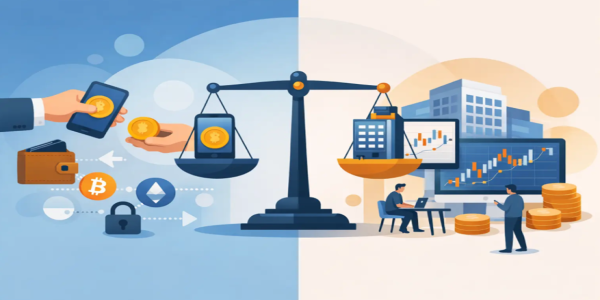
P2P Crypto vs Exchange Which Gives You More Control?
P2P crypto vs exchange comes down to control, speed, pricing, and risk. See how each route works before you buy, sell, or swap digital assets with care.
A crypto purchase can take two very different paths. In the p2p crypto vs exchange decision, one path puts you directly across from another buyer or seller. The other routes your order through a trading platform and its order book. Neither is automatically better. The right choice depends on how much control, speed, privacy, payment flexibility, and protection you want for that specific trade.
For traders who are tired of being slowed by narrow payment options, account limits, or rigid platform rules, understanding the difference is more than basic crypto knowledge. It helps you choose the route that keeps you moving when the market does.
P2P Crypto vs Exchange at a Glance
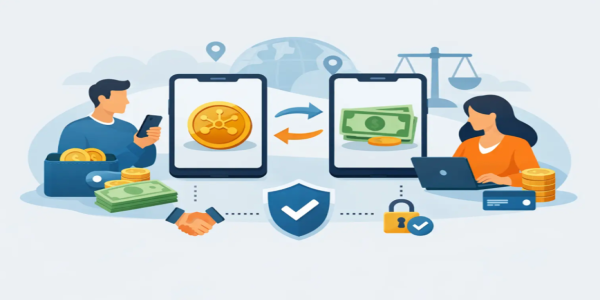
A peer-to-peer, or P2P, marketplace connects individual buyers and sellers. One person posts an offer to buy or sell crypto at a stated price, with a chosen payment method and trade limit. Another person accepts it. The platform may hold the crypto in escrow while the payment is completed, but the deal itself is between two users.
A crypto exchange is a centralized or decentralized marketplace where traders place orders against available liquidity. You can buy at the current market price, set a limit order, convert one asset into another, or trade a pair such as BTC/USD or ETH/USDT. The platform's matching system finds the other side of your order.
The difference is simple: P2P trades are negotiated through people and payment preferences, while exchange trades are matched through market liquidity and trading tools.
That distinction changes the entire experience. If you need a specific local payment method or want to set your own terms, P2P can be powerful. If you want fast execution on a liquid market with a visible chart and order book, an exchange is usually the cleaner move.
How P2P Crypto Trading Works
P2P is built for flexibility. A seller can offer Bitcoin, stablecoins, or other supported assets and choose the payment methods they accept. A buyer can compare offers based on price, payment method, completed-trade history, and limits before starting a transaction.
Most reputable P2P systems use escrow. Once a buyer opens a trade, the seller's crypto is temporarily locked. The buyer sends payment using the agreed method, then marks the payment as complete. The seller verifies receipt and releases the crypto. If there is a disagreement, platform support or a dispute process can review the evidence.
This structure can give users more choice than a conventional funding flow. Someone may prefer a bank transfer, a supported wallet payment, or another approved method that an exchange does not offer. P2P can also let buyers and sellers respond to local demand instead of accepting one fixed quote.
But freedom requires discipline. The biggest P2P risk is not usually blockchain technology. It is dealing with another person. Fake payment confirmations, chargeback attempts, off-platform messages, and pressure to release escrow early are common scam patterns. Never release crypto based on a screenshot, email, or promise. Confirm cleared funds through the actual payment account, keep communication inside the platform, and follow the stated trade terms exactly.
P2P pricing can also be less predictable. An offer that looks convenient may include a premium for the seller's payment risk or a discount tied to strict conditions. That does not make it a bad deal. It means you should compare the final amount of crypto received, not just the headline price.
How Exchange Trading Works
On an exchange, you trade against an order book or a conversion engine. Market orders prioritize speed and fill at the best available prices. Limit orders prioritize price and wait until the market reaches your chosen level. For straightforward swaps, a conversion feature may show a quote and complete the transaction without requiring you to read a chart.
This is often the better route for active traders. Exchange markets can provide deeper liquidity, faster execution, clearer price discovery, and access to more trading pairs. If you are moving quickly between assets during a volatile market, those advantages matter. A few seconds of delay can change an entry or exit significantly.
Exchanges also make it easier to use trading features such as stop orders, recurring purchases, portfolio tracking, and crypto-to-crypto conversions. For someone who wants to buy ETH with USDT, rotate profits into Bitcoin, or move into a stablecoin during a sharp price swing, the process can be immediate.
The trade-off is that exchange access can come with more rules. Some services require identity checks, restrict certain locations or payment methods, set deposit and withdrawal limits, or limit access during security reviews. Fees can also appear in several places: trading fees, conversion spreads, network withdrawal charges, and fiat processing costs.
Before trading, check the full cost. A zero-commission message may apply to one action while the spread or network fee applies elsewhere. What matters is the amount you receive after every cost is included.
Control, Privacy, and Custody
Control is where the choice becomes personal.
With P2P, you have more influence over who you trade with, how you pay, and what conditions you accept. Depending on the platform and applicable rules, the process may involve fewer onboarding steps than a traditional financial account. That appeals to users who value transaction privacy and do not want unnecessary friction between a decision and a trade.
With an exchange, control comes through tools. You may have more precise order types, broader asset pairs, instant conversions, and access to market data. A platform can also handle technical tasks that might overwhelm a newer trader, such as matching orders and calculating trade execution.
Custody is separate from both choices. If crypto stays in a platform wallet, the platform controls the private-key infrastructure. If you withdraw to a self-custody wallet, you control the keys and carry full responsibility for protecting them. Losing a recovery phrase can mean losing access permanently. There is no customer-service reset for a wallet you alone control.
The strongest approach is intentional. Keep only the funds you need for active trading on a platform. Use secure passwords, two-factor authentication, and withdrawal security settings. Treat every payment confirmation and wallet address as final until you have verified it twice.
When P2P Is the Better Move
Choose P2P when payment flexibility is your priority, when you want to compare individual offers, or when a direct trade better fits your preferred transaction flow. It can be especially useful for buying or selling stablecoins with supported payment methods that are not available through a standard exchange deposit screen.
P2P can also make sense when you are comfortable evaluating counterparties. Look for established trade history, strong completion rates, sensible limits, and terms you can follow without ambiguity. Do not chase the most attractive rate if the account looks new, the instructions are confusing, or the trader asks you to leave the platform.
For privacy-conscious users, P2P may offer a more direct experience, but it is not a guarantee of anonymity. Platforms, payment providers, and local laws can have their own requirements. Know the rules that apply where you live and avoid any transaction designed to bypass legal obligations.
When an Exchange Is the Better Move
Use an exchange when you need speed, liquid pricing, multiple coin pairs, or active trading tools. It is generally the stronger option for entering or exiting a position during a fast market, because you are not waiting for another user to confirm a payment.
It is also often easier for beginners making their first crypto-to-crypto swap. If your goal is simply to convert one asset to another, a direct conversion or spot market can reduce the number of moving parts. You can see the quoted rate, confirm the amount, and complete the trade without negotiating with a counterparty.
For traders who want open access without unnecessary complexity, a platform such as Budrigan Market can bring exchange trading, wallet functionality, conversions, and P2P opportunities into one place. The goal is not to force every trade through one method. It is to give you options when the market calls for speed, flexibility, or both.
A Smarter Way to Use Both
You do not need to choose one route forever. Many capable traders use P2P for flexible funding or cashing out through supported methods, then use the exchange for quick conversions and spot trades. Others buy a stablecoin through P2P, move it into a trading balance, and use it as dry powder for opportunities across multiple assets.
The key is to separate convenience from risk. A fast trade is only useful if you understand the price. A private transaction is only valuable if you verify the counterparty. A broad coin selection only helps if you protect your wallet and avoid emotional entries.
Before you click buy or sell, decide what matters most for this transaction: payment choice, execution speed, market price, or privacy. Then use the route that puts you in control of that priority - and never let urgency replace verification.
Share This Post
Recent Posts
-
-
Which Exchange Supports More Altcoins Today?
27 Jul 2026
-
No KYC Crypto Limits: What Traders Need to Know
27 Jul 2026
-

Best Platforms for Instant Altcoin Access
27 Jul 2026
-
Example of P2P Crypto Sale Step by Step
23 Jul 2026