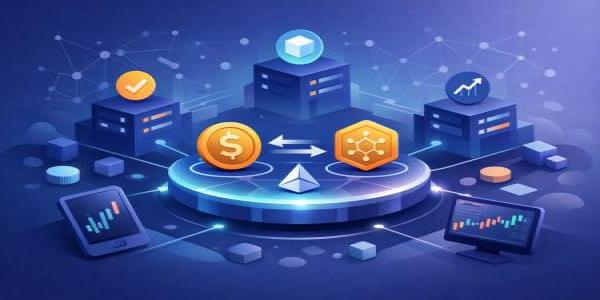
What Is a Decentralized Autonomous Exchange?
What is a decentralized autonomous exchange? Learn how it works, why traders use it, and where speed, privacy, and control matter most.
The moment an exchange asks for documents, banking delays, and approval queues before you can make a trade, the promise of crypto starts to feel a lot like old finance. That is exactly why more traders are asking, what is a decentralized autonomous exchange, and whether it offers a better path to faster, freer market access.
A decentralized autonomous exchange is a crypto trading platform built to reduce gatekeepers, minimize friction, and give users more direct control over trading activity. Instead of relying on the slow, permission-heavy structure that defines many traditional platforms, it uses decentralized systems and automated processes to let people buy, sell, convert, and move digital assets with fewer barriers.
For traders, the appeal is simple. You want access, speed, privacy, and flexibility. You do not want to wait days to get approved just to react to a market move that lasts an hour.
What is a decentralized autonomous exchange in practice?
In plain English, a decentralized autonomous exchange is a platform where users can trade crypto with more independence and less reliance on centralized approval. The word decentralized points to a structure that reduces dependence on a single controlling authority. Autonomous means much of the platform's activity is handled by systems, rules, and automation instead of manual intervention. Exchange is the part most people already understand - it is where assets are traded, converted, or transferred.
That does not always mean every function is fully on-chain or governed by a token-based community. In the real market, the phrase can describe platforms that prioritize user autonomy, fast execution, broad access, and low-friction participation, even if the underlying architecture blends different technologies. That distinction matters because crypto is full of labels, and traders are better served by understanding how a platform behaves than by repeating buzzwords.
What matters most is the user experience and the control model behind it. Can you access the market quickly? Can you move between assets without unnecessary restrictions? Can you trade with more privacy and fewer administrative obstacles? Those are the questions that define whether an exchange actually feels decentralized and autonomous from the user side.
Why traders care about decentralized autonomous exchange models
Most retail traders are not reading infrastructure diagrams before they sign up. They are reacting to pain points. They are tired of lengthy verification, account limitations, delayed withdrawals, narrow coin access, and rigid funding methods.
A decentralized autonomous exchange speaks directly to those frustrations. It offers a model built around action instead of permission. If you are trying to capture a price difference between markets, move quickly into a trending coin, or convert assets on demand, reduced friction is not a bonus. It is the whole game.
Privacy matters too. Some users simply do not want to hand over sensitive personal documents for routine crypto activity. Others want to separate their trading life from the level of surveillance now common across mainstream financial platforms. For them, anonymity is not a niche preference. It is part of financial control.
There is also the issue of choice. Traders want more than one or two major coins and a narrow set of payment rails. They want flexibility across spot trading, peer-to-peer transactions, conversions, wallets, and fiat entry points. A decentralized autonomous exchange model is attractive because it is often designed around access rather than restriction.
How a decentralized autonomous exchange works
At the platform level, the exchange uses automated systems to facilitate trading, matching, conversions, and asset movement with minimal manual bottlenecks. Users typically create an account or gain access faster than they would on a compliance-heavy centralized platform. From there, they can fund, trade, convert, or store digital assets depending on the features offered.
Some platforms focus heavily on peer-to-peer mechanics, where users trade directly with one another. Others combine direct exchange services with wallet tools, crypto-to-fiat conversion, and instant trade execution. The autonomous side usually shows up in streamlined operations - fewer approval stages, simplified interfaces, and systems designed to keep transactions moving.
This model can also support a wider range of trading behavior. Someone new to crypto may want a simple way to buy and hold. A more active trader may want spot trading and quick coin rotation. An arbitrage-focused user may care most about speed, unrestricted movement, and conversion flexibility. A good decentralized autonomous exchange supports all three without turning every action into a compliance event.
The difference between decentralized autonomous and traditional exchanges
The biggest difference is not marketing language. It is control.
Traditional exchanges usually act like digital banks with a trading layer attached. They collect extensive user data, impose onboarding reviews, control access to certain features, and may apply account limits based on geography, verification level, or internal risk rules. For some users, that trade-off feels acceptable. For others, it defeats the purpose of crypto.
A decentralized autonomous exchange pushes in the opposite direction. It aims to shorten the distance between your intent and your trade. You get faster entry, fewer restrictions, and a structure that prioritizes user independence.
That said, there are trade-offs. Less friction can mean users need to take more responsibility for security, wallet management, and transaction accuracy. A platform that gives you more freedom also expects you to use that freedom carefully. There is no point pretending every user wants the same thing. Some prefer institution-style guardrails. Others want access without interrogation. It depends on your priorities.
Who benefits most from this type of exchange?
Privacy-conscious traders are an obvious fit. If anonymity and reduced document exposure are high on your list, this model stands out quickly.
Beginners can benefit too, especially if they feel intimidated by traditional exchanges that bury simple actions under layers of account setup and verification. A cleaner path to funding and trading lowers the entry barrier.
Then there are active market participants. Arbitrage traders, fast movers, and users who rotate between coins based on short-term opportunity need speed and flexibility more than institutional polish. For them, a decentralized autonomous exchange can feel far more aligned with how crypto markets actually move.
Peer-to-peer users are another strong fit. If you want direct transaction options and more payment flexibility, platforms built around autonomy tend to be more practical than rigid exchange models.
What to look for before using one
Not every platform that uses the language of freedom actually delivers it. Look at the real experience.
First, check how quickly you can access core features. If the platform promises fast trading but still sends you into long verification loops, the branding and the product are not aligned.
Second, review the asset range. A strong exchange should give you meaningful access, not just a limited menu of headline coins. More market options create more opportunity.
Third, look at funding and conversion flexibility. Can you move between crypto and USD easily? Are peer-to-peer options available? Does the platform support practical payment methods that match how users actually transact?
Fourth, pay attention to interface design. Freedom is not helpful if the platform is confusing. Speed matters, but clarity matters too.
Finally, understand the fee structure. Low friction should not hide unpredictable costs. Fast access and broad utility are valuable, but traders still need transparency around what they are paying.
For users looking for a platform built around immediate access, privacy, broad crypto support, and streamlined trading activity, Budrigan Market reflects the direction this exchange model is moving.
Is a decentralized autonomous exchange the future?
For a growing segment of the crypto market, yes. The demand is real because the frustration is real. People want to trade without waiting in line. They want privacy without apology. They want more control over how they fund accounts, move assets, and respond to opportunity.
That does not mean centralized exchanges disappear. They will continue to serve users who want a more regulated, institution-like environment. But that is only one version of crypto access. It is not the only one, and it is not always the best one.
The rise of the decentralized autonomous exchange reflects a broader shift in user expectations. Traders are no longer impressed by platforms that add friction and call it safety. They are looking for systems that respect their time, protect their independence, and keep the market within reach.
If you have been stuck between the promise of crypto and the limitations of traditional exchange models, this is the better question to ask: not just what is a decentralized autonomous exchange, but whether your current platform gives you the freedom crypto was supposed to deliver in the first place.
Share This Post
Recent Posts
-

What Makes Peer Payments Private and Secure?
23 Sep 2026
-
Decentralized Exchange Order Book Guide
23 Sep 2026
-
Best Order Types for Beginners to Trade Smart
23 Sep 2026
-

Peer Payment Dispute Resolution Guide for Crypto
23 Sep 2026
-
Stablecoin Conversion Steps for Faster Trading
23 Sep 2026