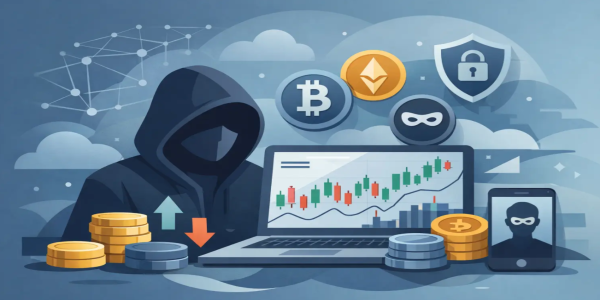
What Is Anonymous Crypto Trading?
What is anonymous crypto trading? Learn how privacy-first trading works, why traders want it, and the trade-offs to know before you start.
You spot a market move, you are ready to buy, and then a mainstream exchange asks for documents, selfies, approval delays, and account limits. That frustration is exactly why people ask, what is anonymous crypto trading? At its core, it means buying, selling, swapping, or transferring crypto with far less personal exposure than traditional finance platforms usually require.
Anonymous crypto trading appeals to people who want speed, privacy, and control. Some want to protect their financial activity from unnecessary data collection. Others want faster access to opportunities without getting stuck in identity checks before they can act. For many traders, it is less about secrecy for its own sake and more about reducing friction.
What is anonymous crypto trading in simple terms?
Anonymous crypto trading is a way to trade digital assets without handing over the same level of personal information that centralized financial platforms often demand. Instead of building a full identity profile before you can do anything, privacy-first trading environments focus on getting you into the market faster.
That does not always mean total invisibility. This is where people often get confused. In crypto, anonymous can mean different things depending on the platform, the blockchain, and the type of transaction. A wallet address may not display your legal name, but activity on public blockchains can still be traceable. So in practice, anonymous trading usually means reducing direct identity exposure rather than becoming impossible to track under every circumstance.
Why traders want anonymous crypto trading
The biggest reason is simple: freedom. Traders do not want every deposit, conversion, and transfer tied to a growing database of personal documents. They want to move when the market moves.
Privacy is another major driver. Once your personal information is stored on a platform, you are trusting that business to protect sensitive data. Many users would rather avoid creating that risk in the first place. If a platform can offer access with fewer onboarding barriers, that feels like a smarter trade-off for privacy-focused users.
There is also a practical angle. Anonymous crypto trading can make the experience feel lighter and faster. You can fund, convert, and trade without the same level of bureaucracy that slows down many mainstream exchanges. For beginners, that can make crypto feel more approachable. For active traders, it can mean fewer delays between intent and execution.
How anonymous crypto trading usually works
The mechanics are often straightforward. A user creates an account or connects a wallet, funds it with crypto or supported payment methods, and starts trading. Depending on the platform model, the user might access spot markets, peer-to-peer trades, wallet transfers, or quick crypto conversions.
In a privacy-first setup, the key difference is the onboarding path. Instead of leading with document verification, the platform is designed to reduce the steps between sign-up and action. That matters if your goal is speed and flexibility.
Some platforms also make it easier to move between crypto assets and fiat options without locking users into rigid approval processes. That can be attractive for people who want to trade more than just a handful of coins or explore fast-moving opportunities across different markets.
What anonymous does not mean
This part matters. Anonymous does not always mean untraceable, and it definitely does not mean risk-free.
Most blockchain networks are transparent ledgers. Transactions can often be viewed publicly, even if the names behind wallet addresses are not immediately visible. If an address is ever linked to a real identity through another service, past activity may become easier to analyze.
It also does not mean every platform claiming privacy is equally trustworthy. Some services use anonymity as a buzzword while offering weak infrastructure, poor liquidity, or unreliable execution. Privacy without performance is not much of an advantage if you cannot actually trade effectively.
That is why serious traders look at the full picture: speed, access, payment flexibility, wallet control, transaction flow, and platform usability, not just marketing claims.
The main benefits of anonymous crypto trading
The first benefit is reduced friction. If you want quick access to the market, fewer onboarding requirements can make a huge difference. When timing matters, delays can cost money.
The second benefit is personal privacy. Many users do not want to upload government documents just to buy or swap digital assets. Anonymous trading models reduce how much personal data is exposed during the process.
The third benefit is broader access. Privacy-focused exchanges often attract users who want fewer trading restrictions, more flexibility in how they fund accounts, and access to a wider range of assets. That matters for arbitrage-minded traders and for users who do not want to be boxed into narrow platform rules.
There is also a psychological benefit. Trading feels more direct when the process is simple. You are not fighting the platform before you even enter a position.
The trade-offs you should understand
Anonymous crypto trading has real advantages, but it is not a magic solution. The biggest trade-off is that privacy and convenience do not remove market risk. Crypto prices still move fast, bad trades still happen, and emotional decisions still cost money.
There is also the issue of platform quality. A low-friction exchange can be powerful, but only if it also delivers stable performance, accessible tools, and a clean trading experience. Speed without reliability is a problem.
Users should also understand that privacy levels vary. Some platforms may allow fast access with minimal onboarding, while others may still apply certain restrictions depending on payment method, asset type, or transaction size. It depends on how the service is structured.
And finally, anonymous trading is not the same thing as avoiding responsibility. You still need to protect your wallet, manage your funds carefully, and understand the assets you trade. Independence is powerful, but it comes with more personal accountability.
Who anonymous crypto trading is for
This model fits privacy-conscious traders, fast movers, and users tired of traditional exchange friction. If you value control over your trading activity, want to avoid unnecessary delays, and prefer a more direct path into the market, anonymous trading can make a lot of sense.
It is also a strong fit for peer-to-peer users, crypto converters, and people who want to move between assets without a heavy approval workflow. Traders looking for broad coin access and flexible funding options often find privacy-first platforms more aligned with how they actually want to trade.
For beginners, the appeal is simplicity. For more active users, the appeal is freedom. Different experience levels arrive for different reasons, but they often stay for the same one: fewer barriers.
What to look for in an anonymous crypto trading platform
Start with usability. If the platform is supposed to save time, the interface should not slow you down. You want a setup that makes deposits, conversions, trading, and withdrawals easy to understand.
Then look at asset access. A strong platform should give you more than a tiny list of coins. Flexibility matters, especially if you want to rotate between trends, explore smaller assets, or move funds where the opportunity is.
Payment options matter too. If a platform supports broader funding methods and smoother conversion paths, it becomes more useful in real trading conditions. Wallet functionality is another plus because it keeps the experience connected instead of forcing users to bounce between services.
Most of all, look for a platform that treats privacy as part of the product, not just as a headline. That is where a service like Budrigan Market stands out to users who want anonymous access, fast execution, and fewer limits between decision and trade.
Is anonymous crypto trading legal?
This depends on where you are and how you use the platform. Laws and platform rules vary by jurisdiction, and crypto regulation continues to change. The key point is that privacy itself is not the same thing as wrongdoing. Many users simply prefer not to hand over more personal data than necessary.
The smarter approach is to use reputable services, understand the rules that apply to you, and trade with clear awareness of both the market and the platform environment. Freedom works best when it is paired with informed decisions.
Anonymous crypto trading is really about choice. It gives people another path into digital markets, one built around privacy, speed, and fewer gatekeepers. If that matches how you want to trade, the next move is simple: choose a platform that respects your time, protects your access, and lets you act when opportunity shows up.
Share This Post
Recent Posts
-
Why Crypto Prices Differ Across Exchanges
22 Oct 2026
-
Crypto Price Alerts That Help You Trade Faster
22 Oct 2026
-
Account Security Checklist for Crypto Traders
22 Oct 2026
-

Crypto Arbitrage Taxable? What U.S. Traders Owe
22 Oct 2026
-
Crypto Liquidity Assessment for Smarter Trades
22 Oct 2026