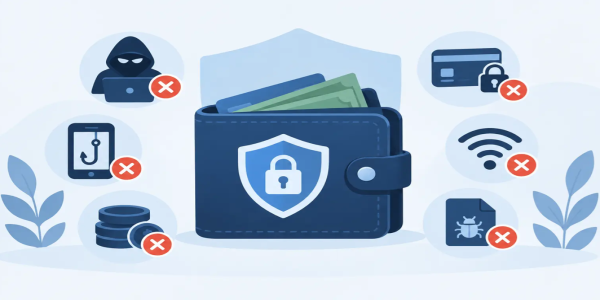
9 Top Wallet Security Mistakes to Stop Now
Avoid the top wallet security mistakes that expose crypto holdings. Build safer habits for keys, approvals, devices, and every transfer you make today.
A wallet can give you direct control of your crypto, but direct control means there is no help desk that can reverse a bad signature, recover a leaked recovery phrase, or stop a transfer sent to a scammer. The top wallet security mistakes are rarely technical failures. They are rushed decisions made when a trade looks urgent, a site looks familiar, or a message sounds convincing.
Freedom in crypto works best when it is paired with disciplined habits. Whether you hold assets for the long term, trade frequently, or move funds through P2P transactions, wallet security should be part of every decision before you confirm.
The Top Wallet Security Mistakes That Cost Crypto
1. Treating a recovery phrase like a password
Your recovery phrase is not a password you can reset. It is the master key to your wallet. Anyone who has it can recreate your wallet on another device and move the funds, often without leaving an obvious warning behind.
Never type your phrase into a website, browser extension, form, chat, or email. A legitimate wallet provider, exchange, support agent, or community moderator will not need it. Do not store it in screenshots, cloud notes, email drafts, or a file called “seed phrase” on your phone. Those shortcuts are convenient until a compromised device or synced account turns convenience into an empty wallet.
Write the phrase down accurately and keep it offline in a private, physically secure location. Consider a durable backup for long-term holdings. The trade-off is less instant access, but that friction is exactly what protects your funds from remote attackers.
2. Signing transactions without reading the request
A wallet signature is not always a harmless login. Depending on the request, it can approve token spending, grant ongoing permissions to a smart contract, or authorize an action you did not intend to take.
Read what your wallet displays before approving. Check the connected site, the network, the contract interaction, and the permissions being requested. If the prompt is vague, unusually broad, or asks for unlimited spending access when a limited amount would do, stop. A fast trade is never worth blind approval.
This matters most when using new decentralized apps, NFT marketplaces, token claim pages, and links shared through social channels. Scammers often build polished copies of real services and rely on one rushed signature. If you are unsure, close the page and independently find the official destination rather than trusting a forwarded link.
3. Keeping all funds in one active wallet
Using one wallet for every trade, long-term holding, test transaction, and new app connection creates a single point of failure. It also makes your entire balance visible whenever that wallet interacts with a risky contract.
A smarter setup separates purpose from exposure. Keep a smaller active wallet for trading and unfamiliar applications. Keep long-term holdings in a separate wallet that does not routinely connect to sites. If you use a hardware wallet, reserve it for meaningful balances and treat it as a vault, not a daily browsing tool.
There is no universal number of wallets that fits everyone. Active traders may need more separation than occasional buyers. The principle is simple: do not put your full crypto position behind every click.
4. Downloading fake wallet apps and extensions
One of the most common wallet security mistakes starts before a wallet is even created. Fake apps, cloned browser extensions, and sponsored search results can closely imitate trusted brands. Once installed, they may capture a recovery phrase or redirect transactions.
Download wallet software only from the provider’s verified official channels. Before installing a browser extension, inspect the publisher name, number of users, reviews, and update history. Before opening a mobile app, check the developer details rather than relying on the icon or app name alone.
Be equally careful with update alerts. A pop-up demanding an immediate wallet update can be a trap. Open your existing wallet app or use its official channel to confirm whether an update is actually available.
5. Ignoring device security
Your wallet is only as secure as the phone or computer used to access it. Malware, keyloggers, malicious extensions, and remote-access tools can capture what you type or manipulate what you see on screen.
Keep your operating system, browser, wallet software, and security tools current. Use a strong device passcode and lock your screen when stepping away. Remove browser extensions you do not use, especially those with permission to read and change data on every website.
Avoid managing meaningful balances from shared computers, public Wi-Fi without appropriate protection, or devices that have been modified outside normal security controls. You do not need expensive equipment to be safer, but you do need a clean device and a habit of questioning unexpected prompts.
6. Sending crypto without verifying the destination
Blockchain transfers are generally final. A single wrong character, the wrong network, or an attacker’s substituted address can turn a routine withdrawal into a permanent loss.
Verify the full receiving address, not just the first and last few characters. Clipboard-hijacking malware can replace an address after you copy it. For a new destination or a high-value transfer, send a small test amount first and confirm that it arrives before moving the rest.
Network selection matters too. The same asset name can exist across multiple networks, and the recipient must support the exact network you choose. Slow down for this step. A one-minute check is cheaper than a recovery process that may not exist.
7. Falling for support and giveaway scams
Scammers know that crypto users move quickly when they fear losing access or missing an opportunity. They impersonate support teams, create urgent account warnings, promise doubled deposits, and offer exclusive airdrops designed to make you act before thinking.
Real support will not contact you out of the blue asking for your recovery phrase, private key, verification code, or remote access to your device. No legitimate giveaway requires you to send crypto first to receive more back. If a message claims otherwise, assume it is hostile until proven safe through an official channel you locate yourself.
Privacy does not mean isolation. Protect your personal details, but verify who you are speaking with before revealing any account information or taking an action that affects your funds.
8. Forgetting to review old approvals
Token approvals can remain active long after you stop using a decentralized application. That does not mean every old approval is dangerous, but forgotten unlimited approvals add unnecessary exposure if a contract is compromised or malicious.
Periodically review the permissions connected to your active wallets and revoke approvals you no longer need. Start with wallets that have interacted with experimental platforms, token claims, or services you no longer recognize. Keep records of the apps you use so reviewing access does not become guesswork.
For everyday trading, consider approving only the amount needed for the transaction instead of unlimited access. It may add an extra step later, but it limits the damage if something goes wrong.
9. Letting urgency override judgment
The final mistake ties the others together: acting under pressure. A price move, liquidation warning, limited-time claim, or direct message can create the feeling that checking details is a luxury. In crypto, that feeling is often the attack.
Build a pause into your process. Before a major transfer, new connection, or unexpected signature, ask three questions: Do I know exactly what this action does? Did I reach this site through a source I independently trust? What happens if I am wrong? If the answer to any question is unclear, wait.
Build Security Into Every Move
Wallet security is not about making crypto feel restrictive. It is about keeping control where it belongs: with you. Use separate wallets for separate purposes, protect your recovery phrase offline, verify every destination, and treat every signature as a financial decision.
Budrigan Market is built for traders who value speed and independent access. Make security the habit that keeps that independence working for you. The best time to protect your wallet is before the next opportunity appears.
Share This Post
Recent Posts
-
Stablecoin Regulation Trends 2026 Explained
08 Oct 2026
-

Market Orders Versus Swaps: Know Your Trade
08 Oct 2026
-
Stablecoins Versus Bank Deposits Compared
08 Oct 2026
-

Crypto Taxes: Trade Freely, Report Clearly
08 Oct 2026
-

P2P Offer Comparison: Find Better Crypto Deals
06 Oct 2026