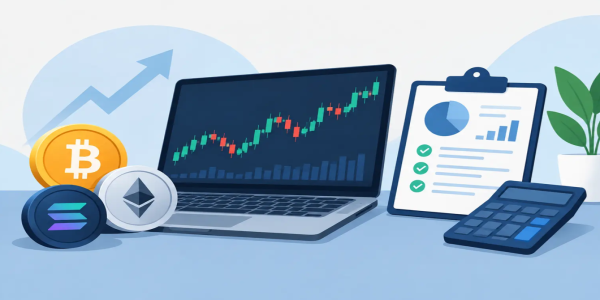
Crypto Taxes: Trade Freely, Report Clearly
Crypto taxes do not have to slow your trading. Learn how U.S. crypto gains, losses, swaps, rewards, and records can keep your reporting clear and ready.
A fast trade can take seconds. Rebuilding its history at tax time can take days if you did not keep the right details. Crypto taxes are part of trading in the United States, whether you buy a major asset, swap into an emerging coin, collect staking rewards, or make a peer-to-peer payment. Privacy and financial independence matter, but so does staying ready to report your activity accurately.
The good news: tax preparation does not need to control your trading strategy. A clear recordkeeping habit lets you move when opportunity appears, then organize the facts without guessing months later.
How Crypto Taxes Work in the United States
The IRS generally treats cryptocurrency as property, not cash. That means many actions that feel like simple trades can create a taxable event. When you dispose of crypto, you may have a capital gain or capital loss based on the difference between its value when you acquired it and its value when you sold, spent, or exchanged it.
Buying Bitcoin with U.S. dollars and holding it is generally not a taxable event by itself. The tax question usually begins when that Bitcoin leaves your ownership in a transaction. Selling it for dollars counts. Using it to pay for goods or services counts. Trading it for Ethereum, a stablecoin, or another token can count too.
That last point catches many active traders off guard. A crypto-to-crypto conversion may feel like one move inside the market, but it can be a disposal of the asset you gave up. The dollar value at the moment of the trade matters, even if no dollars ever touched your account.
Your holding period also matters. Assets held for one year or less before disposal generally produce short-term gains or losses, which are taxed under ordinary income tax rates. Assets held longer than one year may qualify for long-term capital gains treatment. The difference can be meaningful, so record the acquisition date for every lot, not just your total balance.
Events That Can Create a Tax Bill
Not every movement of crypto has the same tax result. Knowing the distinction helps you trade with more confidence and avoid treating every wallet action as income.
A purchase with dollars is usually a starting point. The amount paid, plus certain transaction costs where applicable, helps establish your cost basis. Sending coins between wallets you own is generally not a sale, assuming you still control both wallets. Keep records anyway, because those transfers explain why an asset moved and preserve the original cost basis.
Selling, swapping, and spending are different. If you bought an asset for $1,000 and later exchanged it when it was worth $1,600, the $600 difference is generally a gain before considering eligible fees and your accounting method. If its value fell to $700, you may have a loss. Losses can be valuable because they may offset capital gains, subject to tax rules and limits.
Income-producing activity has its own treatment. Crypto received from mining, staking, certain rewards, referrals, airdrops, or payment for work may be taxable as ordinary income when you gain control of it. Its fair market value at that time commonly becomes the cost basis for a later sale. In other words, one deposit can create two reporting moments: income when received, then a gain or loss when disposed of later.
Decentralized finance activity can be more complicated. Lending, liquidity pools, wrapped tokens, token migrations, and derivatives may have facts that change the tax result. Do not assume a new label means no reportable event. If the transaction is material or unclear, a tax professional who understands digital assets can help you evaluate it before filing.
Keep the Records That Protect Your Position
Freedom in the market works better when your records are in order. Platforms, wallets, and blockchains may display transaction data differently, and exports can change over time. Your own organized record is the dependable source when you need to reconcile activity.
For each transaction, retain the date and time, asset name, quantity, U.S. dollar value, fees, transaction type, wallet or platform involved, and transaction ID when available. Also save the date and value of the original acquisition. Screenshots, trade confirmations, CSV exports, wallet histories, and notes about unusual transfers can all help establish the story behind your numbers.
This matters especially for traders who use multiple wallets or platforms. A transfer may look like a sale to software if the receiving wallet is missing from your records. That can inflate apparent gains. Label your own wallets, document internal transfers, and reconcile balances regularly rather than waiting until the filing deadline.
A simple monthly routine is usually enough for many traders: export activity, check transfers, classify rewards or income, and save copies in a secure location. More active participants may want to do this weekly. The right schedule depends on volume, but the goal is the same - no missing history when markets move fast.
Choose a Cost-Basis Method Before You Need It
When you acquire the same asset at different prices, the specific units you sell can affect your reported gain or loss. This is where cost-basis tracking becomes more than bookkeeping.
Specific identification can allow you to identify the particular units sold if your records support it. If you cannot adequately identify specific units, a default method may apply under current tax guidance. The practical lesson is direct: preserve lot-level data from the beginning. Do not rely on memory after dozens of trades across several wallets.
There is no universally best choice. Selling higher-cost lots may reduce a current taxable gain, while selling lower-cost lots may produce a larger gain now but leave a different portfolio position later. Your income, time horizon, realized losses, and planned trades all matter. Tax decisions should support your broader strategy, not force every trade into the same pattern.
Trade With Speed, Not Tax Blindness
Tax awareness is not an argument for sitting out opportunities. It is an argument for knowing the real outcome of a trade. Before converting a position, consider the current unrealized gain or loss, the holding period, and whether the trade creates a record you can support later.
For example, converting a profitable altcoin into a stablecoin can reduce market exposure, but it may also lock in a taxable gain. Holding through a price drop may avoid realizing that gain at that moment, but it exposes you to market risk. Neither choice is automatically right. The best decision balances market conviction, risk tolerance, liquidity needs, and tax consequences.
Avoid chasing a tax loss just because a loss exists on paper. A sale should make sense for your portfolio first. At the same time, if you already plan to reduce exposure, recognizing a loss may help offset gains elsewhere. Rules around losses and repurchases can be complex and may evolve, so get current professional guidance before building a strategy around them.
Crypto Taxes and Privacy Can Coexist
Financial privacy does not mean financial records disappear. You can value confidential transactions and still maintain the information needed for lawful tax reporting. In practice, this means keeping your own transaction history, protecting it with strong security, and sharing it only where reporting obligations require.
Budrigan Market is built for traders who want fewer barriers between intent and execution. That same independence calls for ownership of your records. When you control your wallets, trades, and transaction data, you are also responsible for preserving a clear trail of what happened.
Do not depend on a platform statement as your only tax file. It may not capture activity from external wallets, peer-to-peer transfers, decentralized applications, or assets moved before they reached the platform. Build one complete view across your trading life.
When to Get Professional Help
Basic buy-and-hold activity may be manageable with reliable records and tax software that supports crypto transactions. The case for professional support grows when you trade at high volume, earn crypto income, use DeFi, receive tokens through unusual events, operate a business, or have activity across multiple countries or entities.
A qualified tax professional can help classify complicated transactions, review cost-basis assumptions, and explain what information belongs on your return. They cannot rebuild records that no longer exist, which is why early organization remains your advantage.
The market rewards preparation as much as speed. Keep your trade history clean, know which actions can create a tax event, and make each move with a full view of the opportunity in front of you.
Share This Post
Recent Posts
-

Stablecoin Regulation Trends 2026 Explained
08 Oct 2026
-

Market Orders Versus Swaps: Know Your Trade
08 Oct 2026
-
Stablecoins Versus Bank Deposits Compared
08 Oct 2026
-
9 Top Wallet Security Mistakes to Stop Now
08 Oct 2026
-

P2P Offer Comparison: Find Better Crypto Deals
06 Oct 2026