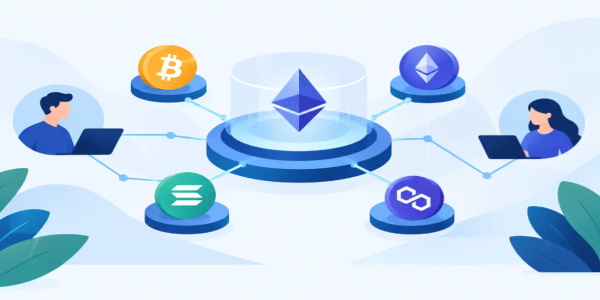
A Guide to Decentralized Crypto Exchanges
This guide to decentralized crypto exchanges explains wallets, swaps, liquidity, fees, and safer trading choices for traders who value control and speed.
A guide to decentralized crypto exchanges starts with one clear idea: your crypto should move when you decide, not when a platform finally clears your account. Decentralized exchanges, often called DEXs, let traders swap eligible digital assets directly from a personal wallet. That can mean faster access, fewer onboarding barriers, and more control over funds - but it also puts more responsibility in your hands.
For traders tired of waiting through restrictive account workflows or limited coin selections, decentralized trading creates a more open route to the market. The opportunity is real. So are the risks. Knowing how wallets, liquidity, pricing, and smart contracts work helps you trade with more confidence and keep control where it belongs: with you.
Why Decentralized Exchanges Matter
A centralized exchange holds customer assets in platform-controlled accounts and matches buyers with sellers through its own order books. A decentralized exchange generally uses smart contracts, which are blockchain programs that execute transactions according to preset rules. Instead of depositing funds into a traditional exchange account before every trade, you connect a wallet and approve transactions yourself.
That difference matters when speed and independence are priorities. You can access supported assets without handing over custody for the entire trading session. You may also find tokens and trading pairs that are unavailable on larger, compliance-heavy platforms.
Still, decentralized does not automatically mean simple, private, or risk-free. Every trade is recorded on a public blockchain unless you use a privacy-focused network or tool. A wallet does not make funds invisible, and traders remain responsible for meeting applicable tax and legal obligations. Freedom works best when paired with informed decisions.
How a Decentralized Crypto Exchange Works
Most DEXs use automated market makers, or AMMs, rather than a conventional order book. Liquidity providers deposit pairs of assets into pools, such as ETH and USDC. The smart contract uses the assets in that pool to quote prices and process swaps.
When you trade, you are swapping against a liquidity pool rather than waiting for another trader to take the opposite side of your order. This structure can keep markets available around the clock, especially for assets that may not have deep order-book activity.
The trade-off is price impact. A small swap in a deep, active pool may stay close to the displayed price. A larger swap in a thin pool can shift the pool balance and cause you to receive less than expected. That difference is called slippage, and it is one of the first numbers to check before confirming a transaction.
Some decentralized platforms also use limit-order systems, request-for-quote models, or aggregators that compare liquidity across several sources. There is no single DEX model. Before trading, understand whether the platform is routing your order through a pool, an order book, or another protocol.
Set Up Your Wallet Before You Trade
Your wallet is your account, your signature, and your recovery responsibility. Start with a reputable self-custody wallet that supports the blockchain you plan to use. Keep the recovery phrase offline, written down securely, and never share it with anyone. No legitimate platform, support agent, or trader needs your recovery phrase.
A dedicated trading wallet is often a smart move. Rather than connecting the wallet that holds your long-term crypto, transfer only the amount you intend to trade into a separate wallet. This limits exposure if you accidentally approve a risky smart-contract permission or connect to a fake website.
You will also need the network's native asset for transaction fees. Ethereum transactions require ETH for gas, while other chains use their own native tokens. Do not swap every last dollar of the asset in your wallet. Leave enough behind to approve and complete transactions.
Before connecting, verify the exact website and network. Fake exchange pages can look nearly identical to legitimate ones. Bookmark platforms you trust, avoid links sent through unsolicited messages, and review the wallet pop-up before signing anything.
A Practical Guide to Decentralized Crypto Exchanges
The actual swap can be quick. The preparation should never be rushed.
First, choose the network and confirm that your wallet is set to that same network. Sending tokens on the wrong chain can lead to delays, extra bridging steps, or permanent loss. Next, select the asset you want to sell and the asset you want to receive. Check the token contract address when trading anything beyond well-known coins. Token names and tickers can be copied by scammers.
Enter a small test amount if you are using a platform or token for the first time. Review the quoted output, estimated fees, minimum amount received, and price impact. If the numbers look unusually bad, stop and investigate. Low liquidity, extreme volatility, or a malicious token setup may be the cause.
When you approve a token for trading, you give a smart contract permission to access that token up to a certain amount. Approve only what is necessary where possible. After the transaction is confirmed, check your wallet balance and transaction record. If something does not match your expectation, do not keep clicking through prompts. Pause before making another move.
Fees Can Change the Real Price of a Trade
A DEX trade may include several costs: network fees, protocol fees, liquidity-provider fees, price impact, and slippage. These are not always presented as one neat charge, which is why the final amount received matters more than the headline exchange rate.
Network fees depend on blockchain traffic. On some networks, busy periods can make a small trade uneconomical. On others, fees may be lower but liquidity can be thinner. The right choice depends on your trade size, the asset pair, and how quickly you need settlement.
Slippage tolerance deserves special attention. It sets the maximum price movement you are willing to accept between submitting and confirming a swap. Too low, and transactions may fail during volatility. Too high, and you may accept a much worse rate than intended. For liquid, established pairs, a conservative setting is usually more sensible than a wide-open one.
Know the Risks Before Chasing the Opportunity
Decentralized trading removes intermediaries, but it does not remove market risk. Crypto prices can move sharply in minutes. New tokens can have low liquidity, concentrated ownership, or contract functions that restrict selling. A token that rises fast can be difficult to exit when demand disappears.
Smart-contract risk also exists. Code can contain vulnerabilities, and even audited protocols are not guaranteed to be immune from exploits. Cross-chain bridges, token wrappers, and unfamiliar applications add more moving parts. The more complex the transaction path, the more carefully you should review it.
Be especially skeptical of guaranteed returns, private trading groups, fake support accounts, and tokens promoted only through hype. If a trade requires you to send crypto to an address before receiving anything back, treat it as a major warning sign. Real decentralized swaps are executed through transparent wallet transactions, not promises in direct messages.
Trade With More Control, Not Less Discipline
Decentralized exchanges reward traders who stay deliberate. Use small entries when testing new markets. Keep records of swaps, costs, and wallet transfers. Set a clear reason for entering a position and a clear level where you will exit if the market moves against you. Fast access should support better decisions, not impulsive ones.
For users seeking a more open way to buy, convert, and manage digital assets, platforms such as Budrigan Market reflect the appeal of lower-friction crypto access. But the strongest position is never blind trust in a platform, a token, or a trend. It is understanding what you are approving, what you are paying, and where your assets are held.
The future of finance is built around choice. Start with a wallet you control, make your first trade small, and let every transaction earn the right to become a bigger one.
Share This Post
Recent Posts
-
How to Trade Altcoins Efficiently With a Plan
14 Sep 2026
-
What the Future of No KYC Exchanges Looks Like
14 Sep 2026
-
A Practical Guide to Crypto Arbitrage Trading
14 Sep 2026
-

Anonymous Crypto Wallet Options for More Control
10 Sep 2026
-
