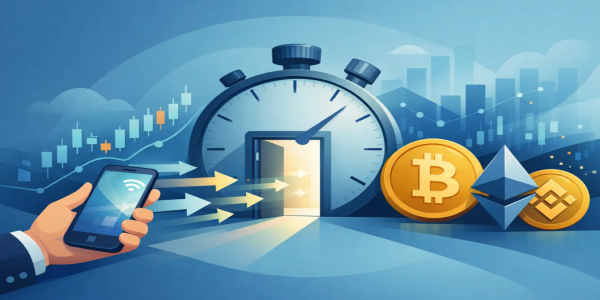
Crypto Market Access Without Delays
Crypto market access without delays gives traders faster entry, fewer barriers, and more control when timing, privacy, and flexibility matter.
Missed entries are expensive. In crypto, a delay of ten minutes can turn a clean setup into a bad fill, a profitable spread into a dead opportunity, or a calm buy into a panic chase. That is why crypto market access without delays matters so much to traders who want speed, control, and fewer roadblocks between decision and execution.
For many users, the biggest problem is not market volatility. It is friction. Traditional exchanges often slow people down with long onboarding, funding bottlenecks, trading limits, and account reviews that show up right when the market moves. If you are trying to react to price action, move between assets, or take advantage of a short-lived arbitrage window, that kind of lag is not a minor inconvenience. It changes the outcome.
Why crypto market access without delays matters
Fast access is not just about convenience. It affects strategy. A trader who can fund quickly, convert fast, and execute without waiting has more room to act on real-time information. A trader who gets stuck in verification queues or banking slowdowns is forced to watch the market instead of participate in it.
This is especially true in crypto because the market does not wait for business hours. Price moves can happen overnight, over a weekend, or in a burst of momentum that lasts less than an hour. When platforms add unnecessary friction, users lose one of the main advantages of crypto in the first place - open, continuous market participation.
There is also a psychological edge. When access is direct, traders make cleaner decisions. They are not distracted by whether a deposit will clear in time or whether an account review will delay a withdrawal or trade. They can focus on timing, pricing, and risk.
Where delays usually happen
Most trading delays come from a small number of friction points. The first is account creation. Many centralized platforms require extended document checks before users can do anything meaningful. For some people, that process is quick. For others, it drags on, triggers follow-up reviews, or creates limits that block activity at the worst possible moment.
The second delay comes from funding. If a platform offers narrow payment options or relies heavily on slow banking rails, users can lose hours or days before capital is available. In a market built on speed, that is a serious handicap.
The third is execution and asset movement. Even after users get into an account, they may face restrictions on what they can trade, how much they can move, or which pairs are available. A platform might advertise access, then narrow it with low limits, region-based restrictions, or clunky conversion flows.
Finally, there is interface friction. A slow or confusing platform creates its own delay. If users have to click through too many steps just to complete a simple swap or place a trade, the platform is costing them time even when the system itself is technically live.
What traders actually want from instant access
Most users are not asking for complexity. They want a fast path from intent to action. That usually means simple onboarding, broad payment flexibility, access to many digital assets, and the ability to move between crypto and fiat without a maze of approvals.
Privacy matters too. Some traders are not comfortable handing over unnecessary personal documentation just to access markets. Others simply want a more independent way to trade, store, and transact. For those users, speed and confidentiality often go together. The fewer barriers there are, the faster the process becomes.
That does not mean every trader wants the exact same thing. A beginner may care most about a straightforward interface and quick funding. An active trader may prioritize conversion speed, asset variety, and freedom to act on short-term opportunities. A peer-to-peer user may care more about flexible transactions and direct wallet utility. The common thread is the same - less waiting, more control.
Crypto market access without delays starts with platform design
Some platforms are built around compliance-heavy workflows first and trading second. Others are designed around action. That difference shows up immediately in the user experience.
A platform focused on crypto market access without delays removes the slowest points in the journey. It reduces onboarding friction, keeps navigation simple, and supports multiple ways to fund and convert assets. Instead of forcing users through institutional-style procedures before they can even test the platform, it creates a direct route into trading.
That design approach is not just good marketing. It reflects how crypto users actually behave. They want choice, speed, and freedom to move between opportunities. They do not want to wait for a gatekeeper to approve every step.
This is where a decentralized-access model stands out. When the platform emphasizes unrestricted participation, minimal barriers, wallet utility, and broad asset support, users get closer to the original appeal of crypto - open markets with fewer middlemen slowing things down.
The trade-off: speed should still feel intentional
Fast access is powerful, but it should not mean careless trading. The point is to remove platform friction, not remove judgment. When users can move quickly, they also need to stay disciplined about risk, especially in volatile assets and short-term setups.
The right platform gives you the ability to act without forcing you to rush. That distinction matters. There is a difference between having immediate access and feeling pressure to overtrade just because the tools are available.
It also depends on your goals. If you are making occasional long-term buys, extreme execution speed may matter less than payment convenience and wallet access. If you are watching price action every day, timing becomes much more important. If you are moving between coins or spotting spread opportunities, delays can erase your edge completely.
That is why flexible access matters more than one-size-fits-all workflows. Traders need room to use the market on their terms.
What a low-friction crypto experience looks like
A strong trading platform should feel immediate from the first interaction. You should be able to get in, fund efficiently, choose from a wide range of assets, and execute with minimal interruption. Spot trading, crypto conversions, wallet functions, peer-to-peer activity, and fiat access should work together instead of feeling like separate systems stitched together.
When that happens, users gain more than convenience. They gain optionality. They can respond to momentum, rebalance quickly, move funds where they are needed, and access more than the handful of coins pushed by mainstream apps. That matters for users who want more than passive exposure.
It also matters for people who value privacy and autonomy. A lower-friction environment supports independent decision-making. You are not waiting for someone else to decide when you can participate. You decide when to enter, when to convert, and when to move.
For traders looking for that kind of experience, platforms like Budrigan Market appeal because they are built around speed, anonymity, broad asset access, and fewer barriers between funding and execution. That combination speaks directly to users who are tired of being slowed down by traditional exchange friction.
Access changes opportunity
The crypto market rewards readiness. Not perfect prediction, not endless analysis - readiness. When your platform lets you act quickly, you are in a better position to buy dips, rotate into strength, test short-term ideas, or simply enter the market when you choose.
Delayed access creates a passive user. Immediate access creates an active one. That does not guarantee profits, and it does not remove market risk, but it does give you a fair shot at participating on your own timing instead of someone else’s process.
If you are serious about trading freedom, start by looking at the barriers in front of you. If the platform slows your funding, limits your choices, or turns every market move into an approval process, it is not helping you compete. Better access is not a luxury feature. In crypto, it is part of the strategy.
The best time to remove friction is before the next move arrives, because once the market starts running, waiting is its own kind of loss.
Share This Post
Recent Posts
-
Stablecoin Regulation Trends 2026 Explained
08 Oct 2026
-
Market Orders Versus Swaps: Know Your Trade
08 Oct 2026
-
Stablecoins Versus Bank Deposits Compared
08 Oct 2026
-
Crypto Taxes: Trade Freely, Report Clearly
08 Oct 2026
-
9 Top Wallet Security Mistakes to Stop Now
08 Oct 2026