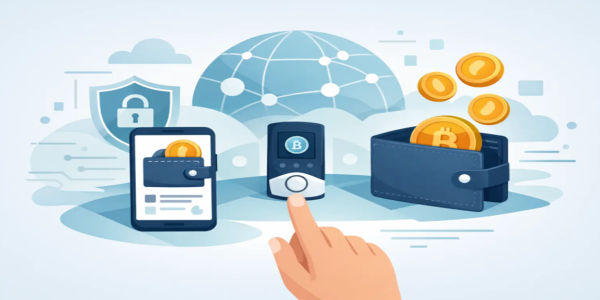
How to Choose a Crypto Wallet That Fits You
Learn how to choose a crypto wallet for trading, spending, and long-term holding, with clear security, access, and control factors that matter most.
A crypto wallet can put you one tap away from a trade - or one bad decision away from losing access to your assets. The difference is rarely the coin itself. It comes down to how you choose a crypto wallet, how you protect its recovery information, and whether its features match the way you actually move money.
For some traders, speed matters most. For long-term holders, the priority is keeping private keys away from an internet-connected device. For anyone who values privacy and independence, control over wallet access should be non-negotiable. Choose for your real habits, not for a flashy interface or a promise that every wallet works for every purpose.
How to Choose a Crypto Wallet Based on Your Goal
Start with a simple question: what will this wallet do for you?
If you trade frequently, you need a wallet that makes deposits, withdrawals, and asset swaps easy to manage without slowing down your next move. A mobile or web-based wallet can be practical here because it is ready when the market is moving. The trade-off is exposure. Any wallet connected to the internet requires stronger day-to-day security habits.
If you are accumulating Bitcoin, Ethereum, or other assets for months or years, security usually deserves more weight than instant access. A hardware wallet or other offline storage approach can reduce online attack risk because your signing keys stay disconnected from your browser and phone. It is less convenient for rapid trading, but that friction can be a feature when your goal is to hold.
If you use crypto for peer-to-peer payments, conversions, or regular spending, look for clear transaction controls, reliable network support, and a simple way to verify every recipient address. Convenience matters, but not at the cost of sending assets on the wrong network or losing visibility over your balance.
There is no universal best wallet. Many experienced users use more than one: an active wallet for trading and smaller balances, plus a separate wallet for long-term holdings. Separating those roles limits the damage if one device or account is compromised.
Decide How Much Control You Want
The biggest wallet decision is custody.
A self-custody wallet gives you control of the private keys or recovery phrase. That supports the independence many crypto users came for: you do not need permission to access your funds, and you are not relying on a company to authorize a withdrawal. But freedom comes with responsibility. If you lose your recovery phrase and have no backup, there may be no reset button.
A custodial wallet is managed by a platform or service. It can be easier for beginners because password recovery, account support, and integrated trading may be available. The trade-off is that another party controls the keys. You are trusting its security practices, operating rules, and access policies.
Neither approach is automatically right. Self-custody is often the stronger choice for people who prioritize direct control and are ready to secure their own backups. Custodial access can suit traders who value speed and want funds close to an active marketplace. The key is knowing which arrangement you are accepting before you deposit.
Do not confuse a login password with wallet ownership. In self-custody, the recovery phrase is the master key. Anyone who has it can usually move your assets. Never share it in a message, enter it into an unexpected website, or store it as a screenshot in cloud-connected photos.
Choose Between Hot and Cold Storage
Wallets are often described as hot or cold.
A hot wallet is connected to the internet. This includes many mobile, desktop, browser extension, and exchange-based wallets. Hot wallets make sense when you need fast access for trades, transfers, decentralized applications, or payments. Their weakness is obvious: online access creates more opportunities for phishing, malware, fake extensions, and compromised devices.
A cold wallet keeps key material offline, commonly through a hardware device. It is designed for holding rather than constant movement. You still need to protect the recovery phrase and confirm transaction details on the device, but cold storage makes it harder for a remote attacker to sign a transaction from your computer alone.
A practical split is straightforward: keep only the amount you are prepared to use or trade in a hot wallet, and move longer-term funds into cold storage. Think of the hot wallet as spending cash and cold storage as a locked vault. The right balance depends on how often you transact and how much you can afford to put at risk.
Check Coin, Network, and Token Support
A wallet can support a coin name without supporting every version of that asset on every network. This is where costly mistakes happen.
For example, a stablecoin may exist on several blockchains. Sending it through the wrong network can leave funds inaccessible or require a complicated recovery process. Before choosing a wallet, confirm that it supports the exact assets and networks you plan to use, not just the broad category of tokens.
This matters even more if you trade across multiple ecosystems. Check whether the wallet handles Bitcoin, Ethereum-based tokens, and the alternative networks relevant to your strategy. If you hold NFTs or use decentralized applications, confirm those features are genuinely supported rather than assumed.
Also look at how the wallet displays network names, transaction status, and receiving addresses. Clear labeling is not a minor design detail. It can prevent a rushed transfer from becoming an expensive lesson.
Evaluate Security Beyond the Marketing Claims
Every wallet says security matters. Look for the controls that prove it.
Strong options typically offer a recovery phrase backup process, password or PIN protection, biometric access on mobile devices, and support for two-factor authentication where an account is involved. For higher balances, compatibility with a hardware wallet is a meaningful advantage. Transaction previews and address verification add another layer of protection before funds leave your control.
Your own setup matters just as much. Use a unique password, protect your email account, keep your operating system updated, and install wallet software only from verified sources. Bookmark the sites you use rather than following ads or random messages. Phishing pages often look convincing until you slow down and inspect the address.
Privacy also needs a realistic view. A wallet can reduce the amount of personal information you hand over, depending on its setup, but most public blockchain transactions remain visible on-chain. Privacy is not the same as invisibility. Avoid reusing addresses when possible, keep your recovery phrase private, and understand what transaction information can be seen publicly.
Compare Fees, Recovery, and Everyday Usability
The cheapest-looking wallet is not always the most affordable. Network fees are usually set by blockchain activity, not by the wallet alone, but wallet design can affect how clearly you see and manage those fees. For active traders, fee customization and accurate estimates can matter when timing is tight.
Recovery is another factor people ignore until it is too late. Ask what happens if you lose your phone, forget your password, or damage your hardware device. A self-custody wallet should provide a clear recovery phrase process. A custodial wallet should explain account recovery and security checks without leaving you uncertain about when you can regain access.
Finally, test usability before moving a large balance. Send a small amount first. Confirm you can receive funds, locate the transaction history, understand the network selection, and restore access if needed. A wallet should make you feel in control, not dependent on guesswork.
A Quick Wallet Selection Checklist
Before funding a new wallet, make sure you can answer these five questions:
- Does it support the exact coins and networks I plan to use?
- Do I want direct control of my private keys, or am I comfortable with a custodian?
- Is it built for active trading, long-term holding, or both through separate wallets?
- Can I explain how I will back up and protect recovery access?
- Have I tested it with a small transaction before transferring more?
If any answer is unclear, pause. Fast access to crypto is valuable, but a few minutes of verification can protect months or years of work.
Your wallet should support your freedom to trade, hold, and transact on your terms. Whether you use a dedicated self-custody wallet or keep active funds ready through a platform such as Budrigan Market, make your first transfer small, verify every detail, and build your setup around control you can maintain.
Share This Post
Recent Posts
-
-
-
Trends in Private Crypto Payments for 2026
28 Jul 2026
-
An Example of Instant Crypto Conversion
28 Jul 2026
-