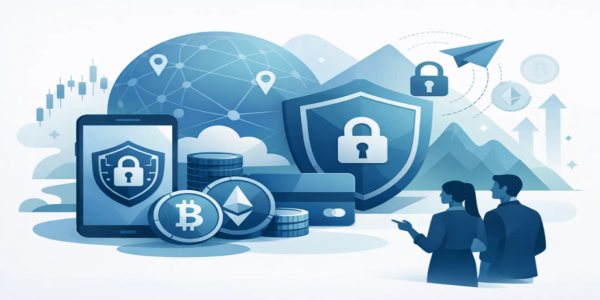
Trends in Private Crypto Payments for 2026
See the trends in private crypto payments shaping faster settlement, wallet control, stablecoin use, and smarter choices for independent traders today.
A payment can settle in seconds and still reveal more than the sender intended. That tension is driving the biggest trends in private crypto payments: users want the speed and global reach of blockchain money without turning every purchase, transfer, or wallet balance into public data.
For independent traders, privacy is not about hiding from responsibility. It is about retaining control. People are looking for payment options that reduce unnecessary exposure, avoid needless account friction, and keep their financial activity from becoming a product for platforms, advertisers, or data brokers.
Privacy Is Moving Beyond a Single Coin
Early conversations about private crypto payments focused almost entirely on privacy coins. That is changing. The new direction is broader: payment privacy is becoming a wallet, transaction-routing, and data-minimization question.
A user may choose a stablecoin for predictable value, a self-custody wallet for control, and a payment method that does not require broadcasting personal details to every counterparty. This approach recognizes that different tools solve different problems. A private asset can protect transaction details, but it does not automatically protect someone whose identity is exposed through a centralized account, a reused wallet address, or a careless payment trail.
The practical trend is toward layered privacy. Traders are paying more attention to what information is collected at signup, what appears on-chain, who controls wallet keys, and whether transaction history is tied to a permanent profile.
Stablecoins Are Becoming the Private Payment Default
Volatility remains one of the biggest obstacles to using crypto for everyday payments. Few people want to price a service in an asset that may move sharply before the recipient converts it. That is why dollar-linked stablecoins continue to gain ground in private payment conversations.
Stablecoins offer a familiar unit of account while preserving crypto’s always-on transfer capability. They can make a P2P settlement, freelancer payment, or cross-border transfer easier to understand than a payment denominated in a fast-moving asset.
Privacy, however, depends on the setup. Many stablecoin transactions are visible on public blockchains. Users who value confidentiality are increasingly looking at the network they use, the wallet they choose, and whether their payment habits create an easily traceable record. Convenience and privacy can work together, but they are not automatically the same thing.
Self-Custody Is Becoming a Payment Feature
For years, self-custody was presented mainly as a security principle: control your keys, control your crypto. It is now becoming a core payment feature as well.
When users hold their own assets, they can move funds without waiting for a platform’s withdrawal window, support response, or internal approval process. That autonomy matters when markets move quickly, when a trading opportunity is time-sensitive, or when a cross-border payment cannot wait for banking hours.
Self-custody also reduces dependence on one company’s rules. But it brings real responsibility. A lost recovery phrase can mean permanent loss of funds. A transaction sent to the wrong address may be impossible to reverse. Private payment freedom works best when it is paired with careful wallet security, offline backups, and a habit of checking every address before sending.
Wallet Design Is Reducing Accidental Exposure
Crypto privacy is often weakened by simple behavior. Reusing one wallet address, publicly sharing receiving addresses, or connecting the same wallet to every app can create a clearer financial map than users realize.
Modern wallet design is beginning to respond. Expect more tools that separate accounts by purpose, generate fresh receiving addresses where supported, make permissions easier to review, and clearly show what data a connected application can access. These are not flashy features, but they address everyday privacy leaks.
The strongest trend is not total invisibility. It is intentional compartmentalization. A trader may keep long-term holdings separate from active trading funds, use different wallets for P2P activity, and avoid connecting a primary wallet to unfamiliar services. That kind of organization can improve both privacy and security without making crypto harder to use.
Faster Settlement Is Raising Expectations
Private crypto payments are no longer judged only by whether they can happen. They are judged by how quickly funds arrive, how predictable fees are, and whether the payment works when users need it.
Network congestion and high fees can still make an otherwise private transaction impractical. This is creating demand for payment rails that offer lower-cost transfers and faster confirmations, especially for smaller transactions. Users do not want to spend a disproportionate fee just to move modest value between wallets.
Speed has a trade-off. Faster networks and newer tools may have different liquidity, security histories, or compatibility levels. Before moving meaningful funds, traders should test a payment path with a small amount and confirm that both sender and recipient support the same asset and network. A cheap transfer is only useful if it arrives where it is supposed to go.
P2P Payments Are Becoming More Purpose-Built
Peer-to-peer crypto is shifting from a simple send-and-receive function into a more flexible payment method. Users are settling informal debts, paying contractors, moving funds between regions, and exchanging value directly without relying entirely on traditional bank rails.
That flexibility is particularly valuable for people who want broader payment choices. Yet P2P activity also requires better judgment than a standard card transaction. There may be no chargeback process, no automatic dispute resolution, and no guarantee that a counterparty is acting in good faith.
The smart direction is private, not reckless. Verify the payment details independently, use clear terms before sending funds, and treat unexpected payment requests with skepticism. Privacy should reduce unnecessary exposure, not reduce basic caution.
Regulation Will Keep Shaping Private Payment Tools
The demand for financial privacy is real, but it exists alongside changing rules for exchanges, stablecoins, payment processors, and digital-asset reporting. This is one of the defining tensions in private crypto payments for 2026 and beyond.
Some users will prefer platforms with minimal onboarding friction. Others will prioritize services that offer specific consumer protections, banking relationships, or jurisdictional clarity. There is no universal answer because the right choice depends on the transaction, the asset, the user’s location, and their comfort with risk.
The important distinction is between privacy and unlawful activity. Legitimate users can want discretion around their holdings, payments, and trading habits while still following the laws that apply to them. Platforms and users alike will need to navigate that line with more maturity as crypto becomes a larger part of the financial system.
Interoperability Will Matter More Than Hype
A private payment method loses value if it only works inside one narrow ecosystem. The next wave of adoption will favor tools that make it easier to move between assets, wallets, and payment networks without creating unnecessary friction or exposing more information than needed.
For traders, this means payment flexibility will increasingly sit next to trading flexibility. The ability to convert assets, fund a wallet, settle with a peer, and move value when opportunity appears can matter as much as the price chart itself. Platforms such as Budrigan Market are built around that demand for faster access, broader asset choice, and fewer barriers between a decision and a transaction.
Still, interoperability requires attention. Always confirm the correct network, understand conversion costs, and avoid assuming that two tokens with a similar name or ticker are interchangeable. The details determine whether a payment experience feels free or frustrating.
What Private Payment Users Should Watch Next
The most useful signals are not marketing slogans. Watch whether payment tools give users clear control over keys, transparent fee information, practical wallet privacy settings, reliable settlement times, and the ability to choose how they hold and move funds.
Also watch for tools that treat privacy as a normal expectation rather than a premium add-on. The future of crypto payments will not belong only to the most complex technology. It will belong to services that make financial control understandable for everyday users while respecting the reality that privacy, security, speed, and compliance each involve trade-offs.
Your next crypto payment does not need to reveal more than necessary or take longer than it should. Start with the basics: control your wallet, understand your network, separate your payment activity thoughtfully, and choose tools that respect your independence.
Share This Post
Recent Posts
-
-
-
How to Choose a Crypto Wallet That Fits You
28 Jul 2026
-

An Example of Instant Crypto Conversion
28 Jul 2026
-