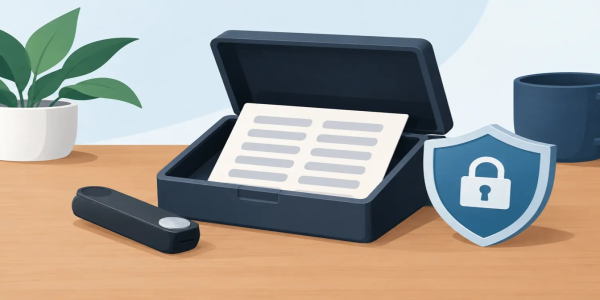
How to Protect Seed Phrases Offline Safely
Learn how to protect seed phrases offline with practical storage choices, backup rules, and recovery checks that keep your crypto safe and fully controlled.
Your seed phrase is not a login detail. It is the master key to your wallet and the assets it controls. If someone gets the words, they can move your crypto. If you lose every accurate copy, no exchange, wallet provider, or support team can restore access. To protect seed phrases offline is to keep that key outside the reach of phishing pages, hacked cloud accounts, malware, and casual digital mistakes.
That level of control is the point of crypto ownership. It also comes with responsibility. A fast trade or simple wallet setup should never turn into a rushed backup decision. Take a few deliberate minutes now so your funds stay yours when markets move, devices fail, or accounts get compromised.
What an Offline Seed Phrase Backup Really Means
An offline backup is a recovery phrase stored without an internet-connected system involved. It is not a screenshot saved to your phone, a note in an email draft, a password manager entry, or a document tucked into cloud storage. Those methods may feel convenient, but they create attack paths that do not need to exist.
A standard wallet recovery phrase usually contains 12 or 24 words in a precise order. Anyone who enters those words into a compatible wallet can recreate access. The words do not need your phone, your email, or your account password. That is why the phrase deserves more protection than the device you use to trade.
Offline does not mean careless paper storage. It means reducing digital exposure while planning for real-world risks such as fire, water, theft, misplacement, and unauthorized access at home. The right method depends on the amount you hold, your living situation, and how often you need to recover a wallet.
How to Protect Seed Phrases Offline From Day One
Start at wallet creation. Write the words down by hand exactly as shown, in the same order. Check every word twice before you close the setup screen. One misspelled word or one swapped position can make a backup useless when you need it most.
Create the backup in a private setting. Avoid cameras, screen-sharing software, smart displays, and people looking over your shoulder. Do not say the phrase aloud. Voice assistants and nearby recording devices are not part of a secure setup.
Then make at least two accurate copies. A single copy creates a single point of failure. Two copies protect against an accident, but they should not sit in the same drawer, safe, or building. A home safe and a separate secure location are often a stronger starting point than keeping both copies together.
The goal is balance: enough separation to survive a local disaster, without spreading copies so widely that you lose track of who can find them.
Choose the Right Physical Material
Paper is cheap, private, and easy to use. For a smaller balance or a temporary backup, archival-quality paper and permanent ink can be reasonable. Keep it in a sealed, waterproof sleeve and store it where it will not be exposed to heat, humidity, or sunlight.
For long-term storage or a meaningful crypto position, consider a metal backup. Steel storage plates or similar durable options are designed to withstand conditions that can destroy paper. They cost more and require careful setup, but the trade-off can make sense when the wallet holds value you would not be comfortable losing.
Do not print your phrase on a shared printer or office printer. Printers can retain documents in memory, and workplace equipment adds people and systems you do not control. Handwriting is slower, but security is not the place to optimize for convenience.
Store Copies With Intent, Not Panic
A locked home safe can be useful, especially one that is secured to the structure of your home. It is not automatically enough. Think about who has access to your home, whether the safe is obvious, and what happens if fire or flooding affects the property.
A second copy may belong in another protected location that only you can access, or with a trusted person under clear instructions. Trust is not a substitute for design. Anyone who can read the complete phrase can control the wallet, so choose arrangements that match your actual risk tolerance.
Avoid hiding a phrase in predictable places: a desk drawer, a book labeled "crypto," a kitchen cabinet, or a folder marked "wallet recovery." A hiding spot should not depend on being clever. It should be physically secure and known well enough that you can recover it years later.
Keep Digital Copies Out of the Equation
The easiest way to lose control is to turn a physical backup into a digital one. Never photograph the recovery words. Do not scan them, email them to yourself, paste them into a notes app, or save them as a file on a USB drive you casually carry around. A USB device may be offline at a given moment, but it becomes vulnerable as soon as it reaches a compromised computer.
The same rule applies to messaging apps. Sending the phrase to yourself in a private chat is still sending it to a service account, a device backup, and potentially every synced session. Convenience can become permanent exposure in seconds.
Be equally skeptical of any website, support agent, or social media account asking for your words. Legitimate wallet providers do not need your seed phrase to help with a transaction, reset an app, verify an account, or troubleshoot a device. Requests for the phrase are a direct attempt to take your funds.
Add a Passphrase Only if You Can Manage It
Some wallets allow an optional passphrase, sometimes called a 25th word. Used correctly, it can create a separate wallet tied to the same recovery phrase. This adds protection if someone discovers the written seed phrase but does not know the additional passphrase.
There is a serious trade-off: lose the passphrase and you may permanently lose access to the wallet it protects. It is not recoverable from the seed words alone. Do not add this layer because it sounds advanced. Add it only if you have a clear plan for storing it separately and reliably.
Never write the full seed phrase and its passphrase together. That defeats the purpose. Treat each piece as a separate secret, and make sure your recovery plan explains what you need without exposing either item to the wrong person.
Test Recovery Before It Becomes an Emergency
A backup is only valuable if it works. After creating it, verify the words and their order using the wallet's approved recovery process. If possible, test with an empty wallet or a small amount first. Never enter your phrase into a random site that claims to verify it.
For a larger long-term holding, conduct a controlled recovery test before you rely on the backup. Use a trusted device, confirm the correct accounts and addresses appear, then secure the wallet again. This takes time, but it can reveal a handwriting error, a missing word, or a mistaken assumption before real funds are at risk.
Review your storage plan after major life changes. Moving homes, changing relationships, adding a significant amount of crypto, or changing your estate plan can all affect who can access your backup and whether the location is still secure.
Plan for Loss Without Giving Away Control
Self-custody is freedom, but it should not become a secret so complete that no one can act if you cannot. If your holdings are substantial, consider leaving limited recovery instructions for a trusted heir or professional adviser. The instructions can explain where to look and what process to follow without placing the full seed phrase in the same document.
For advanced users managing larger balances, distributing risk through separate wallets or a multisignature setup may be worth considering. These options can reduce reliance on one phrase, but they also introduce more complexity. More security only helps when you understand the recovery process and can maintain it over time.
Your wallet can move at the speed of the market. Your backup should move at the speed of good judgment. Write it correctly, keep it offline, store it with purpose, and review the plan before you need it. That is how you keep financial control where it belongs: with you.
Share This Post
Recent Posts
-

Crypto Dollar Cost Averaging Guide for Freedom
10 Nov 2026
-

Crypto Market Trends That Could Shape 2026
10 Nov 2026
-

Crypto Risk Management for Smarter Fast Trades
10 Nov 2026
-
-