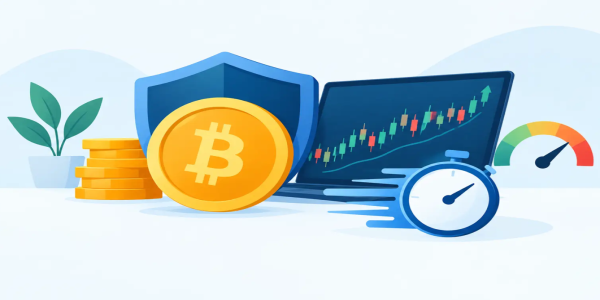
Crypto Risk Management for Smarter Fast Trades
Crypto risk management helps protect capital, plan each trade, and stay in control when volatile markets move fast, hard, and without warning at all times.
A fast trade can feel like a win before the chart has even settled. That is exactly why crypto risk management belongs at the center of every decision - not after a position turns against you. Crypto markets can move sharply in minutes, with liquidity changes, sudden news, and crowd emotion pushing prices far beyond what seemed likely an hour earlier.
Freedom to trade on your terms is powerful. So is the responsibility that comes with it. Whether you are converting assets, trading spot pairs, making P2P transactions, or looking for arbitrage opportunities, a clear risk plan helps you stay active without letting one bad call control your balance.
Crypto Risk Management Starts Before You Buy
The most expensive mistake is entering a trade without knowing what would prove the idea wrong. A coin may have momentum, a convincing chart pattern, or strong market attention. None of that guarantees the next move. Before you place an order, decide three things: where you enter, where you exit if the trade fails, and where you take profit if it works.
That plan does not need to be complicated. If you buy an asset at $100 because you expect support to hold, you might decide the setup is invalid if price falls below $94. Your exit is not a sign that you failed. It is the cost of testing an idea without exposing your full account to it.
The key is making that decision before emotion takes over. Once price is falling, traders often move a stop lower, tell themselves the market will recover, then watch a manageable loss become a damaging one. A predefined exit protects more than capital. It protects your ability to make the next decision clearly.
Size the Position Around the Risk
Position size should follow your exit level, not your excitement level. Start with the dollar amount you can afford to lose on a single trade. Then calculate how much of the asset you can buy while keeping that loss within your limit.
For example, if your account is $5,000 and you choose to risk 1% on a trade, your maximum planned loss is $50. If your stop is 5% below entry, a $1,000 position would expose roughly $50 before trading costs and slippage. That is a very different decision from putting $3,000 into the same trade simply because the opportunity feels urgent.
There is no universal percentage that fits every trader. Newer traders may prefer smaller risk per position while they build consistency. Active traders may take more frequent setups but still keep the loss on each one controlled. What matters is consistency. A risk rule that changes with every mood is not a rule.
Build a Trading Plan That Survives Volatility
Volatility creates opportunity, but it also makes loose planning expensive. A coin can rise 15% in a session and reverse just as quickly. In thin markets, the displayed price may not be the price you receive when exiting a large order. In a fast selloff, stop orders can fill below the level you expected.
That does not mean you should avoid volatile assets. It means you should account for how they behave. Wider stops may be necessary for assets with larger daily swings, but wider stops also require a smaller position. If a trade needs room to move, give it room by reducing size rather than risking more capital.
Use limit orders when price precision matters, especially in less liquid pairs. They can help you define the price you are willing to accept, although they may not fill if the market moves away. Market orders offer speed, but that speed can come with slippage. The right choice depends on liquidity, urgency, and the size of your order.
A practical plan also defines your time frame. A position meant to last a few hours should not quietly become a long-term hold because it is losing. Likewise, a long-term allocation should not be treated like a day trade every time the market drops 3%. Separate these strategies from the beginning, including the capital you assign to each.
Protect Your Capital From Concentration Risk
Holding several coins does not automatically mean you are diversified. Many crypto assets move together when Bitcoin changes direction or when market sentiment turns risk-off. Five altcoins can behave like one oversized bet during a broad correction.
Look at your exposure by theme, not just ticker symbol. If most of your portfolio is tied to one ecosystem, one narrative, or highly correlated smaller-cap assets, your downside may be larger than it appears. Consider keeping a portion in assets with different roles, or keeping funds uncommitted so you can act without being forced to sell at a bad time.
Stablecoins can be useful for managing active trading exposure, but they carry their own risks. Their reliability depends on the asset, its reserves, market conditions, and the platform or wallet used to hold it. Treat every asset as something to evaluate, not as a guaranteed safe zone.
Avoid using every available dollar as collateral or capital. A cash reserve gives you options. It can help you meet an unexpected need, take advantage of a better setup later, or simply avoid panic when the market is down. Being fully deployed may feel productive in a bull run. It can feel very different when liquidity disappears.
Keep Leverage on a Short Leash
Leverage magnifies outcomes in both directions. It can increase the return on a correct idea, but it reduces the room you have to be wrong. A move that would be ordinary in spot trading can trigger liquidation in a leveraged position.
If you use leverage, lower your position size first. Do not treat borrowed exposure as a reason to take the same dollar risk with a bigger position. Plan for sudden wicks, funding costs, and the possibility that an exchange's liquidation rules can close the trade before price has a chance to recover.
For many traders, spot trading offers a cleaner way to build discipline. You can focus on entries, exits, and portfolio allocation without the added pressure of liquidation thresholds. The best tool is the one that matches your experience, account size, and ability to follow a plan under pressure.
Security Is Part of Crypto Risk Management
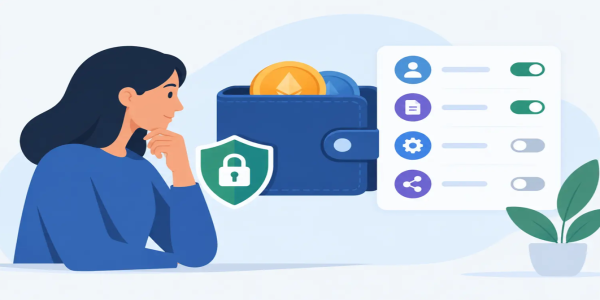
Market risk gets attention because it is visible on a chart. Security risk can be more final. A compromised wallet, exposed recovery phrase, fake support message, or rushed P2P transaction can erase funds without a market move at all.
Keep recovery phrases offline and never share them with anyone. Use a unique password for every account and enable available account protections. Verify wallet addresses character by character, especially when sending a new asset or using copy-and-paste. Malware can replace a copied address in seconds.
Privacy and low-friction access are valuable, but they do not remove the need for personal safeguards. On a platform built for immediate market access such as Budrigan Market, take ownership of each transaction before confirming it. Check the asset, network, amount, destination, and current market rate. A few seconds of verification can prevent an irreversible mistake.
Be equally careful with social media tips and private messages. Scammers often create urgency because urgency weakens judgment. No legitimate opportunity requires you to reveal your keys, send crypto to “verify” a wallet, or act before you can review the details.
Review the Process, Not Just the Profit
A profitable trade can still be poorly managed. If you made money by entering too large, skipping an exit plan, or chasing a sudden pump, repeating that behavior may eventually cost you. A losing trade can be well executed if you followed your setup, respected your risk limit, and exited when the trade was invalidated.
Keep a simple record of your entries, exits, position size, reason for the trade, and result. After several trades, patterns become easier to see. You may find that your best setups work at certain times, that you overtrade after a loss, or that one asset class creates more slippage than expected.
The goal is not to eliminate losses. No strategy can do that. The goal is to make losses small enough that you can stay in the market, keep learning, and be ready when the next real opportunity appears. Trade with speed when it serves you, but let discipline decide how much you put on the line.
Share This Post
Recent Posts
-

Crypto Dollar Cost Averaging Guide for Freedom
10 Nov 2026
-

Crypto Market Trends That Could Shape 2026
10 Nov 2026
-

How to Protect Seed Phrases Offline Safely
10 Nov 2026
-
-