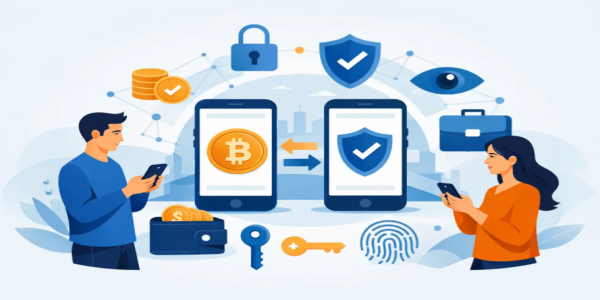
How to Use Peer-to-Peer Crypto Safely in 7 Smart Steps
Learn how to use peer-to-peer crypto safely with practical checks for payments, wallets, escrow, and scams so you can trade with confidence every time.
A fast P2P crypto trade can put you in control of your money, your payment method, and your timing. It can also go wrong fast when you trust a screenshot, send crypto before funds clear, or take a conversation outside the platform. Knowing how to use peer-to-peer crypto safely lets you keep the freedom of direct trading without making easy mistakes that scammers count on.
P2P is not about fearing every counterparty. It is about using a process that protects your funds before, during, and after each trade. Move with confidence, but make every step verifiable.
How to Use Peer-to-Peer Crypto Safely Without Losing Control
1. Trade only with a clear offer and a credible counterparty
Before opening a trade, read the full offer instead of focusing only on the price. Check the payment method, settlement window, minimum and maximum amount, instructions, completion rate, trade history, and user feedback. A rate that looks far better than the rest of the market may be an opportunity, but it can also be bait for rushed decisions.
Start with smaller transactions when dealing with a new counterparty. That gives you a practical way to test their communication, payment timing, and willingness to follow the stated terms. For larger trades, choose users with an established history and consistently strong feedback rather than chasing the absolute best rate.
A real trader should be able to communicate clearly and stay focused on the deal. Be cautious if someone creates artificial urgency, changes instructions after you open the order, or gives vague explanations for why normal safeguards do not apply.
2. Keep the trade inside the platform from start to finish
P2P platforms are built to document the agreement, hold digital assets through escrow where available, and provide a record if a dispute occurs. Those protections weaken the moment you agree to finish the transaction through private messages, an outside wallet, email, or a different payment channel.
Never accept the line, “Cancel this order and I’ll send it directly.” Once an order is canceled, escrow protections may no longer apply. The same rule applies to requests to move the discussion to text messages, Telegram, WhatsApp, or social media. A polished profile on another app does not replace a documented trade.
On a marketplace such as Budrigan Market, use the trade flow as intended: open the order, follow the written terms, confirm payment through your own account, and release crypto only when the conditions are met. Fast access should not mean skipping the guardrails that keep a direct trade accountable.
3. Use escrow, but understand what escrow does not cover
Escrow can prevent a seller from sending crypto before the buyer completes the agreed payment. That is a major advantage, but it does not prove that a payment is legitimate, irreversible, or coming from the right person. Escrow protects the crypto side of the deal. You still have to verify the payment side.
If you are buying, send the exact amount using the payment method in the offer and mark the order as paid only after you have actually sent it. Do not mark payment early to hold an order longer. If you are selling, do not release crypto because a buyer says they paid or sends a confirmation image.
The rule is simple: the seller releases only after independently confirming the funds in their own payment account. Not in a screenshot. Not in an email notification. Not in a message that claims a bank transfer is pending.
4. Treat payment confirmation as a verification task
Payment scams work because people confuse a notice with settled money. Log in to your bank, payment app, or payment provider directly and verify the transaction details yourself. Confirm the amount, sender information when available, currency, and final status.
Some payment methods can be reversed, disputed, or funded through compromised accounts. Others may show as pending for hours or days. For a seller, that means payment convenience and payment finality are not the same thing. Consider the reversal risk before accepting a method, especially for a high-value trade.
Avoid third-party payments. If the buyer’s name does not match the account or identity information required by the platform, pause and follow the platform’s stated dispute process. A buyer who says their friend, relative, or business partner paid for them may be creating a problem you cannot unwind later.
Keep all receipts, transaction IDs, and messages within the order record. Clear evidence matters if the transaction is challenged.
5. Protect your wallet and account before you trade
The safest P2P deal can still end badly if someone gains access to your exchange account or wallet. Use a unique, long password for every crypto service, then enable the strongest available two-factor authentication. An authenticator app or hardware security key is generally safer than SMS codes, which can be vulnerable to SIM-swap attacks.
Never share your password, recovery phrase, private key, authentication code, or screen-share access with anyone. No legitimate support agent needs your seed phrase. Anyone asking for it is trying to take control of your funds.
For larger balances, consider separating trading funds from long-term holdings. Keep only the amount you need for active trades in a hot wallet or exchange wallet, and move longer-term assets to storage you control. Before sending any crypto withdrawal, check the address character by character, confirm the network, and consider a small test transaction when the destination is new.
6. Recognize the pressure tactics behind common P2P scams
Most P2P scams are not technically complex. They rely on speed, distraction, and social engineering. Watch for fake payment confirmations, fraudulent customer-service accounts, QR codes that lead to imitation sites, and buyers who claim they accidentally overpaid and demand an immediate refund.
If someone says a platform support team needs you to send crypto to “verify” an account or release a payment, stop. Do not scan an unfamiliar QR code. Do not install remote-access software. Do not click a login link sent by a counterparty. Enter the platform address yourself or use a trusted saved bookmark.
Stay calm when a counterparty becomes aggressive. Urgency is not evidence. A legitimate trade can survive the few minutes it takes to check your account, reread the order terms, and use formal support or dispute channels when something does not match.
7. Know when to walk away and how to handle a dispute
Cancel or avoid a trade when the terms change, the payment comes from an unapproved third party, the buyer asks you to release crypto early, or the transaction details do not match the order. Losing a tempting rate is better than losing the asset itself.
If an issue develops after the order is open, keep the trade active and use the platform’s dispute tools. Provide concise evidence: payment records, timestamps, transaction IDs, and relevant messages. Do not insult the counterparty or negotiate a side deal while a dispute is in progress. Facts are stronger than frustration.
Privacy and freedom are valuable in crypto, but they work best with personal discipline. Follow applicable laws and platform rules, keep records for your own protection, and do not let the desire for a fast trade override basic verification.
The strongest P2P traders are not the ones who move first. They are the ones who can move quickly because their safety process is already set: verify the person, verify the payment, protect the wallet, and release only when the evidence is real. Build that habit into every trade, and your independence has a far better foundation.
Share This Post
Recent Posts
-

P2P Crypto Marketplace Built for Trading Freedom
27 Aug 2026
-

Market Order Versus Limit Order Explained
27 Aug 2026
-

When Are Blockchain Fees Lowest? A Trader Guide
24 Aug 2026
-

An Example of Crypto Arbitrage Execution
24 Aug 2026
-
Crypto Privacy: Control More Than Your Balance
24 Aug 2026