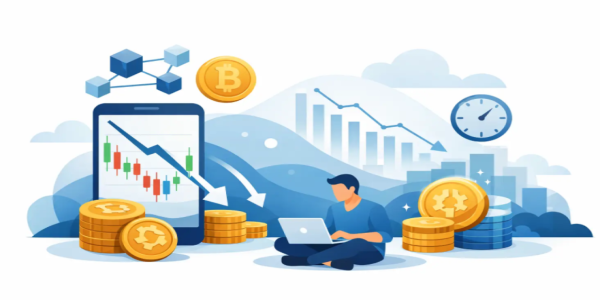
When Are Blockchain Fees Lowest? A Trader Guide
Find out when are blockchain fees lowest and how to time transfers, swaps, and trading moves while keeping your crypto costs under control with confidence.
A $5 network fee may be irrelevant on a large position. On a $25 transfer, it can erase the advantage you were chasing. Knowing when are blockchain fees lowest gives you more control over every deposit, withdrawal, wallet move, and on-chain swap. The goal is not to wait forever for the perfect fee. It is to recognize expensive conditions, act during quieter windows, and keep your crypto moving on your terms.
When Are Blockchain Fees Lowest?
Blockchain fees are generally lowest when fewer people are competing to have transactions processed. That usually happens during off-peak hours, lower trading activity, and calmer market conditions. But there is no universal cheap hour that applies to every chain, every day.
On networks such as Bitcoin and Ethereum, demand drives the queue. When blocks are full and users are bidding for faster confirmation, fees climb. When the mempool or pending transaction pool is quieter, users can often pay less and still get confirmed in a reasonable time.
For US-based traders, lower activity often appears late at night, early in the morning, or on weekends. These are useful starting points, not guarantees. Crypto is global. A major price move in Asia, a token launch in Europe, or a sudden market sell-off can make any hour expensive.
The lowest-fee window is usually the one with three conditions: the network is calm, your transaction is not urgent, and you have checked the live fee estimate before sending.
Why Blockchain Fees Change So Fast
A blockchain does not charge one fixed price for every transfer. Fees reflect demand for limited block space. Think of a busy network as a packed express lane. When everyone wants in immediately, the price of priority rises.
On Ethereum and other smart-contract networks, the cost also depends on what you are doing. Sending a native asset from one wallet to another usually uses less computational work than swapping tokens, minting an NFT, interacting with a liquidity pool, or approving a new token contract. A quiet network can still produce a costly transaction if the action itself requires substantial gas.
Bitcoin fees are influenced more directly by transaction size in bytes and competition for block inclusion. Transactions that consolidate many small inputs can cost more than a simple send. A fee that looks high is not always a sign of a congested network. Sometimes it reflects the structure of the transaction you are creating.
Market events can change conditions in minutes. Fee spikes commonly appear during sharp rallies, rapid sell-offs, popular token claims, large NFT drops, major protocol updates, and periods when traders rush to move funds between platforms. If you wait until the crowd is moving, you are usually paying crowd pricing.
The Best Times to Make Non-Urgent Transfers
If your transfer has no deadline, avoid the obvious pressure points. Do not assume the moment a price starts moving is the moment to reorganize your wallet. That is when many traders are sending funds, bridging assets, and swapping into new positions at once.
Instead, check the network during quieter periods and use the fee option that matches your urgency. Standard or economy settings can make sense for non-time-sensitive transfers. Higher priority fees are for moments when confirmation speed matters more than cost, such as funding a trade before a narrow opportunity disappears.
The practical habit is simple: check first, send second. Review the estimated network fee in your wallet or platform, then decide whether the transaction needs to happen now. If the fee is unusually high and the transfer can wait, set a reminder and check again later rather than forcing an expensive move.
For active traders, separating urgent funds from long-term funds helps. Keep a working balance where you trade most often, and avoid repeatedly moving the same assets on-chain for every small decision. Fewer unnecessary transfers mean fewer chances for fees to chip away at returns.
Use the Right Network for the Job
Timing matters, but network selection matters just as much. Bitcoin and Ethereum have deep liquidity and broad support, yet their fees can rise sharply during heavy use. Other networks may offer lower transaction costs and faster confirmation, depending on the asset, wallet, destination, and trading pair you need.
Do not choose a network based on the fee alone. Confirm that the receiving platform supports that exact asset on that exact chain. USDT on one network is not automatically interchangeable with USDT on another. Sending to an unsupported network can lead to delayed recovery, added support work, or permanent loss.
Before you move funds, verify the token, network, deposit address, and any required memo or destination tag. A low fee is never a bargain if the transfer arrives somewhere it cannot be credited.
For smaller balances, it can be smarter to wait and make one planned transfer instead of several tiny ones. This is especially true when base fees are elevated. For larger balances or time-sensitive trades, paying a reasonable fee may be the cost of preserving flexibility. Financial freedom is not about choosing the cheapest option every time. It is about choosing deliberately.
How to Avoid Paying Peak Fees
You do not need complicated tools to reduce network costs. You need a repeatable decision process. Before sending, look at the live estimate, consider whether the transaction is urgent, and compare the available speed options. If the fee feels out of line with the size or purpose of the transfer, pause.
Avoid reacting to hype with on-chain urgency. A viral token, a sudden candle, or a headline-driven market move can trigger a rush that makes swaps and transfers far more expensive. The market may create opportunity, but a rushed transaction can turn a promising entry into a poor one.
Plan funding ahead of major events when possible. If you know you want capital ready for a trading session, move it during a quieter period instead of waiting until volatility is already underway. This reduces both fee pressure and the stress of watching a pending transaction while prices move.
Be careful with manual gas settings. Setting a fee too low can leave a transaction pending for longer than expected. On some networks, replacing or accelerating a stuck transaction may cost more and create confusion. If you are newer to on-chain activity, the wallet's recommended setting is often the safer choice unless you understand the trade-off.
Fees Beyond the Blockchain
Network fees are only one part of the cost. Depending on where and how you trade, you may also face spread, conversion charges, platform trading fees, withdrawal fees, or costs built into a swap route. A transaction with low gas is not automatically the lowest-cost transaction overall.
This matters when you compare on-chain swaps against exchange-based trading. An on-chain swap may offer direct access to a token, but the gas and price impact can be meaningful in a shallow pool. A platform trade may be faster or more cost-efficient for a liquid pair, while a wallet transfer may be best when you want direct custody.
Budrigan Market is built for traders who value fast access and broad crypto flexibility, but the same rule applies everywhere: review the full cost before you confirm. The strongest move is the one that gets your assets where they need to be without sacrificing unnecessary value along the way.
Is the weekend always cheaper for blockchain fees?
No. Weekends can be quieter on some networks, but they can also bring major market news, token launches, or trading activity from other regions. Treat the weekend as a time to check, not as a guaranteed discount.
Should I always choose the lowest fee setting?
Not if timing matters. A low fee can mean a slower confirmation or a transaction that sits pending during congestion. Choose the lowest setting that still matches your deadline and risk tolerance.
Can I cancel a blockchain transaction if fees rise?
Usually, a confirmed transaction cannot be reversed. A pending transaction may sometimes be replaced or accelerated, depending on the network and wallet. Check every detail before you send, especially the address and network.
The next time a fee estimate looks painful, do not let impatience make the decision for you. Check the network, weigh the urgency, and move when the cost supports the opportunity. Small choices like this keep more of your crypto working for you.
Share This Post
Recent Posts
-

Stablecoin Regulation Trends 2026 Explained
08 Oct 2026
-

Market Orders Versus Swaps: Know Your Trade
08 Oct 2026
-

Stablecoins Versus Bank Deposits Compared
08 Oct 2026
-
Crypto Taxes: Trade Freely, Report Clearly
08 Oct 2026
-
9 Top Wallet Security Mistakes to Stop Now
08 Oct 2026