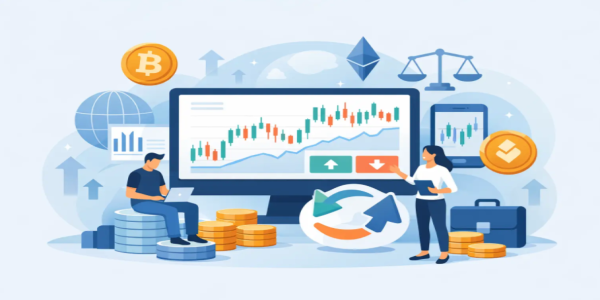
Top Features of Spot Exchanges That Matter
Learn the top features of spot exchanges that shape faster trades, clearer pricing, asset choice, wallet access, and control in every transaction today.
A spot exchange should not make you wait, guess, or fight through unnecessary friction before you can trade. The top features of spot exchanges matter because they determine how quickly you can move from a market decision to an executed order - and how much control you retain after the trade is complete.
For traders who value independence, the right platform is more than a place to buy Bitcoin or swap one token for another. It is your access point to markets, liquidity, funding methods, wallets, and real-time opportunity. Here is what separates a useful spot exchange from one that only looks good on the surface.
What Makes a Spot Exchange Worth Using?
Spot trading is direct: you buy or sell a digital asset at the current market price, then the asset is credited to your account after the trade executes. There are no contract expiration dates and no need to predict where the market will settle weeks from now. You are trading the asset itself.
That simplicity does not mean every spot exchange delivers the same experience. Some limit your coin selection, add slow account approval processes, hide costs in the conversion rate, or make it difficult to move funds when the market is active. A stronger exchange puts speed, visibility, and user control at the center of the experience.
For newer traders, that means less confusion between funding an account, placing an order, and storing an asset. For active traders and arbitrage-minded users, it means fewer barriers between identifying a price difference and acting on it.
Top Features of Spot Exchanges for Active Traders
Real Liquidity and Reliable Order Execution
Liquidity is the feature behind a trade that feels immediate. It reflects how easily buyers and sellers can meet at prices close to the market rate. When liquidity is thin, a large order can push the price up or down before it finishes filling. This is known as slippage, and it can turn a promising trade into a more expensive one.
Look for active markets, visible order books, and trading pairs with enough participation to support your typical order size. High liquidity is especially valuable during sharp price moves, when delays and wide gaps between buy and sell prices can cost more than a posted trading fee.
Liquidity is not identical across every asset. Major coins may trade quickly while newer or smaller tokens have lower volume. A useful platform gives you enough market information to recognize that difference before you commit funds.
Clear Prices, Spreads, and Trading Costs
The price on the screen is not always the price you receive. A good spot exchange makes the bid price, ask price, spread, and any applicable fee easy to understand before you confirm an order.
The spread is the difference between the highest available buying price and the lowest available selling price. In a liquid market, that gap is usually tighter. In a thin market or an instant conversion tool, the spread can have a bigger effect on your final result. This is why zero-commission language should always be read alongside the quoted rate and the amount you will receive.
Transparent pricing gives you a stronger basis for comparing an instant swap with a limit order. Convenience can be worth paying for when timing matters, but you should know the cost of that convenience before trading.
Broad Asset Selection and Useful Trading Pairs
A short coin list can limit your options before you even begin. One of the top features of spot exchanges is access to a range of established cryptocurrencies, stablecoins, and emerging assets, along with pairs that make practical sense.
More choices can support different goals. You might use stablecoins to move between positions, exchange crypto directly without returning to dollars, or access a smaller asset when market attention begins to build. A platform with 150 or more supported cryptocurrencies can offer considerably more flexibility than one built around only a few large names.
Still, more assets are not automatically better. Check whether the specific coins and pairs you want to trade have active markets, reasonable spreads, and available withdrawal support. Selection creates opportunity only when the market is usable.
Wallet Access and Control Over Your Assets
Spot trading does not end when the order fills. You need a practical way to view balances, receive crypto, send it out, and keep track of what you hold. Integrated wallet functionality can make that process faster by keeping trading and asset management in one place.
The trade-off is simple: funds held on any platform require trust in that platform's security and operating practices. For active trading, keeping readily available balances on an exchange can be convenient. For longer-term storage, many users prefer moving assets to a wallet where they control the private keys.
The best choice depends on your strategy. What matters is that withdrawals, deposits, address details, and network choices are clearly presented. Sending crypto on the wrong network or to the wrong address can be irreversible, so speed should never replace a final confirmation step.
Flexible Funding, Conversions, and P2P Options
A trading opportunity has limited value if funding your account is slow or restricted. Flexible payment methods, crypto-to-crypto conversion, crypto-to-USD options, and peer-to-peer transactions can give traders more ways to enter or exit a position.
P2P functionality can be particularly useful for users who want to transact directly with other participants using payment methods that fit their needs. It also calls for careful attention. Review counterparties, confirm payment status through the proper channel, and never release crypto because of a screenshot or an unverified message.
Fast conversions are another practical feature. They can help you shift from a volatile asset into a stablecoin, rebalance holdings, or move between coins without working through several separate trades. Compare rates before confirming, especially during fast market swings.
Low-Friction Access Without Losing Usability
Many crypto users are tired of platforms that make basic access feel like a paperwork project. A streamlined signup process, an interface that is easy to understand, and fewer arbitrary restrictions can make spot trading more accessible to people who want to act on their own terms.
Privacy-conscious traders may also prefer services that minimize unnecessary data collection. That preference should go hand in hand with personal responsibility. Understand the platform's rules, the laws that apply where you live, and the information needed to protect your account and recover access if something goes wrong.
Budrigan Market speaks directly to users looking for fast, low-friction access, broad payment flexibility, and the freedom to trade a wide selection of digital assets without the institutional feel of traditional finance.
Security Features That Protect the Account You Actually Use
Freedom in trading has little value if an account is easy to compromise. Security is not the most exciting feature on an exchange page, but it is one of the most valuable. Look for strong login protections, two-factor authentication, withdrawal confirmations, device or session management, and clear alerts for unusual activity.
Your own habits are part of the security system. Use a unique password, enable every available account protection, verify web addresses before logging in, and treat direct messages claiming to be support with skepticism. Legitimate support should not need your password, recovery code, or private wallet keys.
A platform can provide safeguards, but no exchange can protect funds from every rushed decision. The fastest traders are often the ones with the most disciplined routines.
How to Evaluate Features Before You Deposit
Before funding a spot account, take five minutes to test the experience with the questions that affect your actual trading plan:
- Can you find the assets and trading pairs you want without searching through a confusing interface?
- Are the final rate, spread, and fees visible before you submit a trade?
- Does the platform offer deposit, conversion, and withdrawal options that match how you intend to move funds?
- Can you enable strong account security immediately?
- Is there enough liquidity for the order size and assets you plan to trade?
Start with a small transaction if you are using a platform or network for the first time. Confirm the deposit address, check the received balance, place a modest trade, and test the withdrawal process before moving a larger amount. That small amount of preparation can prevent avoidable mistakes later.
Choose Features That Match Your Trading Style
There is no single best spot exchange feature for every user. A long-term holder may prioritize wallet withdrawals and security controls. A frequent trader may care most about speed, liquid markets, and spreads. A user moving between payment methods may value P2P access and flexible conversion options above all else.
Choose the exchange that removes friction from your real strategy, not one that adds features you will never use. When the market moves, clarity, control, and the ability to act with confidence are worth more than a crowded dashboard.
Share This Post
Recent Posts
-
Why Crypto Prices Differ Across Exchanges
22 Oct 2026
-

Crypto Price Alerts That Help You Trade Faster
22 Oct 2026
-

Account Security Checklist for Crypto Traders
22 Oct 2026
-
Crypto Arbitrage Taxable? What U.S. Traders Owe
22 Oct 2026
-
Crypto Liquidity Assessment for Smarter Trades
22 Oct 2026