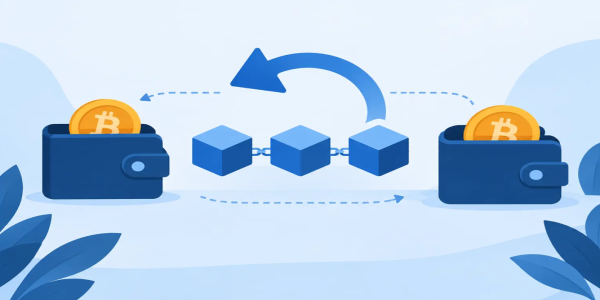
Can Blockchain Transactions Be Reversed? Know This
Can blockchain transactions be reversed? Learn what finality means, when recovery is possible, and how to protect your crypto before you send your funds.
A crypto transfer can feel like sending cash through a glass tube: once it moves, everyone can see it, but nobody can simply pull it back. That reality is behind one of the most common questions from new and active traders: can blockchain transactions be reversed?
Usually, no. A confirmed transaction on a public blockchain is designed to be permanent. There is no bank manager to call, no standard dispute button, and no customer-service team that can rewrite the ledger because a sender made a mistake. That freedom from third-party control is part of crypto’s appeal. It also means every send deserves a final check.
The full answer depends on where the transaction is in its lifecycle, what network you used, and whether you sent funds through a platform, wallet, smart contract, or peer-to-peer arrangement.
Can blockchain transactions be reversed after confirmation?
For a standard on-chain transfer, a confirmed transaction cannot normally be reversed. Once network validators include it in a block and subsequent blocks build on top of it, the transaction gains finality. The recipient controls the funds if they control the destination wallet’s private keys.
That is not a flaw. It is the trade-off that allows decentralized networks to operate without asking a central institution for permission to settle every payment. Your transaction is validated by network rules, not by whether someone later changes their mind.
The number of confirmations matters. Before a transaction is confirmed, it is waiting in the network’s mempool, where some chains and wallets may allow a replacement transaction with a higher fee. After it is confirmed, replacement is generally no longer possible. With additional confirmations, reversing the transaction becomes increasingly unrealistic.
Different networks handle finality differently. Bitcoin relies on growing confirmation depth. Some newer networks provide faster or more explicit finality. But for a trader or wallet user, the practical rule is the same: treat a completed on-chain send as final.
What can happen before a transaction settles?
A transaction that is still pending is not always locked in. If you set a fee that is too low, it may sit unconfirmed for a while. Depending on the blockchain and wallet features, you may be able to speed it up by increasing the fee or replace it with a new transaction.
This is not a true reversal. It is an attempt to change an unconfirmed instruction before validators commit it to the chain. Not every wallet supports this option, and the process differs by network.
A pending transaction can also fail or be dropped. That may happen when the fee is insufficient, the network is congested, the transaction violates a smart contract’s conditions, or it is replaced by another valid transaction using the same funds. If it fails before confirmation, the assets generally remain in the sender’s wallet, though any network fees paid or reserved can vary by chain.
Do not assume “pending” means safe to ignore. Watch the transaction status in your wallet and verify it on the correct network before trying another transfer. Sending twice because the first transfer looks delayed is an expensive mistake.
The situations people mistake for reversals
Crypto users often hear that a transaction was “reversed,” when something else actually happened. Understanding the difference can save time and prevent false expectations.
A platform can reverse an internal balance update
When assets move between users on the same exchange or trading platform, the transfer may happen inside that company’s internal ledger rather than on a public blockchain. The platform may be able to cancel, correct, freeze, or manually review that internal movement under its operating rules.
That is not the blockchain reversing an on-chain transaction. It is a service provider adjusting records it controls. Once you withdraw assets to a self-custody wallet and the withdrawal confirms on-chain, the rules change.
The recipient may voluntarily return the funds
If you sent crypto to the wrong person but can identify and contact them, they can choose to send it back. They are sending a new transaction, not undoing the original one.
This is why a known contact, an escrow arrangement, or a trusted counterparty matters in larger peer-to-peer trades. Recovery depends on cooperation, and there is no guarantee the recipient will cooperate.
A centralized service may help with an address error
If funds are sent to an address controlled by a centralized platform, that platform might be able to locate and return them, particularly when the asset and network are supported. It may charge a recovery fee, require time for manual review, or be unable to help at all.
The outcome depends on its technical setup and access to the destination wallet. A wrong memo, tag, or network can make recovery much harder. Never send first and hope support can fix the details later.
A blockchain can experience a rare reorganization
On occasion, a blockchain may temporarily reorganize its latest blocks when competing versions of recent transaction history are resolved. This is one reason businesses wait for multiple confirmations before treating high-value payments as settled.
For ordinary users, this is not a recovery tool. Deep reorganizations are rare on established networks and are not a practical way to retrieve a completed payment.
Wrong address, wrong network, and scams
Not all irreversible transactions look the same. The recovery odds depend heavily on the error.
If you send an asset to a valid address on the correct network but it belongs to the wrong person, only that person can normally return it. If you send to an address that does not exist in a usable form, the funds may be permanently inaccessible.
Sending on the wrong network is especially risky. For example, an asset sent over one blockchain may not appear in a wallet expecting the same ticker on another blockchain. If you control the destination wallet’s private keys and the networks are technically compatible, recovery may be possible. If a platform controls the address, you need its assistance and there may be no solution.
Scams create the hardest emotional pressure. A fake investment site, impersonator, or fraudulent seller may promise to refund you if you send another payment. Do not send more crypto to “unlock” a withdrawal, pay a fake tax, or activate a supposed recovery service. Blockchain analytics can sometimes trace stolen funds, but tracing does not create the power to reverse a transaction.
Save transaction IDs, wallet addresses, chat records, and screenshots. Report fraud through the appropriate platform and relevant authorities. Act quickly if an exchange account or wallet was compromised, but stay skeptical of anyone who guarantees they can recover funds for an upfront fee.
Smart contracts add another layer of risk
Smart contracts can move assets according to code. If you approve a token allowance, swap through a decentralized exchange, stake assets, or interact with a new protocol, the transaction may be irreversible even if the result surprises you.
Some contracts include administrator controls, pause functions, upgrade mechanisms, or emergency recovery features. Others are deliberately immutable. You cannot assume a project team can reverse a bad trade, recover a mistaken deposit, or rescue funds from a contract just because it has a website and social media account.
Before approving a contract, check the requested permissions. An unlimited token approval may let a contract spend more than the amount needed for one trade. Use the smallest practical approval, and review old permissions periodically. Convenience should not become open-ended wallet access.
How to protect every crypto transfer
The most effective recovery strategy is preventing the error before it reaches the blockchain. Build a simple send routine and use it every time, especially when moving funds quickly between trading opportunities.
Start by confirming the asset, network, and destination address. A wallet address can look valid while belonging to a different chain or unsupported token standard. Make sure any required memo, destination tag, or payment reference is included exactly as requested.
For a new address or a meaningful amount, send a small test transaction first. Wait for it to arrive, then send the remainder. The extra network fee is often cheap insurance compared with losing the full balance.
Copy addresses directly from a trusted source and compare the first and last several characters after pasting. Malware can replace copied crypto addresses in your clipboard. Avoid sending from screenshots, random messages, or search results that could lead to impersonation pages.
Finally, slow down when urgency is part of the pitch. Real markets move fast, but pressure is also a scammer’s favorite tool. A sixty-second verification check gives you more control than any promise of a reversal after funds leave your wallet.
Crypto gives you direct access to your assets and the freedom to move them without waiting for traditional financial gatekeepers. Use that freedom with deliberate habits: verify the details, test new routes, and treat every confirmed transaction as the final decision it was designed to be.
Share This Post
Recent Posts
-

-

Tokenization Trends 2026: What Traders Can Use
09 Nov 2026
-

-

-

Practical Guide to Investor Risk Tolerance
07 Nov 2026