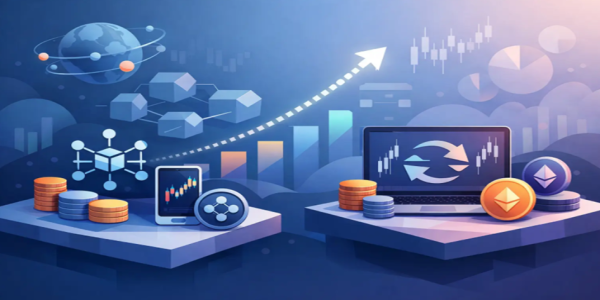
Decentralized Exchange Trends 2026 to Watch
Decentralized exchange trends 2026 point to faster swaps, smarter liquidity, cross-chain access, and more control for active crypto traders everywhere.
A slow trade can cost more than a visible fee. When a market moves hard, traders do not want to wait for an approval queue, move assets through three networks, or lose a price because liquidity is fragmented. That is why decentralized exchange trends 2026 will be shaped less by buzzwords and more by one practical question: how quickly can you act while staying in control of your assets?
For retail traders, the next phase of decentralized trading is about fewer barriers between an opportunity and execution. Faster settlement, broader asset access, smarter routing, and wallet-based control are moving from premium features to basic expectations. The platforms that earn attention will make these advantages easier to use without hiding the risks that come with trading crypto.
Decentralized Exchange Trends 2026: Speed Becomes the Standard
Early decentralized exchanges proved that on-chain trading was possible. They also made traders pay for that independence with slow confirmations, unpredictable network costs, and price slippage during volatile periods. In 2026, that trade-off is getting harder to accept.
Layer 2 networks, high-throughput chains, and better transaction design are pushing exchanges toward near-instant experiences. The goal is not merely a faster swap screen. It is a trading flow where users can check a price, fund a wallet, exchange assets, and manage their position without feeling trapped by network delays.
Speed still depends on the chain, the asset pair, liquidity conditions, and network congestion. A platform can advertise fast execution, but traders should look at the full transaction: quoted price, final price, fees, confirmation time, and withdrawal availability. Fast access matters most when it remains transparent.
This shift also benefits arbitrage-minded traders. Price differences do not last long when markets are active. Better routing and quicker execution can create more realistic opportunities, but competition is increasing too. The edge will not come from chasing every spread. It will come from knowing your costs before entering a trade and moving only when the numbers still work after fees.
Cross-Chain Trading Stops Feeling Like a Separate Task
Crypto users hold value across more than one network. They may keep stablecoins on one chain, trade tokens on another, and receive payments somewhere else entirely. For too long, moving between those ecosystems required bridges, wrapped assets, multiple wallet approvals, and extra points of failure.
One of the most meaningful decentralized exchange trends in 2026 is the move toward cross-chain access built into the trading experience. Instead of treating bridges as a technical obstacle users must solve on their own, exchanges are increasingly handling route discovery behind the scenes. A trader should be able to focus on the asset they want, the amount they want to trade, and the price they are willing to accept.
That convenience does not erase risk. Cross-chain tools can introduce smart contract exposure, delayed settlement, liquidity gaps, and token representation issues. Before confirming a transaction, verify the network, token contract, expected received amount, and any minimum output setting. Convenience is valuable. Blind approvals are not.
For active users, the biggest gain is flexibility. Funds do not need to stay stranded in a single ecosystem simply because moving them is frustrating. More connected markets can mean more choices, more trading pairs, and a better chance of finding competitive pricing.
Liquidity Gets Smarter, Not Just Bigger
A large liquidity number does not automatically mean a good trade. What matters is whether enough usable liquidity exists for your specific pair and trade size at the moment you execute. In 2026, decentralized exchanges will compete on how intelligently they source that liquidity.
Aggregated routing is becoming a key advantage. Rather than relying on one pool, a trading engine can compare routes across available pools and networks to seek a better outcome. For smaller trades, the benefit may look like slightly reduced slippage. For larger trades, efficient routing can be the difference between a manageable fill and a price that destroys the setup.
Liquidity providers are changing too. Passive deposits are giving way to more active strategies that place capital within selected price ranges or respond to market conditions. This can improve capital efficiency, but it also makes liquidity less predictable when prices move sharply. Traders should avoid assuming a quote will remain available until the transaction is finalized.
Stablecoin liquidity will remain especially important. Traders often need a quick way to move between volatile assets and dollar-linked value without leaving the crypto market. The stronger platforms will offer clear conversion paths and multiple choices while making the actual costs easy to understand.
Wallet Control Meets a Simpler Trading Experience
Self-custody has always carried a powerful promise: your assets, your keys, your decisions. It also puts more responsibility on the user. A lost recovery phrase, a malicious approval, or a rushed transaction can turn freedom into an expensive lesson.
The better decentralized trading experience in 2026 will not ask users to choose between control and usability. It will offer clearer signing screens, transaction previews, spend-limit controls, wallet activity alerts, and easier asset management. These tools are not glamorous, but they are the features that help real people trade with more confidence.
For newer traders, simplicity should mean understandable, not oversimplified. If an exchange cannot show what you are sending, what you expect to receive, and what you are paying, pause before proceeding. A clean interface is useful only when it makes critical information easier to see.
Privacy will remain part of this conversation. Many users want to avoid handing over more personal information than a transaction requires. At the same time, legal requirements and service availability can vary by location, payment method, and platform. Responsible traders should understand the rules that apply to them and use services that clearly explain their terms.
On-Ramps and P2P Access Become More Competitive
Trading access begins before the first swap. If funding an account is slow or limited, even the best exchange interface cannot fix the experience. That is why crypto-to-USD conversion options, diverse payment methods, and peer-to-peer transactions will matter more in 2026.
P2P trading can give users additional flexibility when traditional payment rails are limited or expensive. But it requires discipline. Confirm payment status independently, keep communication inside the platform when possible, and never release crypto based on a screenshot or a promise. A fast transaction is not a safe transaction unless each side of the trade is verified.
For users who want a more direct route into crypto markets, platforms such as Budrigan Market are built around immediate access, broad asset choice, wallet utility, and low-friction trading flows. The right fit still depends on the assets you need, the payment options available to you, applicable requirements, and how you prefer to manage custody.
What Traders Should Watch Before They Trade
The most attractive platform is not always the one making the loudest promise. In a market that moves quickly, focus on the details that affect your actual result: execution quality, liquidity for your chosen pair, network support, withdrawal options, pricing transparency, and wallet security controls.
It also pays to separate access from strategy. More coins, more chains, and faster trades can expand your choices, but they do not turn a weak trade into a strong one. Set your trade size before you enter, know the maximum loss you can accept, and do not let urgency replace a plan.
The opportunity in 2026 is not just that decentralized exchanges may offer more freedom. It is that traders can demand freedom that works - fast enough for real markets, clear enough for informed decisions, and flexible enough to keep control where it belongs: with the user.
Share This Post
Recent Posts
-
Stablecoin Regulation Trends 2026 Explained
08 Oct 2026
-
Market Orders Versus Swaps: Know Your Trade
08 Oct 2026
-
Stablecoins Versus Bank Deposits Compared
08 Oct 2026
-
Crypto Taxes: Trade Freely, Report Clearly
08 Oct 2026
-
9 Top Wallet Security Mistakes to Stop Now
08 Oct 2026