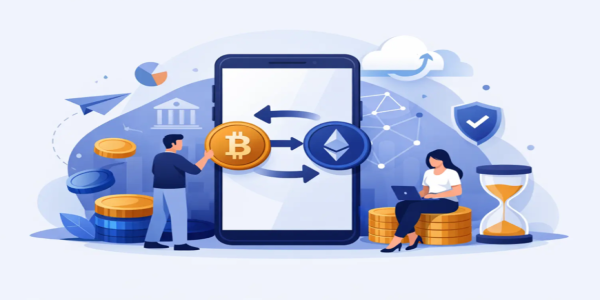
Fast Crypto Withdrawals Explained Simply
Fast crypto withdrawals explained: learn what affects processing, network confirmation, fees, and wallet readiness so you can move funds with confidence.
A withdrawal can feel instant right up until it is not. You press send, your balance changes, and then the real question arrives: where are the funds? Fast crypto withdrawals explained starts with one fact many traders miss - a platform can process your request quickly, but the blockchain still has to carry and confirm the transaction.
For active traders, speed is more than convenience. It can mean moving capital to catch a price difference, paying someone directly, securing profits in a personal wallet, or shifting into a different asset without sitting through unnecessary delays. The goal is not just to withdraw faster. It is to understand which parts of the process you control and which parts depend on the network.
Fast Crypto Withdrawals Explained: Two Speeds Matter
There are two separate clocks behind nearly every withdrawal. The first is platform processing. This is the period between submitting a request and the platform broadcasting the transaction to the selected blockchain. The second is network confirmation, when validators or miners add that transaction to the chain and the receiving wallet recognizes it as confirmed.
A platform may approve and broadcast a withdrawal in minutes, yet a busy network can still make the arrival feel slow. On the other hand, an exchange may hold a request for a security review, wallet maintenance, or a scheduled batch payout even when the network itself is moving normally.
That distinction matters when you compare withdrawal experiences. “Fast” should mean the request is processed promptly, the correct network is used, fees are set competitively for current conditions, and the receiving address is ready to accept the asset. It should not mean assuming every coin will arrive at the same speed.
What Actually Determines Withdrawal Time?
Crypto does not travel at one universal rate. Each asset has its own blockchain design, block time, confirmation expectations, and level of network activity. A transfer on one network may settle in seconds or a few minutes, while another can take much longer during peak demand.
The withdrawal time usually comes down to four connected factors:
- Platform processing: Some services send transactions continuously. Others group requests into batches or pause withdrawals during maintenance.
- Network congestion: When many users are competing for block space, transactions with lower fees may wait longer to be included.
- Confirmation requirements: A receiving platform may credit funds after one confirmation, while another may require several for added protection.
- Wallet and address details: Using an unsupported network, missing a required memo, or entering an incorrect address can stop a transfer before speed even becomes relevant.
The asset itself matters, too. Sending stablecoins can be quick, but the result depends entirely on the chain you choose. The same token may exist on multiple networks, each with different costs, throughput, and compatibility rules. A cheap network is not useful if the destination only accepts the token on another chain.
The Difference Between Internal and On-Chain Transfers
Not every crypto movement needs to wait for a public blockchain. If both the sender and receiver use the same platform, the transfer may be handled internally. That can be close to immediate because the platform is updating account balances rather than asking external validators to process a transaction.
An on-chain withdrawal is different. The assets leave the platform wallet and are sent to an address on a blockchain. This gives you direct portability and greater control, but it also introduces blockchain timing, network fees, and confirmation rules.
Neither option is automatically better. Internal transfers can be efficient for moving funds between users on the same service. On-chain withdrawals are necessary when you want to hold funds in a self-custody wallet, send crypto to another exchange, interact with a decentralized application, or pay someone outside the platform.
How to Prepare for a Faster Withdrawal
Speed begins before you submit the request. A rushed withdrawal is where expensive mistakes happen, especially when markets are moving fast. Take a moment to match the asset, network, and destination requirements.
First, confirm that the receiving wallet supports the exact coin and chain you plan to use. Do not rely on similar-looking ticker symbols or assume every wallet accepts every version of a token. If the destination provides a deposit address and a network label, match both exactly.
Next, check whether a destination tag, memo, or payment ID is required. Certain assets use these identifiers to route deposits to the right user account. Leaving one out can turn a quick transaction into a manual recovery request, if recovery is possible at all.
Then verify the address carefully. Copy and paste it, compare the first and last characters, and consider a small test transfer when sending to a new destination or moving a meaningful amount. Blockchain transactions are generally irreversible. Speed is valuable, but accuracy protects the capital you worked to build.
Finally, make sure your account is ready to withdraw. Some platforms apply security holds after a password change, new device login, or changes to withdrawal settings. These measures can feel inconvenient, but they exist because crypto withdrawals are a prime target for account takeovers. The best fast withdrawal is one that is both prompt and protected.
Fees Can Buy Speed, But Not Always
Network fees are not simply a charge for moving crypto. On many chains, the fee helps prioritize a transaction for inclusion in a block. During congestion, a higher fee can improve the odds of faster confirmation. That is why a transaction can be visible on a blockchain explorer but remain unconfirmed for longer than expected.
However, paying more is not a magic button. If a platform sets the network fee for you, it may use a standard rate or a dynamic rate based on current conditions. If you control the fee from a self-custody wallet, choosing an unusually low amount may save money but can delay your transaction substantially when demand spikes.
The practical choice depends on urgency. For a time-sensitive trade, moving funds during a market window, or a payment with a deadline, a reasonable network fee may be worth it. For a transfer to long-term storage, waiting for normal network conditions may be the smarter move.
Why a Fast Request Can Still Be Delayed
A pending withdrawal does not automatically mean something is wrong. Delays often have a clear operational or network-based reason. Heavy chain activity, wallet maintenance, minimum confirmation policies, and security checks can all affect timing.
Sometimes the delay begins at the destination. A transaction can have the required confirmations on-chain while the receiving exchange has not yet credited the deposit. That may be caused by its internal processing queue, an asset-specific confirmation threshold, or a temporary pause for that wallet.
The right response is to check the transaction ID once it is available. If it has been broadcast, you can see whether the network has confirmed it. If it has not been broadcast, the request is still within the platform processing stage. Keeping those two stages separate prevents needless panic and makes support requests far more specific if you need help.
Choose the Right Network, Not Just the Cheapest One
A low-fee chain can be attractive, especially for frequent withdrawals. But the fastest and cheapest route is only useful when it is compatible from end to end. Before selecting a network, confirm that the platform can send on it and that the destination can receive on it.
For example, sending a token over one chain to an address intended for another may result in lost funds or a difficult recovery process. Similar address formats do not guarantee compatibility. Network selection is a technical decision, not a cosmetic dropdown.
This is where a low-friction trading experience should still leave room for deliberate choices. Platforms such as Budrigan Market are built for traders who value immediate access and flexible movement of digital assets, but every user should keep control of the final checks. Freedom works best when it is paired with good transaction habits.
A Smarter Routine for Time-Sensitive Transfers
If you regularly move crypto for arbitrage, peer-to-peer payments, or quick portfolio changes, create a repeatable routine. Save trusted wallet addresses only after verifying them. Keep a small amount of the chain’s native token available when using self-custody wallets, since it is often needed for gas. Know which networks your usual destinations support before market pressure makes every second feel urgent.
It also helps to plan around known network behavior. If a chain becomes expensive or congested during major market moves, do not wait until that moment to discover your alternatives. Having compatible wallets and tested deposit routes in place gives you options without forcing a rushed decision.
Fast withdrawals are not about chasing the fastest-looking number on a screen. They come from choosing the right asset route, preparing the destination, understanding confirmations, and treating every address check as part of the transaction. Build that habit now, and when the next opportunity appears, your funds can move with purpose instead of uncertainty.
Share This Post
Recent Posts
-
-

Guide to Crypto Fiat Onramps for Fast Funding
08 Aug 2026
-
-

A Practical Guide to Unrestricted Crypto Trading
08 Aug 2026
-