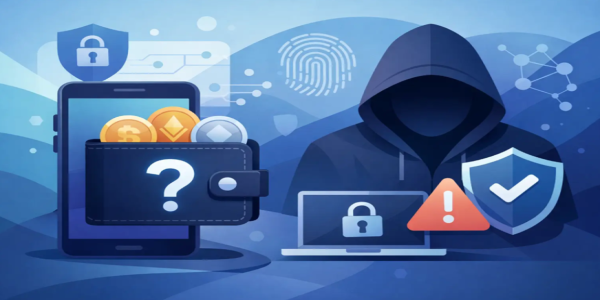
Are Anonymous Wallets Safe? What Traders Should Know
Are anonymous wallets safe? Learn what privacy wallets protect, where the risks are, and how to trade and store crypto with more control and confidence.
A wallet can give you more control over your crypto, but control is not the same as invisibility. Are anonymous wallets safe? They can be, provided you understand what “anonymous” actually means, choose your tools carefully, and protect the keys that control your funds.
For traders who want fewer barriers, privacy matters. No one wants their financial activity exposed unnecessarily or their access delayed by complicated processes. But crypto moves fast, and a private wallet setup can create serious problems when users treat anonymity as a security feature on its own.
What Is an Anonymous Wallet?
An anonymous wallet is usually a crypto wallet that lets you create and use an address without submitting identity documents. Most self-custody wallets work this way: you generate a wallet, receive a recovery phrase or private key, and can send or receive supported assets directly.
The wallet may not ask for your name, address, or photo ID. That is where the privacy benefit begins. It does not mean every transaction is untraceable.
Most major blockchain networks are public ledgers. A Bitcoin, Ethereum, or stablecoin transaction can be viewed by anyone who knows the address or transaction ID. Your legal name may not appear beside an address, but transaction amounts, timestamps, wallet balances, and movement between addresses can still be visible.
That distinction matters. A wallet can be identity-light without being fully anonymous. For many users, that is enough. The goal is practical financial privacy and direct control, not unrealistic promises of total invisibility.
Are Anonymous Wallets Safe for Everyday Crypto Use?
Anonymous wallets can be safe for everyday crypto use when they are legitimate, properly secured, and used with clear expectations. The biggest security advantage is self-custody. You hold the private key, which means you are not relying on a platform to approve withdrawals or protect a central pool of funds.
The trade-off is simple: you are responsible for everything.
If you lose your recovery phrase, there may be no password reset. If a scammer gets that phrase, they can drain the wallet. If you send assets to the wrong network or address, the transaction may be impossible to reverse. Freedom from account restrictions also means freedom from the safety net many people expect from traditional finance.
A wallet is safer when it is built by a reputable provider, downloaded from an official source, kept updated, and protected with strong device security. It becomes dangerous when users install copies from ads or app stores without checking the publisher, sign transactions they do not understand, or store recovery phrases in cloud notes and screenshots.
Privacy Is Not the Same as Security
This is the point many new traders miss. A wallet can reveal very little personal information and still be unsafe. It can also be highly secure while offering limited privacy.
Security protects your assets from theft, unauthorized access, malware, and mistakes. Privacy limits how easily your identity and financial activity can be connected. You need both, but they are different jobs.
For example, a wallet that requires no ID might feel private, but it is not secure if its recovery phrase is exposed. On the other hand, a hardware wallet can provide excellent protection for your keys, yet blockchain activity tied to its public address can still be analyzed.
Smart traders evaluate both sides before moving funds. Ask who controls the keys, what information the wallet collects, whether the app is open and transparent about permissions, and whether the chain itself exposes transaction history publicly.
The Risks That Matter Most
The most common wallet risks are not usually advanced blockchain attacks. They are human errors, fake apps, and social engineering designed to exploit speed and overconfidence.
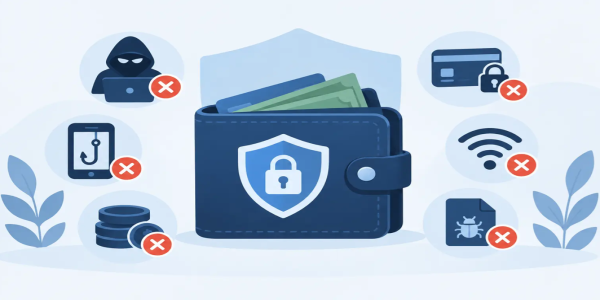
Watch for these threats:
- Fake wallet apps and browser extensions: Scammers copy familiar names, logos, and interfaces to capture recovery phrases or redirect payments.
- Phishing messages: A fake support agent may claim your wallet needs verification, synchronization, or emergency recovery. Legitimate wallet providers do not need your recovery phrase.
- Malicious approvals: On smart contract networks, connecting a wallet to an unknown site can approve access to tokens or authorize transactions you did not intend.
- Lost recovery phrases: Without the phrase or private key, your funds can become permanently inaccessible.
- Public Wi-Fi and compromised devices: Malware, keyloggers, and unsafe browser extensions can expose sensitive information before a transaction is even signed.
Anonymity does not protect against any of these threats. Good habits do.
How to Use a Privacy-Focused Wallet More Safely
Start by separating your trading wallet from your long-term storage. A hot wallet connected to trading platforms, decentralized apps, or P2P activity should hold only the amount you are prepared to use. Keep larger holdings in a more protected setup, ideally with offline key storage or a hardware wallet.
Write your recovery phrase down offline and store it in a secure physical location. Do not email it to yourself. Do not save it in a document, cloud drive, or phone gallery. Never share it with support agents, trading groups, friends, or anyone claiming they can recover funds for you.
Before every transaction, verify the receiving address and network. Copying an address is not enough because clipboard malware can replace it. Check the first and last characters, confirm the asset type, and send a small test amount before moving a large balance to a new destination.
Use a unique password for any wallet app or exchange account connected to your activity. Enable available security features, including two-factor authentication where applicable. Keep your phone, browser, and wallet software current. Security updates are not optional when your device is part of your financial setup.
Finally, treat every signature request as a financial decision. If a site asks you to connect your wallet or approve a token, stop and read the request. Fast access should never mean blind approval.
Choosing Between Custodial and Self-Custody Wallets
There is no single right choice for every trader. A custodial wallet is managed by a platform, while a self-custody wallet puts the private keys in your hands.
Custodial options can be easier for beginners because account recovery and support may be available. The downside is that you depend on the provider’s security, operational decisions, and withdrawal policies. Your access can be affected by platform outages, limits, or account reviews.
Self-custody supports independence. You can hold and move your assets directly, often without handing over unnecessary personal details. But it requires discipline. There is no customer service team that can restore a lost seed phrase or cancel a completed blockchain transfer.
Many active crypto users choose a balanced approach. They keep a smaller amount available for fast swaps, market opportunities, and P2P transactions, then secure longer-term holdings separately. This gives them flexibility without placing every asset in one wallet or one platform.
A Clearer Way to Think About Wallet Privacy
The safest approach is not chasing a label that says “anonymous.” It is building a setup that gives you the privacy you want, the access you need, and the security practices your funds deserve.
Use addresses thoughtfully. Avoid publicly posting a wallet address tied to your main holdings. Consider separate wallets for trading, personal transfers, and long-term storage. Be careful about sharing screenshots that show balances, addresses, or transaction history. Small details can reveal more than most users realize.
Also remember that converting crypto to cash, using third-party payment services, or interacting with regulated providers may involve identity checks outside the wallet itself. That does not make self-custody useless. It simply means privacy has layers, and each service has its own rules.
Financial freedom works best when it is paired with informed decisions. Platforms such as Budrigan Market can reduce friction around market access and crypto activity, but your wallet security remains your responsibility from the moment you receive your keys.
Choose privacy with clear eyes. Move deliberately, secure your recovery phrase like the asset it is, and let speed serve your strategy rather than weaken your judgment.
Share This Post
Recent Posts
-
Stablecoin Regulation Trends 2026 Explained
08 Oct 2026
-

Market Orders Versus Swaps: Know Your Trade
08 Oct 2026
-
Stablecoins Versus Bank Deposits Compared
08 Oct 2026
-
Crypto Taxes: Trade Freely, Report Clearly
08 Oct 2026
-
9 Top Wallet Security Mistakes to Stop Now
08 Oct 2026