Hot Wallet Versus Cold Wallet for Your Crypto
Hot wallet versus cold wallet explained: compare speed, security, costs, and access to choose a crypto storage setup that keeps you in control daily.
A trade can take seconds. Recovering crypto sent from a compromised wallet can be far harder. That is why the hot wallet versus cold wallet decision matters before you build a balance, not after. The right choice comes down to how often you move funds, how much you hold, and how much responsibility you want to keep in your own hands.
Crypto gives you direct access to your assets, but direct access comes with direct accountability. A wallet is not just an app or a device. It is the system that protects the private keys needed to authorize transactions. Choose a setup that matches the way you trade, spend, and protect your capital.
Hot Wallet Versus Cold Wallet: The Core Difference
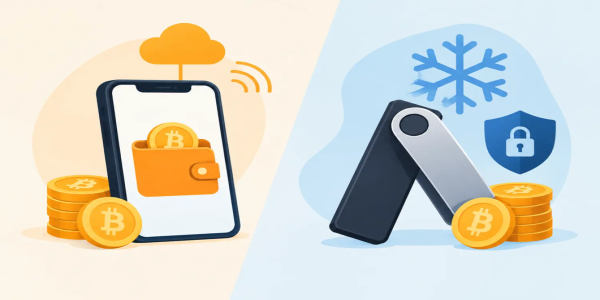
A hot wallet is connected to the internet. It can be a mobile app, desktop application, browser extension, or an exchange-based wallet. Because it is online, it is built for speed. You can receive funds, swap assets, connect to trading services, and act when the market moves without reaching for extra hardware.
A cold wallet keeps your private keys offline. Most people mean a hardware wallet when they say cold wallet, though offline paper backups and air-gapped signing setups can also fall into this category. The key advantage is simple: an offline private key is much harder for a remote attacker to reach.
This is not a contest with one universal winner. A hot wallet offers faster access. A cold wallet creates stronger separation between your keys and online threats. Smart crypto users often use both, giving each wallet a specific job.
Why a Hot Wallet Works for Active Crypto Users
A hot wallet makes sense when access matters. If you trade regularly, convert between assets, use peer-to-peer payments, or want funds ready for an opportunity, online wallet access can remove friction from every move.
For newer users, mobile and browser wallets are also easier to understand. You can see balances, copy receiving addresses, review transaction history, and approve transfers in a few taps. That convenience is real, especially when you are learning how networks, fees, and confirmations work.
The trade-off is exposure. Internet-connected software can be targeted through phishing pages, fake apps, malicious browser extensions, malware, or a stolen phone. Most wallet losses are not dramatic technical hacks. They happen because someone enters a recovery phrase on a fake site, approves a harmful transaction, or sends funds to the wrong address.
A hot wallet is not automatically unsafe. It just demands active habits. Use a unique, strong password where available. Turn on biometric locks and two-factor authentication for related accounts. Download wallets only from verified sources. Check every address and approval screen before confirming a transaction.
Think of a hot wallet like the cash you carry for immediate use. It is useful because it is close at hand. It should not automatically become the place where you keep every dollar you own.
When a Cold Wallet Is the Better Move
A cold wallet is designed for funds you do not need to move every day. Long-term holdings, larger balances, and assets reserved for future plans are natural candidates for offline storage.
With a hardware wallet, the private key stays on the device while transactions are signed there. Even if the computer or phone you use is infected, the attacker generally cannot complete a transfer without you reviewing and approving it on the wallet itself. That extra confirmation step is a meaningful security boundary.
Cold storage also introduces its own responsibilities. Hardware can be lost, damaged, or stolen. The device itself is replaceable, but your recovery phrase is the real backup. If you lose both the wallet and the recovery phrase, access to your assets may be gone permanently.
Never photograph your recovery phrase, paste it into a note-taking app, send it in a message, or store it in cloud email. Write it down carefully and store it somewhere private, secure, and protected from fire or water damage. Anyone who sees that phrase can potentially take your funds. No legitimate wallet provider, platform, or support representative needs it.
Cold wallets also require more patience. You need the device with you, you need to connect it correctly, and you need to confirm transactions physically. For someone making frequent trades, that can feel slow. For someone protecting a serious long-term position, it can feel like exactly the point.
Hot Wallet Versus Cold Wallet: Compare the Trade-Offs
The decision becomes clearer when you compare what each option is built to do.
| Factor | Hot Wallet | Cold Wallet |
|---|---|---|
| Internet connection | Connected | Private keys remain offline |
| Best for | Daily use, trading, payments | Long-term storage and larger holdings |
| Transaction speed | Fast and convenient | Slower, requires device access |
| Main risk | Phishing, malware, compromised device | Lost device or poorly stored recovery phrase |
| Cost | Often free to install | Usually requires buying hardware |
| Ease for beginners | Generally simple | Requires setup and careful backups |
The table does not mean a cold wallet eliminates risk or that a hot wallet is only for small balances. Your personal threshold matters. A trader may be comfortable keeping a working balance online. Someone building a long-term portfolio may move most funds offline after each purchase. The right limit is the amount you could afford to lose without putting your financial plans at risk.
The Practical Setup: Use Both Wallet Types
For many users, a two-wallet approach offers the best balance of freedom and protection. Keep an active amount in a hot wallet for trades, conversions, and peer-to-peer activity. Move the amount you do not plan to touch soon into cold storage.
This approach keeps your capital organized. Your hot wallet becomes your operating balance. Your cold wallet becomes your reserve. You do not have to choose between immediate market access and stronger offline protection.
Before moving a large amount, test the route with a small transaction. Confirm the network is correct, confirm the receiving address, and wait for the transaction to arrive. Crypto transfers are usually irreversible. A two-minute check can prevent an expensive mistake.
Also separate wallet security from platform security. Whether you use a self-custody wallet or hold assets on a trading platform, understand who controls the keys and how withdrawals work. If a platform holds the keys, it is providing custody. If you hold the recovery phrase, you control the keys. Neither model is automatically right for every situation, but the difference should never be a mystery.
Security Habits That Matter More Than the Wallet
The strongest wallet can still fail when basic security is ignored. Your routine matters as much as your technology.
Protect your recovery phrase from both strangers and familiar people. Be skeptical of direct messages claiming to offer support, giveaways, account recovery, or urgent security alerts. Scammers create pressure because pressure makes people skip verification.
Use separate passwords for your email, trading accounts, and wallet-related services. Secure your email especially carefully, since it is often the recovery point for other accounts. Avoid public Wi-Fi for sensitive transactions when possible, and keep your phone, browser, and wallet software updated.
Finally, do not let speed turn into carelessness. Fast market access is valuable, but a rushed approval can give a malicious contract permission to move tokens from your wallet. Read what you are signing. If a request looks unclear, stop and verify before you approve it.
Choose Based on How You Move
If you want immediate access for active trading and everyday transfers, start with a well-secured hot wallet and keep your working balance realistic. If you are holding crypto for months or years, or protecting a larger amount, cold storage deserves serious consideration.
Budrigan Market users who value fast market access can treat wallet choice as part of the strategy, not a technical afterthought. Keep funds available when you need to act. Keep reserves protected when you do not.
Your wallet setup should make you more confident, not more exposed. Build it around your habits, test every transfer, and protect your recovery phrase as carefully as the assets it controls.
Share This Post
Recent Posts
-
Crypto Spreads and Your Real Trading Cost
17 Nov 2026
-
Market Volatility: Trade Fast, Not Blind
17 Nov 2026
-
Stop Losses: Trade Crypto With a Clear Exit Plan
17 Nov 2026
-
When to Use Limit Orders in Crypto Trading
17 Nov 2026
-
Crypto Dollar Cost Averaging Guide for Freedom
10 Nov 2026