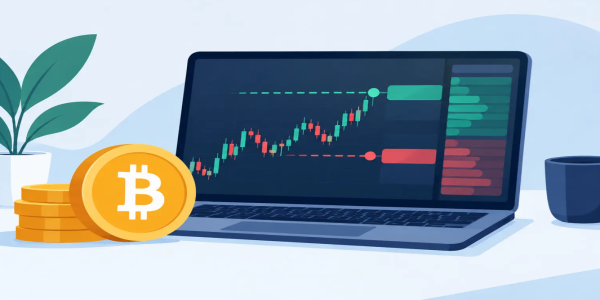
When to Use Limit Orders in Crypto Trading
Learn when to use limit orders in crypto trading to seek better entries, control risk, and avoid chasing sudden market moves with a clear plan every time.
A crypto price can move before you have time to second-guess a trade. That is exactly when knowing when to use limit orders gives you more control. Instead of accepting whatever price the market offers at that second, you choose the price you are willing to pay or receive - then let the market come to you.
For traders who value speed, flexibility, and the freedom to act on their own terms, limit orders are a practical way to trade with intention. They do not guarantee a fill, and they are not a shortcut to profits. What they do offer is discipline when volatility tries to pull you into rushed decisions.
What Is a Limit Order?
A limit order is an instruction to buy or sell a cryptocurrency at a specified price or better. A buy limit order is set below the current market price. It will execute only if the asset falls to your chosen price or lower. A sell limit order is usually set above the current market price. It will execute only if buyers are willing to pay your target price or more.
Say Bitcoin is trading at $68,000, but you believe $66,500 is a more attractive entry. Rather than buying immediately, you can place a buy limit order at $66,500. If the market drops to that level and there is enough available liquidity, your order may fill. If it never reaches that price, the order remains unfilled or expires according to the order settings.
That last part matters. A limit order controls price, not certainty. If your target is too far from the market, you may miss the trade entirely.
When to Use Limit Orders in Crypto
Use limit orders when the price matters more than immediate execution. Crypto markets operate around the clock, and sudden moves can tempt traders to enter or exit at levels they did not plan for. A limit order puts your decision on record before emotion enters the picture.
You have a specific entry price
A limit order makes sense when you have already identified a price zone where you want to buy. Maybe an asset has pulled back to a prior support area before, or maybe you have a fixed amount you are willing to risk on an entry. The reason can vary, but the approach stays the same: set the price you want and wait.
This is especially useful for traders building a position over time. Instead of trying to predict the exact bottom, you can place smaller buy limits at several levels below the current price. If the market retraces, you may enter gradually rather than putting all your capital into one fast-moving trade.
You want to take profit without watching the chart
A sell limit order can protect your plan when a position reaches your target while you are away from the screen. If you bought an altcoin at $1.20 and have decided you are comfortable taking profit at $1.50, a sell limit at $1.50 lets you define that exit in advance.
This is not the same as knowing the market will stop at your target. Price may reach it, fill your order, and continue much higher. That can feel frustrating, but disciplined traders understand the difference between a planned profit and chasing every final dollar of a move.
The market is moving too fast
During a sharp rally or selloff, market orders can fill at prices that are worse than the number you saw on the screen. This difference is called slippage. It becomes more likely when liquidity is thin or when many traders are trying to transact at once.
A limit order sets a boundary. You may not get filled, but you also avoid agreeing to a price outside your plan. For smaller or more volatile crypto assets, that trade-off can be worth it.
You are trading a less liquid asset
Not every coin has the depth of Bitcoin or Ethereum. On lower-volume markets, a market buy or sell can move through multiple price levels before it is fully filled. That means a single order may execute at several different prices, leaving you with a less favorable average.
Limit orders help you specify the minimum price you will accept when selling or the maximum price you will pay when buying. They are often the more controlled choice when the order book is thin, spreads are wide, or price jumps are common.
You are following a rules-based strategy
Strong trading habits are built before the trade, not during a burst of volatility. If your strategy has defined entries, profit targets, and position sizes, limit orders fit naturally into that structure. They turn a written plan into an actionable instruction.
This can be useful for swing traders waiting for pullbacks, arbitrage-minded traders targeting a defined spread, or long-term buyers looking to accumulate at selected levels. The tool is the same. The purpose changes with your strategy.
When a Market Order May Be Better
A limit order is not automatically the right answer. If getting into or out of a position immediately matters more than the exact price, a market order may be more appropriate. For example, a trader reacting to a major change in their risk exposure may prefer prompt execution over waiting for a target that may never be reached.
Market orders are also more practical when trading highly liquid assets in normal conditions and the size of your order is modest relative to available volume. Even then, check the spread and current market conditions. Fast execution can come at a cost.
The real question is simple: do you need certainty of execution, or certainty of price? A market order prioritizes execution. A limit order prioritizes price.
How to Set a Limit Order With More Control
Before placing the order, start with the trade idea rather than the order form. Decide why the price is attractive, how much capital you are willing to commit, and what happens if the market goes against you. A limit order should support your strategy, not become the strategy.
For a buy limit, set a price at or below the current market price. For a sell limit, set a price at or above it. Then enter your amount and review the total value carefully. Small mistakes in decimal placement or order size can create a position much larger than intended.
Also check whether the order is set to remain open until canceled, expire after a certain period, or execute only if it can be completely filled. These settings affect how long your instruction stays active and whether partial fills are possible.
Partial fills deserve attention. If you place an order to buy 10 units and only 4 units are available at your selected price, you may receive 4 units while the rest remains open. That can be useful, but it can also leave you with an incomplete position. Know what your trading interface allows before you rely on the order.
Common Limit Order Mistakes
The biggest mistake is setting an order and forgetting it exists. Crypto markets can change direction quickly, and an old buy or sell order may no longer match your view. Review open orders regularly, particularly after large price moves or major news events.
Another mistake is placing a target exactly at an obvious round number. Many traders cluster orders around levels like $1.00, $10.00, or $50,000. Your order may still fill, but crowded price levels can become competitive. Some traders choose a slightly different price based on their own analysis, though there is no universal number that guarantees better execution.
Finally, do not confuse a limit order with risk protection. A sell limit order locks in a desired upside price. It does not automatically protect you if price drops. If downside control is part of your plan, understand the protective order types available on your chosen trading platform and how they behave during volatility.
Trade the Price You Chose
The value of a limit order is not that it predicts where crypto goes next. Its value is that it gives you a way to act without surrendering your price decision to a fast market. Build your target around a clear reason, size the trade responsibly, and keep enough flexibility to change your mind when the market facts change.
Freedom in trading is not impulsive access. It is the ability to set your terms, wait for the opportunity you want, and act with purpose when it arrives.
Share This Post
Recent Posts
-
Crypto Spreads and Your Real Trading Cost
17 Nov 2026
-
Market Volatility: Trade Fast, Not Blind
17 Nov 2026
-
Stop Losses: Trade Crypto With a Clear Exit Plan
17 Nov 2026
-

Hot Wallet Versus Cold Wallet for Your Crypto
17 Nov 2026
-
Crypto Dollar Cost Averaging Guide for Freedom
10 Nov 2026