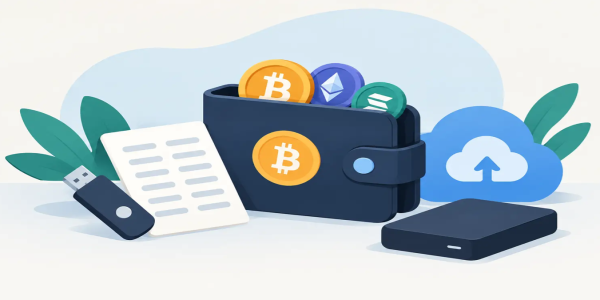
Wallet Backup Methods That Keep Crypto in Reach
Compare wallet backup methods that protect your crypto from device loss, mistakes, and theft while keeping recovery private, simple, and ready when needed.
A wallet can disappear long before your crypto does. A broken phone, lost hardware wallet, wiped browser, or forgotten password does not erase coins from the blockchain, but it can erase your ability to control them. That is why wallet backup methods deserve attention before you fund a wallet, not after an accident puts your balance out of reach.
For self-custody users, a backup is not a convenience feature. It is your recovery plan. Get it right and you can replace a device without panic. Get it wrong and a small mistake can become an expensive lesson.
What You Are Actually Backing Up
Most non-custodial wallets are restored with a recovery phrase, often called a seed phrase. It is usually a sequence of 12 or 24 words generated when the wallet is created. Those words can recreate the private keys that control your assets.
That distinction matters. Backing up an app password, a wallet address, or a screenshot of your portfolio will not restore access to your funds. Your wallet address is public and receives crypto, but it cannot authorize a transaction. A password may protect one device, but it may not recover the wallet on a new one.
The recovery phrase is the master key. Anyone who has it can usually move your funds. Treat it with the same seriousness you would give a vault key, except there is no customer service desk that can reverse a valid blockchain transaction.
Some wallets also use private keys, keystore files, passkeys, or multisignature recovery data. Check the wallet's recovery process before relying on any backup. The principle remains the same: identify the material that restores spending control, then protect it without creating an easy path for someone else to steal it.
Wallet Backup Methods Worth Using
The right backup method depends on your balance, your living situation, and how often you need access. The strongest setup is often layered: one primary offline record and one carefully separated contingency copy.
Write the recovery phrase on paper
Writing the phrase clearly on paper is the most direct option. It is private, requires no internet connection, and avoids putting the phrase into a searchable digital system. For a new user with a modest balance, this is far safer than storing words in email, cloud notes, or a camera roll.
Paper has obvious weaknesses. Water, fire, fading ink, and accidental disposal can destroy it. Use permanent ink, write each word in the correct order, and keep the page in a dry, private location. Do not label it with words such as “crypto,” “Bitcoin,” or the wallet brand. That only tells a thief what they have found.
Use a metal backup for long-term storage
A metal seed backup is designed to resist fire, water, and physical wear better than paper. Depending on the product, you stamp, engrave, or assemble letter tiles representing your recovery words. It takes more effort, but it is a serious upgrade for funds you intend to hold for years.
Metal does not make a phrase magically secure. If it is left in an obvious drawer, anyone can photograph it. Its advantage is durability, not invisibility. Store it somewhere private and consider keeping it in a different location from the device you use to access the wallet.
Keep two offline copies in separate locations
One copy creates a single point of failure. Two copies reduce the risk that a flood, fire, move, or simple misplacement cuts you off from your funds. The trade-off is clear: every additional copy creates another theft risk.
For many holders, two offline copies in separate secure locations is a practical balance. The locations should not be equally easy for the same person to access. A home safe plus a secure off-site location can work, provided you trust the people and environment involved. Avoid putting both copies in the same bag, safe, or building.
Add a passphrase only if you can manage it
Some wallets support an optional passphrase that creates an additional layer of protection on top of the recovery phrase. Used correctly, it can protect funds even if someone discovers the seed words. Used carelessly, it can permanently lock out the owner.
A passphrase is not part of the standard recovery phrase and may not be recoverable through the wallet provider. If you use one, back it up with the same discipline as the seed itself, but never store both together. This approach fits experienced users who understand the recovery flow and can maintain a clear, private plan. It is not a shortcut for beginners.
Backup Methods to Avoid
Convenience is usually the enemy of wallet security. A digital copy can be copied again, synced automatically, exposed in a breach, or quietly accessed by malware. The following choices create avoidable risk:
- Screenshots or photos of a recovery phrase
- Email drafts, cloud drives, note apps, and password managers not designed for seed custody
- Text messages, chat apps, or social media messages sent to yourself
- Printing the phrase on an office or shared printer
- Giving the phrase to a friend, trader, support agent, or “recovery service”
No legitimate wallet provider needs your seed phrase to help you. No trading platform, including Budrigan Market, should ask you to send it through chat or email. If anyone requests it, stop the conversation. A recovery phrase is for restoring your wallet yourself, not for proving ownership to another person.
Test Recovery Before You Need It
A backup that has never been tested is only a theory. Typos, missing words, wrong word order, and incorrect passphrase handling are common recovery failures. Test your process while your original wallet still works and while the amount at stake is small.
Start with a new wallet or a low-value test wallet. Record its recovery phrase using your chosen method. Then restore it on a separate compatible device or wallet environment, following the exact process you would use after a loss. Confirm that the restored wallet shows the expected address and can access the test funds.
Do not type a real seed phrase into random websites, browser forms, or unofficial wallet apps for the sake of testing. Install wallet software only from verified official sources, and perform recovery in a private setting. Once you confirm the process works, remove any temporary test data from devices you used.
Build a Backup Plan Around Your Trading Style
Active traders and long-term holders do not face the same risks. If you trade frequently, keep only the amount you need for near-term activity in an accessible wallet or platform balance. Consider moving longer-term holdings into a separate self-custody wallet with a stronger offline backup plan. Separating trading funds from savings limits the damage if one account or device is compromised.
If you use several wallets across different networks, do not assume one phrase restores every asset in every app. A single phrase may control multiple addresses, but wallet compatibility and derivation paths can vary. Keep a private inventory of what each backup restores, which networks you use, and whether any passphrase or hardware device is involved. Do not include the seed phrase in that inventory.
Your plan should also account for life changes. Moving homes, changing devices, traveling, or sharing a living space can alter your threat level overnight. Review your backup locations after major changes. If someone may have seen or copied your phrase, move funds to a newly generated wallet immediately. A compromised seed should be treated as permanently compromised.
A Simple Recovery Routine
Create the wallet in private, write the phrase offline, verify every word and its order, and store the record securely. Make a second offline copy only if you can protect it separately. Test recovery with a low-value wallet, then keep the phrase away from cameras, cloud storage, and anyone claiming they can help recover it.
Financial freedom includes responsibility for the keys behind your assets. Take an hour to build a recovery plan while everything is working. The quiet confidence of knowing you can recover on your terms is worth far more than the convenience of a screenshot.
Share This Post
Recent Posts
-
-

Slippage Cost Reduction for Faster Crypto Trades
26 Oct 2026
-

-
Can Crypto Transactions Reverse? What to Do Next
26 Oct 2026
-

Why Crypto Prices Differ Across Exchanges
22 Oct 2026