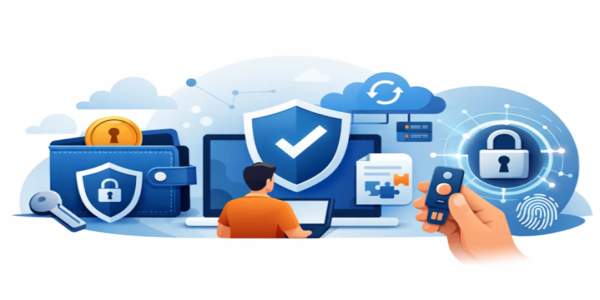
Wallet Recovery Process Steps That Protect Access
Understand the wallet recovery process, protect your recovery phrase, and restore crypto access without exposing your assets to scams or online mistakes.
Your phone is gone, your browser was reset, or you cannot remember the password that opened your crypto wallet. The wallet recovery process is the moment when real ownership matters. If you control the recovery credentials, you can usually restore access. If you do not, no support agent, exchange, or shortcut can safely recreate them for you.
Crypto gives you more freedom to move, trade, and hold assets on your terms. That freedom comes with a clear responsibility: protect the information that proves the wallet is yours. Move carefully, ignore urgency, and treat every recovery step as a security decision.
What the Wallet Recovery Process Actually Does
A wallet does not store coins in the same way a physical wallet stores cash. Your assets exist on a blockchain, while your wallet holds the private credentials used to control them. Recovery restores those credentials to a trusted wallet application or platform so you can view and transact with the same blockchain addresses again.
For a self-custody wallet, recovery usually requires a recovery phrase, sometimes called a seed phrase. This is commonly a sequence of 12 or 24 words generated when the wallet was created. Anyone with that phrase can control the associated assets. It is not a password reset code, and it should never be shared with another person.
For a custodial platform wallet, the process is different. The platform holds or helps manage the private keys, so you may recover access through the account credentials and security checks available in your account. The trade-off is straightforward: self-custody gives you direct control and direct responsibility, while custodial access can be easier to restore but depends on the platform's account recovery system.
Start With the Right Type of Recovery
Before entering any credentials, identify what you are trying to recover. This avoids one of the most expensive mistakes in crypto: importing a phrase into the wrong place because a website or message looked convincing.
If you used a self-custody wallet, locate the original wallet app, hardware wallet, or reputable wallet software you intentionally selected. Use its official recovery option and enter the phrase only inside the legitimate application. If you used a hardware wallet, recover it directly on the device when possible, not through a browser form.
If you are locked out of a trading account or platform wallet, use the official sign-in flow you already know. Reset the account password through the platform's own interface, then complete any available security steps. Budrigan Market users should rely on the account tools shown within the platform, never on unsolicited messages claiming they can restore access.
A simple rule protects a lot of capital: a recovery phrase belongs only in the wallet recovery screen of the wallet you chose. It does not belong in chat, email, a search bar, a support ticket, a screenshot, or a form sent by someone who contacted you first.
Wallet Recovery Process Steps to Follow
Begin in a private setting. Do not recover a wallet over public Wi-Fi, on a shared computer, or while screen-sharing with someone else. Update your device and operating system first if you suspect malware, and close unnecessary apps and browser extensions.
Next, verify the recovery phrase from your offline backup. Read each word carefully and keep the original order intact. A single misspelling, an extra space, or two words entered in the wrong sequence can produce an error or open a completely different empty wallet. Do not keep retrying random combinations if you are unsure. Step away, compare the phrase to your original record, and reduce the chance of exposing it through repeated copying and pasting.
After restoring the wallet, confirm the public address and balances on the appropriate blockchain network. Some wallets require you to add a network or token manually before every asset appears. An asset that is not visible is not automatically lost. Check the network first, then verify the address using a blockchain explorer only if you already know how to do so safely.
Once access is restored, strengthen security before making a trade or transfer. Create a new local password, enable the strongest account protection available, and remove old devices or active sessions you do not recognize. If you suspect that anyone else may have seen your recovery phrase, move assets to a newly created wallet with a brand-new phrase as soon as you can safely do so.
Know the Difference Between a Lost Password and a Lost Phrase
A lost wallet password is often recoverable. In many wallet apps, the password only encrypts the wallet on one device. If you still have the recovery phrase, you can install the wallet again and restore control.
A lost recovery phrase is more serious. With a true self-custody wallet, the phrase is the master backup. If it is gone and you no longer have access through an unlocked device, there may be no recovery path. That is not a platform failure. It is the design that allows you to hold assets without asking permission from a bank or central gatekeeper.
This is why convenience and independence need to work together. Do not rely on a phone note, cloud document, email draft, or photo of the phrase. Those options are convenient, but they create exposure points that attackers know how to target.
For long-term holdings, write the phrase down accurately and store it offline in a secure location. Consider a durable backup for protection against fire or water damage. Keep the backup private, and avoid labeling it in a way that tells a thief exactly what it controls.
Scams That Target Wallet Recovery
Scammers understand that people searching for wallet recovery are stressed and ready to act. They build fake support pages, buy misleading ads, impersonate wallet brands, and send direct messages offering immediate help. Their goal is almost always the same: get your recovery phrase, private key, or account security code.
Watch for four clear warning signs:
- Someone asks for your 12- or 24-word phrase to verify ownership, fix a transaction, or validate your wallet.
- A website asks you to "synchronize," "rectify," or "connect" a wallet by pasting in the phrase.
- A supposed support agent contacts you first through social media, messaging apps, text, or email.
- A person promises guaranteed recovery for an upfront crypto payment or says you must act within minutes.
Legitimate support may help with account access, transaction status, or general platform guidance. It should not need your self-custody recovery phrase. There is no exception for a stuck withdrawal, a token migration, a wallet upgrade, or a security review.
If you already shared a phrase, act immediately. Create a new wallet on a clean device, record its new phrase offline, and transfer any accessible assets to the new address. Do not wait for a scammer to "finish" the process. Once a phrase has been exposed, treat the old wallet as compromised even if the balance still appears untouched.
Build a Recovery Plan Before You Need One
The best recovery process begins before anything goes wrong. Create your wallet backup when you are focused, not while rushing to catch a market move. Verify that every word is readable, the sequence is correct, and the backup can be found by you but not by anyone else.
You should also decide what happens if a device fails, a password is forgotten, or an account is accessed from a new location. Keep account passwords unique. Use an authenticator-based second factor where available rather than relying only on text messages. Review connected apps and wallet permissions after using decentralized services, especially if you approve token access for trading or swaps.
For active traders, separate working funds from longer-term holdings. A wallet used for frequent transactions has more exposure to rushed decisions, malicious approvals, and fake token interactions. Keeping only the capital you need for current activity in that wallet can limit the impact of a mistake without limiting your ability to act quickly.
Your recovery phrase is not just a backup. It is the key to independent access. Protect it with the same discipline you bring to every trade, and you keep control where it belongs: with you.
Share This Post
Recent Posts
-
Stablecoin Regulation Trends 2026 Explained
08 Oct 2026
-

Market Orders Versus Swaps: Know Your Trade
08 Oct 2026
-
Stablecoins Versus Bank Deposits Compared
08 Oct 2026
-

Crypto Taxes: Trade Freely, Report Clearly
08 Oct 2026
-
9 Top Wallet Security Mistakes to Stop Now
08 Oct 2026