What Is Self Custody Crypto and Why It Matters
What is self custody crypto? Learn how private keys work, why control matters, and how to protect digital assets without losing access or flexibility.
A crypto balance can disappear from your control long before it disappears from a screen. If an exchange, app, or third party holds the keys, it ultimately decides how and when assets move. So, what is self custody crypto? It is the practice of holding the private keys that authorize access to your digital assets yourself - rather than leaving that authority with an exchange or other provider.
Self custody puts ownership where many crypto users believe it belongs: directly in your hands. That freedom can be powerful, especially for traders and investors who value privacy, flexible access, and independence from traditional financial gatekeepers. It also comes with real responsibility. There is no support desk that can restore a lost recovery phrase or reverse a transaction sent to the wrong address.
What Is Self Custody Crypto in Practice?
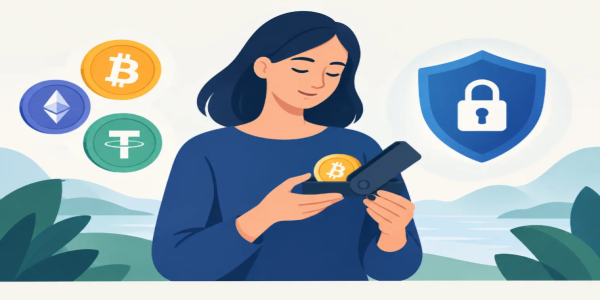
Self custody means you use a wallet where you control the private key or recovery phrase. A private key is the cryptographic credential that proves you are authorized to spend assets from a blockchain address. Most wallets present this authority as a 12- or 24-word recovery phrase, also called a seed phrase.
The wallet itself does not physically store coins. Your crypto remains recorded on its blockchain. Your wallet stores or helps generate the keys that let you view balances and sign transactions. Think of the blockchain as the public record and the private key as the one credential that can authorize movement from your address.
That distinction matters. If you hold the keys, you can access compatible wallet software, connect to decentralized applications, or move funds without asking a centralized platform for permission. If someone else holds the keys, you have an account with that provider and must operate within its policies, availability, and withdrawal rules.
Self Custody vs. Keeping Crypto on an Exchange
Centralized exchanges make crypto easy to buy, sell, convert, and trade. They can be useful when speed matters and you want immediate access to markets. But when assets remain in an exchange account, the platform generally controls the wallet infrastructure and signing process behind the scenes.
That arrangement is called custodial storage. You may see a balance in your account, but you do not directly control the keys attached to the address where assets are held. The provider can process withdrawals, but it can also pause them during technical events, security reviews, market volatility, or account disputes.
Self custody changes that relationship. You control transfers, while no provider can freeze your wallet simply because it changes a policy or experiences an outage. For users who want fewer barriers between them and their assets, this is a major advantage.
The trade-off is simple: more control means more personal accountability. Exchanges can help recover account access through identity checks and support processes. A self-custody wallet cannot. Lose the seed phrase and device access, and your funds may be permanently inaccessible.
Why Self Custody Matters to Independent Crypto Users
Crypto was built around the ability to transact without relying on a single intermediary. Self custody is the practical expression of that idea. It lets you maintain direct authority over assets whether you are holding Bitcoin for the long term, using stablecoins for peer-to-peer transfers, or connecting funds to decentralized finance.
It can also reduce counterparty risk. Counterparty risk is the possibility that a company holding your assets faces insolvency, a security breach, operational failure, or legal restrictions that affect access. Self custody does not eliminate every risk - markets can still fall and blockchains can still have technical issues - but it removes dependence on a custodian for routine access to your funds.
For active traders, the answer is often not all or nothing. Keeping a working balance on a trading platform may make sense when you need to react to price movements or execute conversions quickly. Moving a longer-term reserve to self custody may make more sense when your priority is control. The right split depends on how often you trade, how much you hold, and how prepared you are to manage security yourself.
The Main Types of Self-Custody Wallets
A software wallet, often called a hot wallet, runs on a phone, browser extension, or computer. It is connected to the internet and convenient for frequent transactions, swaps, and decentralized apps. Its convenience makes it a practical choice for smaller amounts you actively use, but online exposure means you must be alert to phishing, malicious extensions, and compromised devices.
A hardware wallet, often called a cold wallet, is a dedicated device that keeps private keys offline. Transactions are created on your computer or phone but approved on the hardware device. This provides stronger protection for long-term holdings because the private key does not need to be exposed to an internet-connected device.
Paper backups and metal seed-storage tools are not wallets on their own. They are methods of securing a recovery phrase. A durable offline backup can protect against device loss, but it must be stored privately and safely. Anyone who finds your recovery phrase can take your crypto. There is no password reset after that.
Some advanced users choose multisignature wallets. These require two or more separate approvals before funds can move. Multisig can reduce the risk of one lost or stolen key, but it adds setup complexity. It is usually better suited to larger holdings, teams, or users who understand recovery planning.
How to Start With Self Custody Without Making Costly Mistakes
Start with a reputable wallet that supports the assets and network you intend to use. Bitcoin, Ethereum, Solana, and other ecosystems may require different wallet compatibility. Confirm the network before receiving or sending funds. Sending assets through an unsupported network can create a difficult, and sometimes impossible, recovery situation.
When the wallet displays your recovery phrase, write it down offline. Do not save it in screenshots, cloud notes, email drafts, or chat messages. Never enter it into a website, and never share it with a person claiming to be support. Legitimate wallet providers do not need your seed phrase to help you.
Before moving a large amount, send a small test transaction. Confirm the address character by character or use a trusted address book. Crypto transactions are generally irreversible, and clipboard malware can replace a copied address with an attacker's address without making the change obvious.
Use a strong device passcode, keep wallet software updated, and be skeptical of urgent messages. Most wallet losses are not caused by someone breaking blockchain encryption. They happen because a user signs a malicious transaction, reveals a seed phrase, downloads a fake wallet, or sends assets to the wrong place.
For meaningful amounts, separate your holdings by purpose. A hot wallet can hold spending or trading funds. A hardware wallet can protect long-term assets. This approach gives you practical access without putting every dollar at the same level of online risk.
What Self Custody Does Not Guarantee
Self custody is not a shortcut to perfect privacy, guaranteed profit, or risk-free crypto. Blockchain transactions are often publicly visible, even when an address is not immediately tied to a name. Your activity can still be exposed through transaction patterns, reused addresses, or interactions with regulated services.
It also does not protect against bad decisions. You can still buy a volatile asset at the wrong time, interact with a fraudulent token, approve a harmful smart-contract permission, or fall for a social engineering scam. Control over keys is essential, but it is only one part of managing digital assets responsibly.
Network fees are another consideration. Moving crypto from an exchange to a personal wallet may involve withdrawal fees, and using certain blockchains can require native tokens for transaction fees. Plan for those costs before transferring funds so you do not leave assets stranded without enough balance to move them later.
When Self Custody Is the Right Move
Self custody is a strong fit when you want long-term control, direct blockchain access, or less reliance on a centralized company. It is especially relevant if you view crypto as an asset you should personally secure rather than a balance another platform manages for you.
It may be less suitable if you are not ready to protect a recovery phrase, verify every transaction, and create a backup plan. There is nothing weak about using an exchange for active trading convenience. The key is knowing who controls your assets at each stage. After buying or trading assets on a platform such as Budrigan Market, you can decide whether immediate market access or personal custody best matches your next move.
Financial freedom is not just the ability to trade. It is understanding the authority behind every balance you own. Build your self-custody habits slowly, test your process with small transfers, and treat your recovery phrase with the same seriousness as the assets it protects.
Share This Post
Recent Posts
-
-

Crypto Trading Access Trends Reshaping Markets
19 Sep 2026
-

How to Trade Altcoins Efficiently With a Plan
14 Sep 2026
-

A Guide to Decentralized Crypto Exchanges
14 Sep 2026
-
What the Future of No KYC Exchanges Looks Like
14 Sep 2026