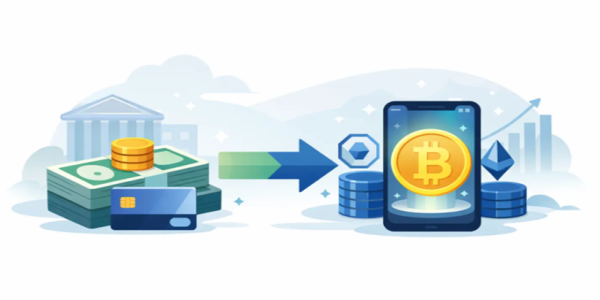
A Guide to Funding Crypto With Fiat Fast
Use this guide to funding crypto with fiat to compare cards, bank transfers, and P2P payments, manage fees, and move from cash to trading with confidence.
A trade idea can disappear while a bank transfer is still pending. That is why a guide to funding crypto with fiat should focus on more than simply choosing a payment button. The best route is the one that gets your money into crypto at a cost, speed, and level of control that fit your next move.
Fiat is government-issued money such as US dollars. Funding crypto with fiat means using dollars from a bank account, payment card, or peer-to-peer arrangement to buy digital assets. Once the funds arrive, you can hold crypto, convert between assets, trade spot markets, or send assets to a wallet. The process is simple on the surface, but fees, settlement times, transaction limits, and payment protections can change the real cost of entry.
Choose Your Fiat Funding Route Before You Buy
There is no single best payment method. A trader reacting to a short-term price move may value instant card funding. Someone making a larger purchase may prefer a bank transfer with lower fees. A privacy-conscious buyer may prefer a direct peer-to-peer transaction, while accepting that careful counterparty checks matter more.
The four most common ways to fund crypto with fiat are:
- Debit or credit cards, which are usually fast but can carry higher processing fees and issuer restrictions.
- Bank transfers, including ACH and wire transfers, which can be more cost-effective but may take longer to clear.
- Peer-to-peer payments, where buyers and sellers agree on terms directly and use the available payment methods.
- Payment wallets or local payment rails, which can be convenient when they are supported but may have their own limits and fees.
Start with the result you want. If you need buying power quickly, compare the final quote and expected availability time. If you are funding a larger position, calculate the total cost of transfer, conversion, and trading rather than looking only at the first advertised fee.
Cards: Fast Access, Often Higher Cost
A debit card is commonly the most direct route from dollars to crypto. You enter the amount, review the quoted exchange rate and fees, authorize the transaction, and receive the asset once the payment is approved. For small or time-sensitive purchases, this convenience can be worth the premium.
Credit cards require more caution. Some card issuers treat crypto purchases as cash advances, which can mean extra fees and immediate interest charges. Others decline the transaction altogether. Buying volatile assets with borrowed money also magnifies risk. If you use a card, confirm how your issuer classifies the purchase before committing funds.
Card funding can also trigger fraud checks, especially with a first transaction or an amount that differs from your usual spending pattern. Use a card in your own name, enter billing information exactly as your bank has it, and avoid repeated failed attempts. Multiple retries can create temporary authorization holds that reduce available balance without completing the purchase.
Bank Transfers: Better for Deliberate Funding
Bank transfers suit traders who want to move larger amounts with a clearer cost structure. In the US, ACH transfers often cost less than card purchases, though availability can range from near-instant to several business days depending on the provider and bank. Wire transfers can settle faster for larger amounts, but the sending bank may charge a fee.
The trade-off is timing. A transfer may show as received before the funds are fully cleared, and some platforms place a temporary withdrawal hold on recently deposited dollars or newly purchased crypto. That does not necessarily stop trading, but it can affect your ability to move assets right away. Check the settlement and withdrawal rules before you send money, particularly if you plan to transfer crypto to another wallet immediately.
Send a small test amount when you are using a new bank connection or funding destination. It is a low-cost way to confirm account details, expected timing, and any transfer reference requirements before moving a larger amount.
A Practical Guide to Funding Crypto With Fiat
Your funding process should be deliberate, even when the platform makes it feel instant. Begin by deciding the exact dollar amount you can afford to put at risk. Crypto prices can move sharply, and a funding decision should not be driven by urgency alone.
Next, choose the asset you want to buy. Funding with fiat does not always mean buying Bitcoin first. If your goal is to trade a specific market, check whether you can buy that asset directly with USD or whether you will need to convert through a widely traded asset or stablecoin. Direct pairs can reduce steps, but the best choice depends on the quoted rate and available liquidity.
Then review the transaction preview before approval. Look beyond the dollar amount leaving your account. Confirm the amount of crypto you will receive, the exchange rate, payment-processing fees, conversion charges, network fees if applicable, and any minimum or maximum purchase limits. A low headline fee can be offset by a wider spread, so compare the final amount you receive.
After the purchase, confirm where the crypto is held. Keeping assets in an exchange wallet makes active trading easier. Moving them to a wallet you control can give you direct custody, but it also makes you responsible for wallet security, recovery information, and the accuracy of every transfer address. There is no universal answer. Frequent traders often prioritize access; long-term holders may prioritize independent custody.
Peer-to-Peer Funding Gives You More Flexibility
Peer-to-peer crypto transactions let buyers and sellers set terms directly. This can expand payment choices and create access when traditional rails are limited. It can also be useful for users who want to negotiate price, payment timing, or transaction size with another participant.
More flexibility means more responsibility. Use the platform’s trade protections when available, keep communications and payment proof within the transaction record, and release funds only after you have confirmed payment according to the agreed terms. Do not accept screenshots as the only evidence of a completed payment. Check your account directly.
Be equally skeptical of pressure tactics. A legitimate counterparty does not need your wallet recovery phrase, account password, or a payment sent outside the agreed process. If an offer looks unusually generous, pause and verify every detail. Speed matters in crypto, but avoid confusing speed with haste.
Protect the Funds Before and After They Become Crypto
Fiat funding is only the first security decision. Use a unique password for your trading account, turn on two-factor authentication, and protect the email address connected to the account. Email access is often the recovery path for financial accounts, making it a high-value target.
When withdrawing crypto, copy and verify the receiving address character by character, or use trusted address-book features after testing them. Confirm the network as well. Sending an asset over the wrong blockchain network can lead to delays or permanent loss. For a first withdrawal to a new wallet, send a small amount and wait for confirmation.
Keep records of deposits, purchases, conversions, and sales. In the US, crypto activity can have tax consequences, including when one crypto asset is exchanged for another. Your records should show dates, dollar values, fees, and transaction IDs. Good tracking saves time when reviewing performance and preparing tax information.
Avoid the Funding Mistakes That Cost the Most
The most expensive mistakes are rarely dramatic. They are usually a rushed card purchase with a bad quote, a bank transfer sent to incorrect details, an ignored withdrawal hold, or a peer-to-peer payment released before confirmation. Build a simple habit: verify the amount, the fee, the recipient, the network, and the timing before approving anything.
Also watch for limits that can affect your plan. Payment providers may have daily card caps, banks may flag unusual transfers, and platforms may set purchase or withdrawal thresholds based on payment method and account history. If you expect to trade actively, learn those limits before a market move puts pressure on your decisions.
A platform built for fast access should still give you room to make informed choices. Budrigan Market is designed for traders who want fewer barriers between funding and market participation, but your strongest advantage remains your own discipline. Fund with an amount you understand, verify every transaction, and let your strategy - not the clock - decide the next move.
Share This Post
Recent Posts
-

Stablecoin Regulation Trends 2026 Explained
08 Oct 2026
-

Market Orders Versus Swaps: Know Your Trade
08 Oct 2026
-
Stablecoins Versus Bank Deposits Compared
08 Oct 2026
-
Crypto Taxes: Trade Freely, Report Clearly
08 Oct 2026
-
9 Top Wallet Security Mistakes to Stop Now
08 Oct 2026