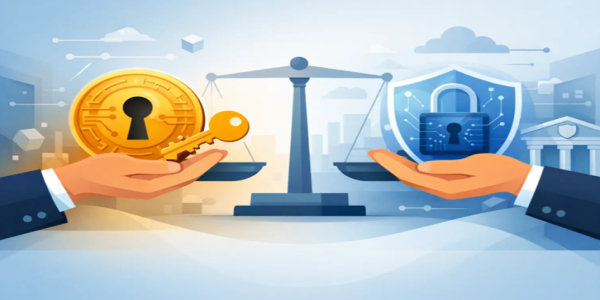
Crypto Custody: Who Really Controls Your Keys?
Crypto custody determines who can move your assets. Learn the difference between self-custody and platform custody, plus practical steps to choose wisely.
A trade can take seconds. Recovering crypto sent from a compromised wallet, lost device, or exposed recovery phrase may be impossible. That is why crypto custody is not a technical footnote. It is the decision that determines who can authorize transfers, how quickly you can access funds, and what happens when something goes wrong.
For traders who value speed, privacy, and control, custody deserves the same attention as price, liquidity, and available markets. More access is valuable only when you understand where your assets sit and who holds the keys.
What Crypto Custody Actually Means
Crypto custody is the process of securing the private keys or signing authority needed to control digital assets. A blockchain does not recognize a username, a customer support ticket, or a claim that coins belong to you. It recognizes a valid cryptographic signature.
Private keys are the proof behind that signature. Whoever has control of them can generally move the associated assets. This is why the familiar phrase "not your keys, not your coins" remains relevant. It is not an argument that every trader must personally hold every key at all times. It is a reminder that convenience and control are different things.
Custody also covers the systems around those keys: wallet backups, device security, withdrawal rules, transaction approvals, and recovery procedures. A strong custody setup is not just about choosing a wallet. It is about deciding how much responsibility you want to carry and building habits that match that choice.
Self-Custody vs. Platform Custody
Most users choose between two broad models. Neither is automatically right for every situation.
Self-custody puts you in command
With self-custody, you manage the wallet credentials yourself. That can mean a hardware wallet kept offline, a software wallet on a secured device, or another setup where you alone control the recovery phrase and transaction approvals.
The benefit is direct ownership. You do not need a platform to approve a withdrawal, remain operational, or maintain access to your funds. You can interact with supported networks and wallets on your own terms. For long-term holdings, independent access and reduced platform exposure can be compelling.
The trade-off is absolute accountability. If you lose the recovery phrase, share it with a scammer, sign a malicious transaction, or leave it in an unprotected cloud file, there may be no reversal button. Self-custody gives you freedom, but it also makes operational discipline nonnegotiable.
Platform custody prioritizes convenience
With platform custody, a trading platform holds the private keys or manages signing authority on your behalf. You access balances through an account, then use the platform to trade, convert, deposit, or withdraw.
This arrangement can be practical for active traders. Funds are available where market activity happens, so you can react quickly without moving assets between wallets for every trade. Account protections, transaction monitoring, and recovery options may also help when a user loses access to a device or login.
But platform custody introduces counterparty risk. Your ability to move funds depends on the platform's security, operations, withdrawal policies, and continued availability. Before leaving meaningful balances on any service, understand its security approach, account controls, asset support, and withdrawal process. Fast access matters. So does knowing the route out.
A blended approach often makes sense
Many independent traders use both models. They keep an active trading balance in a platform wallet and move longer-term holdings to self-custody. This can preserve trading flexibility without placing every asset in one environment.
The right split depends on your trading frequency, portfolio size, risk tolerance, and confidence with wallet security. A trader making frequent spot conversions may need readily available funds. Someone accumulating crypto over months or years may prefer to reduce online exposure. Control is not all or nothing - it is a set of choices you can adjust as your position changes.
How to Choose a Crypto Custody Setup
Start with a simple question: what would hurt more right now, losing access during a market move or making an irreversible security mistake? Your honest answer points toward the level of convenience and personal responsibility you should accept.
If you are new to crypto, avoid treating self-custody as a performance test. Begin with a small amount, learn how addresses work, and practice receiving and sending a test transaction. Confirm the network before you send. A wallet can support the same asset name while using a different network, and sending to the wrong destination can create a costly problem.
If you use platform custody, look for practical controls rather than marketing alone. Strong login credentials, two-factor authentication, withdrawal confirmation, device monitoring, and clear account recovery processes all matter. Never reuse a password from email, social media, or another exchange account. Your email inbox is often the first target because it can be used to reset other accounts.
For traders seeking broad asset access and quick conversions, platforms such as Budrigan Market can reduce friction between funding, trading, and wallet activity. Still, fast access should never become careless access. Use only the balance you need for your current strategy, then reassess after major gains, large deposits, or changes in your trading plan.
Protecting Your Keys Without Slowing Yourself Down
Security does not require turning every transaction into a complicated ritual. It requires separating high-risk actions from routine ones.
Keep your recovery phrase offline. Do not paste it into a website, store it in a screenshot, send it to anyone, or enter it because a supposed support agent asks. Legitimate wallet providers and trading platforms do not need your recovery phrase to help you. Anyone requesting it is trying to gain control of your assets.
Use a dedicated email address for financial accounts when possible, protect it with a unique password and two-factor authentication, and review login alerts. If your phone number is used for account recovery, be aware of SIM-swap risk. An authenticator app or security key can offer stronger protection than text messages alone.
Before approving a transaction, slow down for the details that cannot be changed afterward. Check the receiving address, network, amount, and token approval. A rushed click is one of the most common ways users lose control. Scammers rely on urgency, fake airdrops, imitation websites, and messages that promise easy profits. Privacy is valuable, but secrecy should not isolate you from basic verification.
A useful personal custody routine includes four habits:
- Keep trading funds and long-term holdings in separate places.
- Test new wallets, networks, and withdrawal paths with a small amount first.
- Review connected wallet permissions and revoke approvals you no longer need.
- Write down a recovery plan so a trusted person can follow it if you become unavailable.
That final point requires judgment. Giving someone unrestricted access can create its own risk. The goal is to document where critical information exists and how it can be accessed securely, not to casually distribute your keys.
Custody Is Also a Trading Decision
Market opportunity and asset safety are connected. Holding everything in self-custody may reduce platform exposure, yet it can add time when you want to trade quickly. Holding everything on a platform may improve execution speed, yet it concentrates risk in one account. The better move is to decide in advance what each balance is for.
Set a working balance for trades, a reserve for near-term opportunities, and a longer-term allocation that you do not need to touch daily. Review those amounts when volatility rises or your portfolio changes materially. This turns custody from a vague security concern into a disciplined part of capital management.
You do not need to choose between freedom and protection. You need a custody arrangement you understand well enough to use confidently. Keep control where it matters, keep only necessary funds exposed to active trading, and make every transfer with the patience that digital ownership demands.
Share This Post
Recent Posts
-
Stablecoin Regulation Trends 2026 Explained
08 Oct 2026
-

Market Orders Versus Swaps: Know Your Trade
08 Oct 2026
-
Stablecoins Versus Bank Deposits Compared
08 Oct 2026
-

Crypto Taxes: Trade Freely, Report Clearly
08 Oct 2026
-
9 Top Wallet Security Mistakes to Stop Now
08 Oct 2026