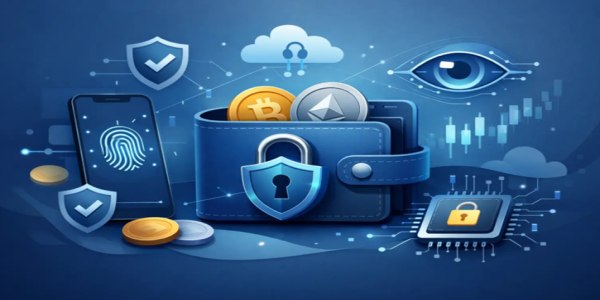
Crypto Wallet Security Trends That Matter in 2026
Crypto wallet trends are changing fast. See how passkeys, self-custody, smart wallets, and safer habits protect assets and preserve full control.
A wallet can be drained in seconds, but the setup that allowed it often happened days earlier: a rushed signature, a fake support message, or an approval nobody reviewed. That is why crypto wallet security trends are shifting away from simple passwords and toward smarter transaction controls, stronger recovery options, and security that does not slow every trade to a crawl.
For traders who value direct market access and control of their assets, the goal is not to make crypto feel like traditional banking. The goal is to keep your keys, your privacy, and your freedom without leaving an open door for scammers. Security should support fast action, not punish it.
Crypto Wallet Security Trends Changing How You Trade
The old wallet-security playbook was simple: write down a recovery phrase, hide it well, and never share it. That rule still matters. But wallet threats have become more sophisticated. Attackers increasingly target the moment before a transaction, when a trader is focused on a promising entry, a conversion, or a time-sensitive P2P deal.
The strongest new protections focus on that moment. They help users understand what they are signing, isolate high-value assets, and recover access without casually handing control to a third party.
Passkeys are replacing weak login habits
Passwords are easy to reuse, steal, and phish. Passkeys use device-based cryptography and biometric confirmation, such as Face ID or a fingerprint, instead of a password that can be copied into a fake website. A passkey cannot simply be typed into a scam form because there is no reusable secret to type.
This matters most for wallets and trading accounts connected to a browser or mobile device. If a platform supports passkeys, use them. They reduce the risk of password theft while making sign-in faster for legitimate users.
Passkeys are not a substitute for protecting a recovery phrase or approving transactions carefully. They secure account access. They do not reverse a transaction you personally authorized on a compromised website.
Transaction simulation is becoming a must-have
A wallet signature is not always a simple payment. It can grant a decentralized application permission to move a token, approve an unlimited spending allowance, or interact with a malicious smart contract. The transaction may look routine at first glance while creating a major opening later.
Transaction simulation tools preview the likely result before you confirm. Instead of seeing only unreadable contract data, you may see a clearer warning: which token leaves your wallet, how much is approved, and whether a new permission is being created.
This is one of the most useful crypto wallet security trends because it attacks a common problem directly: blind signing. If the wallet cannot explain the transaction clearly, pause. Speed creates opportunity in crypto, but blind speed creates expensive mistakes.
Smart wallets bring more control to self-custody
Traditional wallets are usually controlled by one private key. Lose the key and access is gone. Expose the key and the wallet can be emptied. Smart wallets, sometimes called smart accounts, can add rules around how assets move.
For example, a smart wallet may support spending limits, trusted recovery contacts, delayed withdrawals, or separate permissions for different actions. A trader might allow low-value activity from a mobile device while requiring additional confirmation for a large transfer.
The trade-off is complexity. More rules can mean more setup and a greater need to understand the wallet provider's design. For active users, however, configurable security can be worth it. One key should not always have unlimited power over every asset you own.
Multi-party security is moving beyond institutions
Multi-signature wallets require more than one approval before funds move. They are useful for shared funds, trading groups, business treasuries, or anyone who wants to separate everyday access from long-term holdings.
Another approach, multi-party computation, divides signing authority across separate devices or parties. No single participant holds the entire private key in one place. The user experience can feel closer to a standard wallet, while the security model reduces the impact of one compromised device.
Neither option is automatically better. Multi-signature setups are often transparent and battle-tested, but they require careful coordination. Multi-party computation can be more convenient, but users should understand who participates in recovery and how that service is structured. Freedom starts with knowing where control actually sits.
The Threats Behind Modern Wallet Security
Wallet security is not only about advanced technology. Most losses still begin with basic deception. Criminals follow attention, and traders moving quickly between assets are attractive targets.
Fake wallet extensions, cloned trading pages, fraudulent airdrops, and impersonated support accounts remain common. Address poisoning is another threat: an attacker sends a tiny transaction from an address that resembles one you have used before, hoping you copy the wrong address from your history later.
Mobile users face their own risks. Malicious apps, compromised Wi-Fi, notification-based scams, and SIM-swap attacks can all expose accounts. A phone is convenient for trading, but convenience should not turn it into the only place where your financial life exists.
Privacy-conscious traders should also recognize a hard truth: anonymous access does not remove personal responsibility. If you choose self-custody and minimal account friction, your recovery plan matters even more. There may be no support team that can restore a lost seed phrase or undo an on-chain transfer.
Build a Wallet Setup That Matches Your Trading Style
There is no single perfect wallet setup. A trader making frequent, smaller transactions needs a different structure than someone holding a long-term position. The practical move is to separate funds by purpose.
Keep a smaller working balance in a wallet used for daily trades, swaps, and P2P transactions. Store long-term holdings in a separate wallet with stronger protections, ideally on a hardware device that remains offline when not in use. This limits the damage if your active wallet connects to a risky application.
For a stronger baseline, make these habits non-negotiable:
- Store recovery phrases offline, never in screenshots, email drafts, cloud notes, or chat messages.
- Verify every website address and wallet extension before connecting or signing.
- Review token approvals regularly and remove permissions you no longer need.
- Send a small test transaction before moving a significant amount to a new address.
- Use a dedicated email and secured device for trading activity when possible.
These steps are not glamorous, but they work. Security failures often come from small shortcuts repeated over time.
Hardware wallets remain relevant
Hardware wallets are not new, and that is part of their value. They keep private keys off an internet-connected computer or phone, requiring a physical confirmation before signing. For meaningful balances, that extra step is a powerful defense against remote theft.
Still, a hardware wallet cannot protect someone who confirms a malicious transaction. It protects the key, not the decision. Pair it with transaction simulation and careful approval review for a stronger setup.
Buy devices only through legitimate channels, initialize them yourself, and treat any prewritten recovery phrase as a warning sign. A real new device should generate its recovery information during your own setup process.
Recovery is becoming a security feature
For years, crypto users were told that recovery phrases were the only path to true control. They remain the most direct route, but new recovery models are gaining attention because people lose devices, forget backups, and make human mistakes.
Social recovery lets designated trusted contacts help restore access without giving any one person complete control. Other systems allow encrypted backup methods or device-based recovery. These options can be useful, but they introduce a trust decision. Choose recovery contacts carefully, understand the required approval threshold, and avoid any system that makes recovery easier for an attacker than for you.
Whether you trade through Budrigan Market or manage assets across several wallets, your recovery plan should be tested before an emergency. Write down what happens if you lose your phone, hardware wallet, or primary device. A plan that exists only in your memory is not a plan.
Make Security Part of Every Trade
The future of wallet security is not about adding endless barriers. It is about making high-risk actions harder to approve by accident while keeping legitimate trading direct and fast. Passkeys, smart-wallet permissions, transaction previews, and multi-party controls all point toward the same idea: users should have more clarity before assets move.
Your best advantage is not a secret tool. It is a deliberate routine. Slow down for the signature, separate trading funds from long-term holdings, and treat every recovery phrase like the key to a vault. Financial freedom works best when control is protected before the market starts moving.
Share This Post
Recent Posts
-

7 Exchange Alternatives for More Trading Freedom
21 Aug 2026
-

-

-
Secure Crypto Custody Keeps Your Coins in Reach
20 Aug 2026
-

Crypto Custody: Who Really Controls Your Keys?
20 Aug 2026