
How to Start Spot Crypto Trading With Control
Learn how to start spot crypto trading, choose pairs, place orders, manage risk, and build a disciplined routine with more control over your crypto assets now.
Spot trading is where crypto ownership becomes real. You buy an asset at the current market price, it lands in your balance, and you decide whether to hold it, trade it, or move it to a wallet you control. If you are learning how to start spot crypto trading, begin with that simple distinction: you are exchanging one asset for another, not betting on a contract or borrowing capital to magnify a position.
That makes spot trading a practical entry point for people who want direct market access without turning every price move into a high-stakes event. The opportunity is real, but so is volatility. A clear process helps you trade with purpose instead of reacting to every green candle and alarming headline.
What Spot Crypto Trading Actually Means
In a spot market, trades settle right away at the current available price, known as the spot price. If you exchange USD or USDT for Bitcoin, you receive Bitcoin. If you later exchange that Bitcoin for USDT, you receive USDT. There is no expiry date, no liquidation price created by leverage, and no need to predict a move within a narrow timeframe.
This does not mean spot trading is risk-free. A coin can fall after you buy it, liquidity can be thinner in smaller markets, and spread and trading fees affect your result. But the mechanics are easier to understand than leveraged products: your maximum loss on a fully paid spot purchase is generally the amount you put into that asset, subject to the asset's price falling toward zero.
For beginners, that clarity matters. It gives you room to learn chart behavior, order types, and portfolio management without adding borrowed funds to the equation.
Set Up Your Trading Base Before Your First Order
Fast access is valuable, but speed should not replace preparation. Before you fund an account, decide how much capital you can afford to place at risk. Crypto is volatile, and money needed for rent, bills, debt payments, or emergencies should stay outside a trading balance.
Next, choose the asset you will use to buy crypto. Many traders use USD, USDT, or another stablecoin as their starting balance because it makes pricing and profit-and-loss tracking easier. A stablecoin may help reduce day-to-day price swings while you wait for a setup, but it still carries issuer, depegging, and platform risks. Understand what you hold.
Security is part of your trading base, too. Use a unique password, enable the strongest available account protections, and keep recovery details private. If you plan to hold crypto for a long time, learn the difference between keeping assets on a trading platform and using a self-custody wallet. Platform balances are convenient for active trades; self-custody can provide more direct control, but it also makes you fully responsible for protecting access and sending funds to the correct address.
Budrigan Market is built for traders who value quick access, broad asset choice, and fewer unnecessary obstacles between funding and executing a trade. Still, availability, payment methods, fees, and legal requirements can vary by location and asset. Check the applicable terms before transferring funds.
How to Start Spot Crypto Trading Step by Step
Your first trade should be small enough that a sudden price swing teaches a lesson, not creates panic. Treat it as a live practice order.
Pick a pair you can explain
Crypto trades happen in pairs. BTC/USDT means you are buying or selling Bitcoin using USDT. ETH/USD means you are exchanging Ether against US dollars. The asset on the left is the asset being traded; the asset on the right is what you use to price and pay for it.
Start with a liquid, widely traded pair. High liquidity usually means more buyers and sellers, tighter spreads, and a better chance that your order executes close to the price you expect. Smaller coins can move quickly, but they may also have wide spreads and sharp moves that are difficult for new traders to manage.
Before buying, answer three questions in plain language: What am I buying? Why am I buying it now? What would make me sell? If you cannot answer those questions, wait.
Learn market orders and limit orders
A market order is designed to execute immediately at the best prices currently available. It is useful when getting into or out of a liquid position matters more than choosing an exact price. The trade-off is slippage: in a fast-moving or thin market, your final fill may be slightly different from the displayed price.
A limit order lets you name the price you are willing to pay when buying or accept when selling. If Bitcoin is at $60,000 and you only want to buy at $58,500, you can place a buy limit order at $58,500. It will remain open unless the market reaches that price, you cancel it, or it expires under the platform's order rules.
Neither order type is automatically better. Market orders favor speed. Limit orders favor price control. For a first spot trade, a small limit order is often a calm way to see how the order book and execution process work.
Check the order details twice
Before submitting an order, review the pair, buy or sell direction, amount, order type, estimated total, and fee. A misplaced decimal or reversed pair can turn a simple trade into an expensive mistake.
After execution, confirm the asset appears in your spot balance. Record the entry price, amount, fee, and reason for the trade. This takes less than a minute and prevents your trading history from becoming a blur of guesses.
Build Risk Rules Before the Market Tests You
Most bad trades begin before the buy button. They begin when a trader has no position size rule, no exit idea, and no plan for what happens if the market moves against them.
Set a maximum amount you are willing to risk on any one idea. For some new traders, that may mean using only a small portion of their total crypto allocation per trade. The right number depends on your income, financial obligations, experience, and tolerance for volatility. There is no universal percentage that fits everyone.
Decide in advance whether you are making a short-term trade or building a longer-term position. A short-term trade needs a clear invalidation point - the price or market condition that tells you your idea was wrong. A longer-term position requires a different discipline: you need conviction, a time horizon, and enough diversification that one asset does not dictate your financial future.
Avoid averaging down automatically. Buying more after a price decline can improve your average entry, but it also increases exposure to an asset that may be weakening for a valid reason. Add only when it fits a prewritten plan, not because you feel pressure to rescue a position.
Read the Market Without Chasing It
You do not need ten indicators to make better spot decisions. Start by watching price, volume, and market structure. Is the asset making higher highs and higher lows, or is it breaking below recent support? Is volume increasing during a move, or is price drifting without strong participation? These observations will not predict every outcome, but they create a more useful framework than social-media hype.
Be especially careful after a sudden surge. A coin can continue rising, but entering after a large vertical move often means accepting poor risk relative to the potential reward. Waiting for a pullback, consolidation, or a limit price can feel boring. Boring is often a feature, not a flaw.
News can move crypto markets quickly, including regulation, exchange issues, protocol updates, macroeconomic data, and large wallet activity. Do not trade a headline you have not verified. By the time a rumor reaches a crowded feed, the market may already have priced it in.
Make Your First Month About Process
Your goal during the first month is not to double an account. It is to build repeatable behavior. Trade fewer pairs, use smaller amounts, and keep a journal of every entry and exit. Write down what you saw, what you expected, and what actually happened.
Review the journal weekly. You may notice that your best trades come from patiently placed limit orders, or that your worst results happen when you trade late at night, increase size after a loss, or buy coins you never researched. Those patterns are more valuable than a single winning trade.
Taxes also deserve attention from day one. In the US, selling, swapping, or spending crypto can create taxable events. Keep accurate records of dates, amounts, prices, and fees, and consider speaking with a qualified tax professional for advice tailored to your situation.
The market will always offer another move. Your advantage comes from being ready when a trade fits your rules, and being willing to stand aside when it does not. Start small, protect your capital, and let discipline earn the right to scale.
Share This Post
Recent Posts
-

Stablecoin Regulation Trends 2026 Explained
08 Oct 2026
-

Market Orders Versus Swaps: Know Your Trade
08 Oct 2026
-

Stablecoins Versus Bank Deposits Compared
08 Oct 2026
-
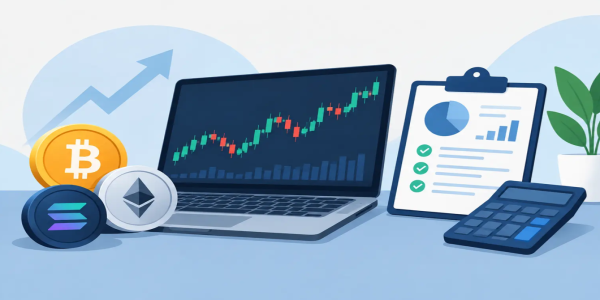
Crypto Taxes: Trade Freely, Report Clearly
08 Oct 2026
-
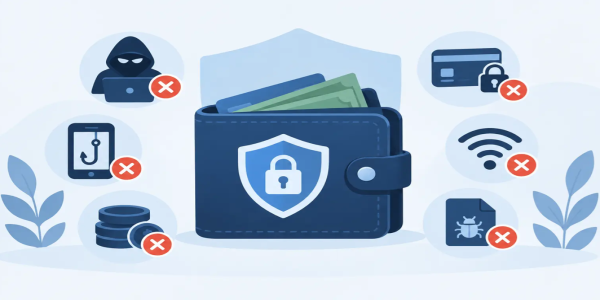
9 Top Wallet Security Mistakes to Stop Now
08 Oct 2026