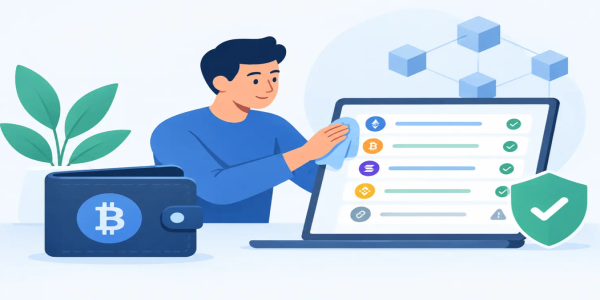
Practical Guide to Blockchain Address Hygiene
This guide to blockchain address hygiene helps you protect privacy, prevent costly transfer mistakes, and move crypto with greater confidence every day.
A wallet address can receive crypto in seconds, but one wrong character, one copied scam address, or one careless connection can turn a fast trade into a permanent loss. This guide to blockchain address hygiene gives you practical habits for moving, storing, and trading crypto with more control.
Blockchain transactions are designed to be final. There is no bank desk to call, no chargeback button, and no guarantee that a receiving platform can recover funds sent on the wrong network. Good address hygiene is not about making crypto complicated. It is about building a few fast checks into every transaction so your assets stay where you intend them to go.
Why Blockchain Address Hygiene Matters
A blockchain address is public, but that does not make it harmless to share carelessly. Addresses can reveal transaction history, balances, recurring counterparties, and patterns in how funds move. Over time, those patterns may connect separate wallets to the same person or trading activity.
For traders who value speed and independence, that creates two risks. The first is operational: sending assets to the wrong address, network, or contract. The second is privacy-related: creating a clean trail that exposes more about your holdings and habits than you planned.
Address hygiene means treating every address as a financial instruction, not just a string of characters. Verify it, label it, understand its network, and keep your wallet activity organized enough to spot something unusual before you confirm.
Start With Network Discipline
The same asset can exist on multiple networks. USDT, USDC, ETH, BTC, and many other coins may have versions or wrapped forms that travel through different blockchains. An address that looks valid is not automatically compatible with the asset or network you are sending.
Before each withdrawal or deposit, confirm three things: the coin, the network, and the receiving address. These must match exactly. Sending USDT through one network to a wallet that only supports another can lead to delays, recovery fees, or a loss that cannot be reversed.
Do not rely on the token symbol alone. A platform may display USDT on Ethereum, Tron, BNB Smart Chain, Solana, Polygon, or another network. Each route has different fees, confirmation speeds, and address formats. The cheapest network is not always the right choice if the recipient cannot receive it.
Use a Small Test Transfer When the Stakes Are High
A test transaction costs a little time and a network fee. That trade-off is usually worth it when you are funding a new wallet, sending to an unfamiliar exchange deposit address, or moving a meaningful balance.
Send a small amount first. Wait for the receiving wallet or platform to recognize it. Then send the remaining balance only after you have confirmed the result. For frequent transfers to a destination you have already verified, you may decide that repeated tests are unnecessary. For a new route, a test transfer is one of the cheapest forms of insurance available.
Never Trust the Clipboard Without Checking It
Clipboard-hijacking malware watches for copied wallet addresses and silently replaces them with an attacker's address. You paste what looks like the correct destination, hit send, and the funds are gone. The risk is especially high when you move quickly between trading windows, chats, and wallet apps.
After pasting an address, compare the beginning and end against the trusted source. Check more than the first few characters. If your wallet supports saved contacts or address books, use them only after verifying the initial entry carefully.
QR codes can reduce typing errors, but they are not automatically safe. A fake website, altered screenshot, or malicious QR overlay can point to the wrong wallet. Confirm the displayed address and network before approving the transaction, even when you scan.
Keep your device clean as well. Install software from trusted sources, update your operating system and wallet apps, and avoid browser extensions you do not recognize. The strongest transaction review cannot fully protect a compromised device.
Keep Trading, Spending, and Long-Term Storage Separate
Using one address for everything is convenient, but it makes your activity easier to map. A better approach is to organize wallets by purpose. Use one wallet for active trading, another for longer-term holdings, and a separate address for payments or peer-to-peer transfers where practical.
This does not create perfect anonymity. Public blockchains retain records, and sophisticated analysis can connect activity through timing, amounts, common funding sources, and repeated counterparties. Still, separating functions reduces unnecessary exposure and makes your own records far easier to manage.
For example, a trading wallet can hold only the capital you expect to use in the near term. Your storage wallet can stay off your daily workflow. If a connected trading wallet encounters a risky token approval or phishing site, the potential damage is limited to the assets kept there.
Budrigan Market users who want quick access to diverse assets can apply the same principle: keep your active trading flow efficient while keeping long-term funds in a wallet arrangement that fits your personal risk tolerance.
Address Reuse Depends on the Chain
Address reuse is not identical across every blockchain. On Bitcoin and other UTXO-based chains, using a fresh receiving address for new payments is generally a strong privacy practice. Reusing one address lets anyone easily see all funds received there and can make your transaction graph more revealing.
On account-based networks such as Ethereum, using a new address for every interaction is less practical. Gas costs, token balances, approvals, and application history are tied to the account. In that case, the smarter move is often separating high-risk activity from core holdings rather than constantly creating new addresses.
The goal is not complexity for its own sake. Use separation where it materially improves privacy, security, or organization. Avoid rituals that make your setup so confusing that you lose track of your own assets.
Label Every Address That Matters
An unlabeled address is a future mistake waiting to happen. As your wallet activity grows, record what each saved address is for: personal cold storage, trading wallet, exchange deposit, client payment, family transfer, or smart contract.
Use clear labels that explain both the destination and the network. “USDC - Polygon - personal trading wallet” is much safer than “Wallet 2.” If an exchange changes its deposit address or network policy, update the label immediately rather than assuming an old entry remains valid.
Keep a private transaction log for larger transfers. Record the date, asset, amount, network, destination purpose, and transaction ID. This is useful for tracking trades, resolving deposit questions, and preparing accurate tax records. Privacy does not mean operating without records. It means deciding what information you reveal and maintaining your own control over it.
Watch for Address Poisoning and Look-Alike Traps
Address poisoning is a simple social-engineering attack built for rushed users. An attacker sends a tiny transaction, often with a token of little value, from an address designed to resemble one you use. Later, when you review your history, you may copy the attacker's address by mistake.
Never copy a destination from transaction history unless you independently verify it against a trusted saved contact, written record, or recipient confirmation. Similar-looking addresses are not the same address. A few matching beginning and ending characters prove nothing.
Be equally careful with contract addresses. Fake tokens can use familiar names and symbols while pointing to a different contract. Before swapping, receiving, or approving a token, verify the official contract address through a source you trust. Do not interact with random tokens that appear in your wallet. They may be bait for a malicious site or contract.
Treat Wallet Connections and Approvals as Address Hygiene
Address safety does not end when you send crypto. Connecting a wallet to a decentralized app can expose your address to tracking and may create token approvals that allow a smart contract to move assets under certain conditions.
Use a dedicated wallet for unfamiliar apps, mints, games, and experimental protocols. Before signing, read whether you are approving a transaction, granting token access, or simply logging in. A signature request is not always harmless, and a broad token approval can create risk long after you leave the site.
Review and revoke approvals you no longer need. The exact process varies by network and wallet, and revoking may require a network fee. That small cost can be worthwhile if you have interacted with unknown contracts or no longer use a service.
Build a Fast Pre-Send Routine
Speed matters in crypto markets, but rushed execution is expensive. Create a short routine that takes less than a minute: confirm the recipient from a trusted source, match the network, compare the pasted address, check the amount and fee, then verify that you are not approving an unexpected action.
For large transfers, pause before the final confirmation. Ask a basic question: if this transaction cannot be reversed, am I certain this is the right route? That moment of friction protects the freedom that self-directed crypto gives you.
Your address is more than a destination. It is part of your trading footprint, privacy posture, and security perimeter. Keep it organized, verify it every time, and let careful habits support the faster, more independent way you choose to move in crypto.
Share This Post
Recent Posts
-

Limit Orders Versus Market Orders Explained
18 Nov 2026
-
Guide to Blockchain Explorers for Traders
18 Nov 2026
-
Hot Wallets Versus Cold Wallets for Traders
18 Nov 2026
-
Why Do Crypto Spreads Widen When Markets Move?
18 Nov 2026
-
Crypto Spreads and Your Real Trading Cost
17 Nov 2026