Hot Wallets Versus Cold Wallets for Traders
Compare hot wallets versus cold wallets to choose the right balance of fast trading access, private control, and long-term crypto protection choices.
A wallet decision can shape every trade you make. Choose the wrong setup and you may sacrifice speed when an opportunity appears, or leave more funds online than you are comfortable with. Hot wallets versus cold wallets is not a debate with one winner. It is a question of how often you move crypto, how much you hold, and how much control you want over your assets.
For traders who value freedom and fast market access, the strongest answer is often not choosing one wallet type forever. It is using each one for the job it does best.
What Is a Hot Wallet?
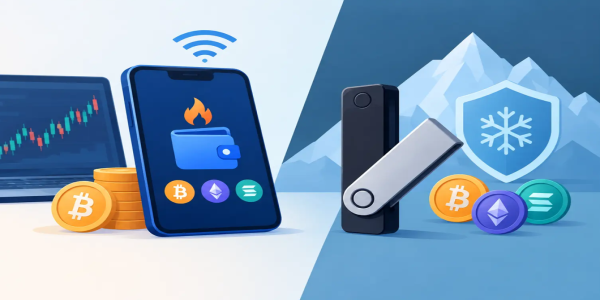
A hot wallet is a crypto wallet connected to the internet. It can be a mobile app, desktop wallet, browser extension, or a wallet provided through a trading platform. Because it is online, it is ready for transactions when you are.
That connection is the point. A hot wallet lets you receive crypto, send funds, swap assets, or move capital onto a trading platform without pulling out a separate device or connecting it to a computer. For active traders, that speed matters. Markets do not wait for a slow setup process.
Hot wallets are especially useful for funds you intend to use in the near term. Think of them as your working capital wallet: crypto allocated for trading, peer-to-peer payments, conversions, or quick transfers.
The trade-off is exposure. Any wallet that interacts with the internet faces more potential attack paths than one kept offline. That does not mean every hot wallet is unsafe. It means security depends heavily on your habits, your device, and the wallet provider you choose.
What Is a Cold Wallet?
A cold wallet stores the private keys needed to authorize transactions offline. Hardware wallets are the most familiar example. They generally keep your keys on a dedicated physical device and only sign transactions when you connect and approve them.
This extra distance from the internet makes cold storage a strong option for long-term holdings. If you are holding Bitcoin, Ethereum, stablecoins, or other assets for months or years rather than trading them daily, a cold wallet can reduce online exposure.
Cold wallets demand more responsibility. You must protect the device, keep your recovery phrase private, and make sure your backup is stored safely. If your recovery phrase is lost and you cannot access the wallet, no customer service team can simply reset it. Self-custody gives you greater independence, but it also puts you fully in charge.
Hot Wallets Versus Cold Wallets: The Real Difference
The key difference is not whether one wallet holds “better” crypto than the other. Both can hold digital assets. The difference is how the private keys are secured and how quickly you can use your funds.
A hot wallet prioritizes access. It is built for movement, convenience, and active participation. A cold wallet prioritizes separation. It is built for preserving assets you do not need to touch often.
For a trader, the choice often comes down to timing. Keeping every dollar of crypto in cold storage may feel secure, but it can create friction when you want to fund a position quickly. Keeping your entire portfolio in a hot wallet may make transactions easy, but it concentrates more value in an internet-connected environment.
Neither approach should be automatic. Your wallet structure should match your actual behavior, not an idealized version of it.
When a Hot Wallet Makes Sense
A hot wallet is a practical fit when speed and access are part of your plan. If you trade frequently, use crypto for payments, receive transfers from other users, or rotate between assets, keeping a measured amount available online can help you act without delay.
It also makes sense for beginners who are learning how transactions work. Sending a small amount, checking network fees, and managing addresses is easier when your wallet is accessible. Start with an amount you can afford to use and learn from, rather than placing your entire portfolio into a new setup at once.
If you use a platform such as Budrigan Market for fast crypto activity, a hot wallet allocation can keep trading capital close to the market. The goal is not to keep everything online. The goal is to avoid letting unnecessary wallet friction stand between you and a time-sensitive decision.
Use stronger account protection whenever funds are online. Choose a unique password, enable every available security setting, keep your phone and browser updated, and never approve a wallet connection you do not understand. A fast wallet should not become a careless wallet.
When a Cold Wallet Makes Sense
Cold storage is designed for crypto you want to hold, not constantly move. It is a sensible choice when the value of your holdings has grown beyond what you would feel comfortable keeping in an internet-connected wallet.
It can also bring discipline to your strategy. Moving long-term assets to cold storage creates a deliberate step before selling or reallocating them. For investors who tend to react to every price move, that small amount of friction can be useful.
Cold wallets are not only for large portfolios. Even a smaller holder may prefer one if self-custody and offline key storage are priorities. What matters is whether you can handle the operational side properly. A hardware wallet left unsecured, a recovery phrase photographed on a phone, or a backup stored in cloud notes defeats much of the purpose.
Write your recovery phrase down carefully and keep it in a private physical location. Never share it with anyone claiming to be support staff, a trader, or a recovery specialist. Anyone asking for a recovery phrase is asking for control of your assets.
A Smarter Setup: Separate Trading Funds From Long-Term Holdings
Many traders benefit from a two-wallet approach. Keep a planned amount in a hot wallet for active trading, transfers, and market opportunities. Move the portion you are holding for the long run into cold storage.
This creates clearer boundaries. Your online wallet becomes your operating balance, while your cold wallet becomes your reserve. You can rebalance between them on your own schedule instead of making every wallet decision in the middle of a volatile market move.
The exact split depends on your strategy. A daily trader may keep more readily available than someone who makes a few trades each month. A long-term holder may use a hot wallet only for small transactions and keep nearly all assets offline. There is no magic percentage, and anyone promising one is oversimplifying crypto risk.
Security Habits That Matter More Than Wallet Labels
A cold wallet is not a guarantee, and a hot wallet is not automatically a mistake. Most avoidable losses come from rushed decisions, fake websites, malicious approvals, phishing messages, and poor recovery phrase handling.
Before sending funds, verify the receiving address character by character, especially for a first transfer. Send a small test amount when moving a meaningful balance to a new address. Check the network too: sending an asset through the wrong network can turn a simple transfer into a costly problem.
Be equally cautious with wallet extensions and decentralized applications. A token approval can give a smart contract permission to move certain assets. Only connect your wallet to services you trust, and review permissions regularly. Convenience should never mean signing blind.
Finally, remember that custody and trading are separate decisions. You can choose where to hold assets based on security needs while choosing where to trade based on liquidity, speed, available markets, and the freedom to act on your own terms.
Your crypto should be positioned with purpose. Keep your active capital ready, keep your long-term holdings protected, and make every transfer deliberate. That balance gives you more control than treating hot or cold storage as an all-or-nothing choice.
Share This Post
Recent Posts
-

Limit Orders Versus Market Orders Explained
18 Nov 2026
-

Guide to Blockchain Explorers for Traders
18 Nov 2026
-

Practical Guide to Blockchain Address Hygiene
18 Nov 2026
-
Why Do Crypto Spreads Widen When Markets Move?
18 Nov 2026
-
Crypto Spreads and Your Real Trading Cost
17 Nov 2026