What Makes Peer Payments Private and Secure?
Learn what makes peer payments private, from wallet addresses and encryption to smart habits that protect your transaction details and your account control.
A payment can move from one person to another in seconds without putting your bank balance, home address, or full financial history on display. That is the real question behind what makes peer payments private: not whether a transaction is invisible, but which personal details stay out of the exchange and who remains in control of the data.
For crypto users, privacy is part of financial independence. You should be able to fund a wallet, pay another person, or trade digital assets without turning every transaction into a permanent public profile. But privacy has layers. Wallet design, network records, platform data practices, and your own habits all shape the level of privacy you actually get.
What Makes Peer Payments Private?
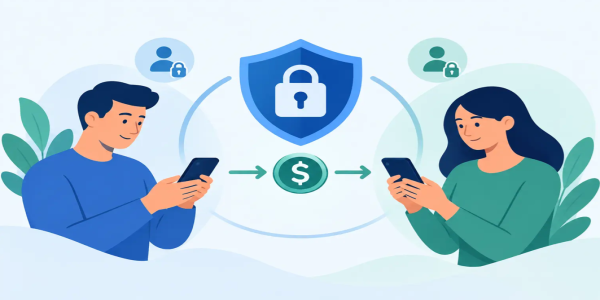
Private peer payments limit the amount of personal information shared between sender, recipient, payment provider, and outside observers. In a traditional payment app, a transfer may be tied to your legal name, phone number, email address, bank account, transaction memo, device details, and purchase history. The payment may be quick, but the data trail can be extensive.
Crypto peer payments work differently. A transaction is generally sent to a wallet address rather than directly to a bank account number or a name. The recipient needs a valid address to receive funds, while the sender needs enough assets and the correct network details to complete the transfer. That separation can reduce unnecessary data exposure.
Still, a wallet address is not the same as complete anonymity. On transparent blockchains, transaction amounts and address activity can be visible on a public ledger. If an address becomes connected to a real-world identity through a public post, an exchange record, a reused payment address, or a careless screenshot, the wider transaction history may become easier to analyze.
Privacy is therefore about reducing exposure, not making unrealistic promises. The strongest approach combines privacy-focused tools with disciplined behavior.
Wallet Addresses Keep Personal Details Out of the Payment
A crypto wallet address acts as the destination for funds. It can look like a long string of letters and numbers, and it allows someone to receive crypto without handing over their bank routing number, physical address, or full identity to the sender.
That matters in everyday peer-to-peer transactions. If you are reimbursing a friend, purchasing digital services, or settling a trade, the other party often needs only the payment address and the agreed amount. There is no need to exchange a stack of sensitive personal information just to complete a transfer.
Many wallets can generate a fresh receiving address for each payment. This is a valuable privacy feature because address reuse creates patterns. When the same address appears repeatedly, anyone reviewing the blockchain can more easily connect multiple payments to the same wallet activity. A new address does not erase blockchain visibility, but it can reduce unnecessary links between separate transactions.
Always confirm the address, asset, and network before sending. Privacy loses its value if funds are sent to the wrong destination and cannot be recovered.
Encryption Protects Data in Transit and at Rest
Private payments depend on more than the blockchain. Your wallet and the platform you use also handle sensitive information, including private keys, login credentials, recovery phrases, and transaction instructions.
Encryption helps protect that information from being read by unauthorized parties. When you access a reputable wallet or exchange through a secure connection, encryption helps prevent third parties from casually intercepting the data moving between your device and the service. Strong wallet architecture also protects private keys, which authorize transactions, from exposure.
Your role is just as important. Keep your recovery phrase offline and private. Do not store it in cloud notes, send it in a message, or share it with anyone claiming to offer support. A recovery phrase is not a password reset tool. Whoever controls it can control the wallet.
Use a unique password, enable available account security features, and lock your phone or computer. A private payment cannot remain private if someone else has access to the device that approves it.
Data Minimization Is a Real Privacy Advantage
Every service asks for something. The question is whether it asks only for what is necessary or collects far more than the transaction requires.
Data minimization means limiting the personal data attached to an account and a payment flow. For privacy-conscious users, that can mean choosing services that avoid unnecessary profile fields, do not make social payment feeds public by default, and allow users to transact with wallet addresses rather than broadcasting personal details to recipients.
It also means reading the fine print before using any service. A payment provider may retain transaction records, device information, IP-related data, or identity information depending on its policies and applicable requirements. Privacy-friendly access does not remove your responsibility to understand how a platform handles data.
Budrigan Market is built for users who value fast access, wallet-based transactions, and fewer barriers between funding, trading, and moving digital assets. The point is control: you choose how you manage your crypto rather than accepting the data-heavy habits of traditional finance by default.
Your Payment Habits Can Strengthen or Weaken Privacy
The technology matters, but behavior often decides the outcome. A privacy-focused wallet cannot protect information you voluntarily publish.
Avoid posting wallet addresses alongside your name on public social media accounts. Be cautious with transaction screenshots, especially when they show balances, timestamps, addresses, QR codes, or account identifiers. Even a harmless-looking confirmation image can give someone enough context to connect activity that should remain separate.
Use fresh receiving addresses when your wallet supports them, and keep personal payments separate from public business activity when possible. If you accept payments for a public-facing business, consider using a dedicated wallet rather than mixing those funds with personal transfers. This creates clearer boundaries and makes your own recordkeeping easier.
Be selective about payment notes as well. A blockchain transaction may be permanent, so avoid putting names, invoices, phone numbers, or sensitive context into any field that could be recorded or shared. Keep detailed records privately for tax, accounting, or dispute purposes instead of embedding them in a payment trail.
Private Does Not Mean Risk-Free or Untraceable
Privacy is a benefit, not a substitute for judgment. Blockchain transactions are typically irreversible after confirmation. If a stranger pressures you to pay quickly, promises guaranteed returns, or asks you to move funds to "verify" your wallet, stop. Those are common warning signs of fraud.
It is also smart to understand the difference between pseudonymity and anonymity. Many public blockchains show transaction data openly, even if they do not show legal names beside addresses. Network analytics can sometimes identify patterns, especially when users reuse addresses or connect wallet activity to public accounts.
For some users, privacy-centered cryptocurrencies and wallets may offer additional confidentiality features. Those tools involve trade-offs, including different network support, liquidity, fees, compatibility, and local regulatory considerations. Choose tools based on your actual needs, not hype.
Use peer payments for lawful purposes, verify who you are dealing with, and maintain your own records. Financial freedom works best when it is paired with clear decisions and strong personal security.
How to Make a Peer Payment More Private
Start by sharing only what the recipient needs: a wallet address, the correct network, and the amount. Use a fresh receiving address where available, protect your private keys and recovery phrase, and avoid publishing transaction details that can connect your financial activity to your identity.
Then choose services and wallets that respect your control over data. Look for clear privacy practices, secure account protections, transparent fees, and the freedom to move assets without unnecessary friction. Speed is useful, but security and intentional data sharing matter more than a few saved seconds.
The best private payment is not the one that attracts attention for being mysterious. It is the one that lets you transact confidently, disclose only what is necessary, and keep your financial life in your hands.
Share This Post
Recent Posts
-
Decentralized Exchange Order Book Guide
23 Sep 2026
-
Best Order Types for Beginners to Trade Smart
23 Sep 2026
-
Peer Payment Dispute Resolution Guide for Crypto
23 Sep 2026
-
Stablecoin Conversion Steps for Faster Trading
23 Sep 2026
-