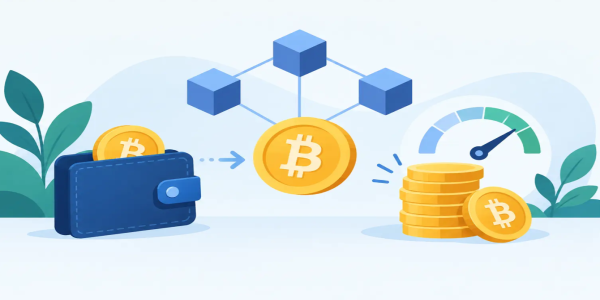
Your Guide to Blockchain Transaction Fees
Use this guide to blockchain transaction fees to understand network costs, choose smarter transfer settings, and move crypto with fewer surprises today.
A $20 crypto transfer should not turn into a $35 mistake because the network got busy. This guide to blockchain transaction fees puts you back in control of the cost behind every send, swap, and wallet-to-wallet transfer. Once you know what creates a fee, you can choose the right network, set the right speed, and avoid paying more than the transaction needs.
Transaction fees are not a hidden charge invented by your wallet. They are the price paid to get an action processed on a blockchain. The amount can be tiny, or it can rise sharply when thousands of people are competing for the same limited block space. For active traders, P2P users, and anyone moving funds quickly, that difference matters.
What Blockchain Transaction Fees Actually Pay For
A blockchain has no central payments team approving transfers. Instead, independent validators or miners process transactions, confirm them, and add them to the chain. Network fees reward that work and help prevent the blockchain from being flooded with spam.
On Bitcoin, users typically compete for limited space inside each block. A higher fee can move a transaction closer to the front of the line when the network is congested. On Ethereum and many Ethereum-compatible networks, fees are commonly described as gas. Gas measures the computational work needed to complete an action, whether that means sending ETH, approving a token, or interacting with a smart contract.
This is why sending a coin is often cheaper than swapping, minting, staking, or using a complex decentralized application. A basic transfer is simple. A smart contract transaction can involve multiple instructions, and each instruction consumes more network resources.
The key distinction is simple: a network fee goes to the blockchain infrastructure, while a platform trading fee or conversion spread is charged by the service that facilitates a trade. They can appear in the same transaction flow, but they are not the same cost.
Guide to Blockchain Transaction Fees: The Variables That Matter
There is no universal blockchain fee. Costs shift based on the network, the moment you transact, and the action you are taking.
Network demand
Demand is usually the biggest driver. When a major token launch, market rally, NFT event, or volatility spike hits a popular chain, users compete to get confirmed first. Fees can rise within minutes. When activity cools, the same transfer may cost a fraction of what it did earlier.
If your transaction is not time-sensitive, waiting can be a smart move. Check the estimated fee, step away for an hour, and compare again. This is especially useful on networks where congestion is frequent.
Transaction complexity
Not all blockchain activity takes the same amount of work. Sending Bitcoin to another wallet is different from exchanging tokens through a smart contract. Approving a token for use, bridging assets between chains, or interacting with a lending protocol can require several separate transactions.
Before confirming, read the action carefully. A low trading cost can lose its advantage if the trade requires multiple expensive approvals and transfers afterward. Think beyond the first click and calculate the full route your assets need to take.
Confirmation speed
Many wallets let you select a fee level such as slow, standard, or fast. Higher fees generally signal that you want faster confirmation. Lower fees can work when the network is quiet, but during heavy demand they may leave a transaction waiting longer than expected.
Speed should match your reason for transacting. Paying extra may be justified when you are responding to a price movement, completing an arbitrage route, or sending funds before a deadline. It makes less sense when you are simply moving long-term holdings between your own wallets.
The blockchain you choose
The same asset may exist on more than one network. Stablecoins, for example, are often available across Ethereum, Tron, Solana, BNB Smart Chain, Polygon, and other ecosystems. Each version can have a different fee profile, confirmation time, wallet compatibility, and level of liquidity.
Cheaper is not automatically better. Both the sending and receiving side must support the exact network. Sending a token over the wrong chain can create a difficult recovery situation, and in some cases recovery may not be possible. Always match the asset, network, and destination address requirements before you send.
How to Estimate Your Cost Before You Confirm
The best time to think about fees is before a transaction is broadcast. Once it is on the blockchain, it usually cannot be canceled or edited.
Start by looking at the final confirmation screen in your wallet or trading platform. It should show the network selected, the amount being sent, and the estimated fee. If the fee looks unusually high, do not rush. Check whether the network is congested, whether a lower-priority setting is available, or whether another supported network fits your purpose.
For Ethereum-style transactions, you may see terms such as gas limit, base fee, priority fee, and max fee. The gas limit is the maximum amount of computational work the transaction may use. The base fee reflects current network demand, while the priority fee is an added incentive for validators. Most users do not need to manually adjust every value. A wallet's recommended setting is often the safer choice unless you understand the consequences of changing it.
For Bitcoin, fees are often quoted in satoshis per virtual byte. Larger or more complex transactions can require more data space, so the total fee is not based only on the dollar value you are sending. A small Bitcoin payment can sometimes cost more than expected when the mempool is crowded.
Smart Ways to Keep Fees Under Control
You do not need to chase the lowest possible fee on every transfer. You need to avoid paying high fees when they do not create a real advantage.
First, separate urgent transactions from flexible ones. If a transfer can wait, avoid peak activity periods and compare estimates later. Second, keep a small balance of the network's native coin in your wallet. ETH is needed for Ethereum gas, BTC for Bitcoin fees, SOL for Solana transactions, and so on. Holding only tokens without the native asset can leave you unable to move them.
Third, consolidate decisions, not necessarily every transaction. If you plan to make several trades or transfers, map the route before you begin. Repeatedly moving small balances between networks can create unnecessary costs. At the same time, do not combine funds blindly if privacy, accounting, or security considerations call for separate wallets. The lowest fee is not always the best operational choice.
Finally, use the right chain for the job. A fast, lower-cost network may make sense for a routine stablecoin transfer. A more established network may be preferable when a specific application, counterparty, or liquidity pool requires it. Your choice should balance cost, speed, support, and the value at risk.
Common Fee Mistakes That Cost More Than They Should
The most expensive error is sending on an unsupported network. A receiving address may look valid across several chains, but that does not mean the recipient can access the funds on every one of them. Confirm the network with the recipient, not just the address.
Another mistake is confusing a token's price with the cost to move it. You might hold a low-value token on a high-fee chain and discover that transferring it costs more than the token itself. In that situation, waiting for lower fees, exchanging the asset first, or using a different route may be more practical.
Users also get caught by failed smart contract transactions. A failed transaction may still consume gas because validators processed the attempted computation. Read approval requests, make sure you have enough native currency for the entire action, and avoid signing transactions you do not understand.
Fees Are a Trading Decision, Not Just a Wallet Detail
For a trader, fees affect more than withdrawals. They influence whether an arbitrage opportunity is real, whether a small position is worth moving, and whether a conversion still makes sense after every step is counted. A trade that looks profitable before fees can become a loss after network costs, platform charges, spreads, and transfer delays.
Build fee awareness into your decision before you trade. Estimate the cost to enter, convert, transfer, and exit. If the route is too expensive, wait for a better window or choose a different market path. Fast access is valuable, but informed execution is what protects your capital.
Budrigan Market users can bring that same mindset to every wallet transfer and conversion: verify the network, review the final cost, and act when the terms support your move. The freedom to trade on your terms is stronger when every transaction is deliberate.
Share This Post
Recent Posts
-

Practical Guide to Self Custody Inheritance
20 Oct 2026
-
-
Are Stablecoin Reserves Audited? What to Check
20 Oct 2026
-
A P2P Escrow Dispute Example and How to Respond
20 Oct 2026
-

Stablecoin Regulation Trends 2026 Explained
08 Oct 2026