Fiat Currency Onramps Guide for Faster Crypto Access
This fiat currency onramps guide shows how to fund crypto accounts, compare payment methods, control costs, and move when markets give you a fast signal.
A market move does not wait for a bank transfer to clear. When Bitcoin breaks a level, a new token starts gaining volume, or a P2P opportunity appears, your ability to fund an account can matter as much as your trading idea. This fiat currency onramps guide explains how to move dollars into crypto with fewer surprises, better cost control, and a clearer plan for acting when timing matters.
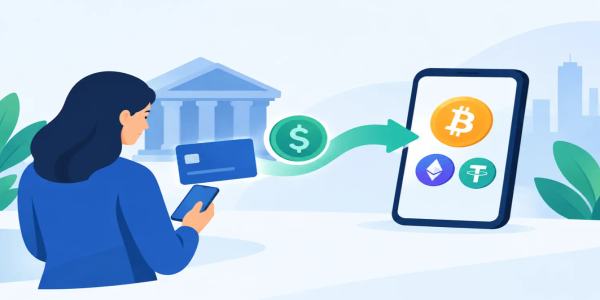
A fiat onramp is simply the route from traditional money - such as US dollars held in a bank account, card balance, or payment app - into digital assets. You choose a payment method, send fiat to a trading platform or buy through a provider, then receive crypto in your account or wallet. From there, you can trade, convert, send, or hold.
The concept is simple. The details determine whether your funds arrive in minutes, days, or not at all.
What Makes a Fiat Onramp Worth Using?
The best onramp is not always the one with the lowest advertised fee. A zero-fee card purchase is not a bargain if the exchange rate is poor. A cheap bank transfer is not ideal if it clears after the opportunity has passed. Strong funding decisions balance speed, total cost, limits, privacy expectations, and the assets you want to buy.
For active traders, speed is usually the first filter. Card payments and some instant bank options can place funds quickly, though processing times vary by provider and bank. Traditional ACH transfers may cost less but can take longer to become available for trading or withdrawal. Wire transfers are often better suited to larger deposits, particularly when a user needs a predictable funding route during business hours.
Payment availability also changes by location, bank policy, platform rules, and transaction size. Before relying on any method, test it with an amount you are comfortable using. A small first deposit reveals the real process: how long it takes, what fees appear, whether the payment is accepted, and how quickly you can access the crypto after purchase.
Fiat Currency Onramps Guide: Choose Your Funding Route
There is no universal best method. The right route depends on whether you prioritize immediate execution, lower costs, flexible payment options, or larger transaction capacity.
Debit and credit cards
Cards are familiar and fast. They are often the easiest choice for a first crypto purchase because there is little setup beyond entering payment details and confirming the transaction. If you want to buy an asset now rather than wait for a transfer, a debit card can be a practical starting point.
The trade-off is cost. Card processors may charge more than bank-based methods, and some card issuers treat crypto transactions differently from regular purchases. Check your issuer’s policies before funding. Credit card interest, cash-advance treatment, or issuer restrictions can quickly turn a convenient purchase into an expensive one.
For most traders, debit is the cleaner option. Use a card when speed has a real purpose, not simply because it is available.
Bank transfers
Bank transfers generally make sense when cost matters more than immediacy. ACH deposits can be useful for recurring buys, larger account funding, or building a position over time. Wires may be preferable for high-value transfers where a direct, traceable payment route is needed.
The key question is not just when the deposit lands. Ask when you can trade it and when you can withdraw the crypto. Some services credit funds quickly but apply a temporary hold to withdrawals. That may be acceptable if you plan to trade on the same platform. It is less useful if your strategy requires moving assets to another wallet or exchange immediately.
Peer-to-peer payments
P2P crypto transactions can offer more payment flexibility than a standard checkout flow. Depending on the marketplace, buyers and sellers may agree on available payment methods and pricing within the platform’s rules. This can be useful for traders who want alternatives to a limited card-or-bank menu.
Flexibility requires discipline. Only deal through an established platform process, verify the transaction status, and never send payment outside the agreed channel because someone promises a better rate. Scammers often create urgency, ask for off-platform communication, or send screenshots that look like payment confirmation. A screenshot is not settled funds.
Crypto-to-crypto conversion
If you already hold USDT, BTC, ETH, or another asset, you may not need a fiat onramp for every trade. Converting between crypto assets can be faster than moving money through banks, especially when you want to respond to market conditions across multiple pairs.
That does not remove costs. Review the quoted conversion rate, spread, and network fees before confirming. A quick conversion is valuable only if you know what you are giving up for that speed.
Calculate the Real Cost Before You Buy
The purchase fee is only one part of the transaction. The real cost of an onramp can include processing fees, exchange-rate spread, network charges, and the difference between the market price you expected and the price you receive.
Start with a simple comparison. If you want to spend $500, look at how much crypto each method actually delivers after all fees. Then compare how quickly the asset becomes tradable and transferable. A method that costs a few dollars more may be worth it when a time-sensitive setup is in play. For long-term buying, the lower-cost transfer may win.
Volatile assets add another variable: price movement during settlement. If a bank transfer takes several days, the market can move significantly before your order is placed. Some users manage this by keeping a small working balance of stablecoins ready for opportunities while using bank transfers to replenish it later. This is not a guarantee against market risk, but it separates funding delays from trading decisions.
Prepare Before the Market Moves
The most effective onramp strategy is set up before you need it. Waiting until a chart is moving fast is when people rush through fees, choose the wrong network, or send funds to the wrong destination.
Keep your approach simple. Decide which payment method is your fast option and which is your lower-cost option. Know your typical deposit size. Review your bank’s transaction settings in advance. If you use a self-custody wallet, keep the correct receiving address and network information available, but never reuse an address blindly without checking it first.
A platform such as Budrigan Market is built for users who want fewer barriers between funding, conversion, and market access. Whether you are using fiat to buy your first crypto or adding capital for a new trade, the goal is the same: get from intent to execution without unnecessary friction.
It also helps to set personal limits before depositing. Decide the maximum amount you will use for an individual trade, the amount you are willing to hold on a platform, and the amount you want kept in a personal wallet. Fast access should support control, not replace it.
Protect Your Funds During Every Step
Crypto transactions are often irreversible. That creates freedom, but it also makes verification non-negotiable. Before approving a purchase or transfer, confirm the asset, the amount, the recipient address, and the network. Sending USDT on the wrong network can create a recovery problem, and in some cases recovery is not possible.
Use a unique password for your trading account and enable available account-security features. Be suspicious of unsolicited messages, fake support accounts, and links that ask you to enter credentials or connect a wallet. Real market access does not require you to share a recovery phrase, private key, or one-time code with anyone.
Avoid funding crypto purchases with money needed for rent, debt payments, or emergencies. An onramp is a tool for access, not a reason to take financial risks you cannot afford. Crypto prices can move sharply in either direction, even after a well-timed entry.
Use the Onramp With a Purpose
Buying crypto is not the finish line. Once your funds arrive, decide what happens next. A beginner may convert dollars into a familiar asset and hold. An active trader may use stablecoins to access multiple spot pairs. A P2P user may prioritize a payment route that fits a specific transaction. An arbitrage-minded trader may care most about settlement speed, liquidity, and transfer availability.
That is why the best fiat onramp is personal. The right method for a $50 first purchase may be completely wrong for a trader moving capital regularly. Review your route after a few transactions, compare your actual costs against expectations, and adjust based on what your strategy needs.
Markets reward preparation more often than impulse. Set up a funding method you understand, test it before the pressure is on, and keep your next move deliberate when opportunity arrives.
Share This Post
Recent Posts
-
Your Guide to Blockchain Transaction Fees
20 Oct 2026
-

Practical Guide to Self Custody Inheritance
20 Oct 2026
-
Are Stablecoin Reserves Audited? What to Check
20 Oct 2026
-
A P2P Escrow Dispute Example and How to Respond
20 Oct 2026
-

Stablecoin Regulation Trends 2026 Explained
08 Oct 2026