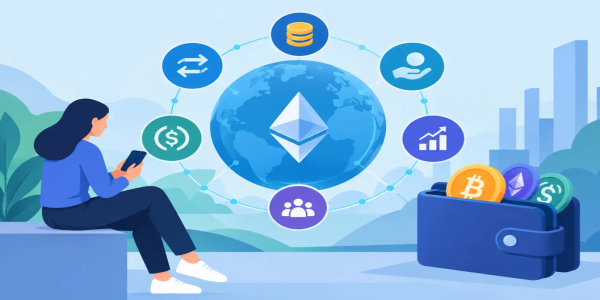
Decentralized Finance Trends Shaping Crypto Access
Decentralized finance trends are reshaping how traders swap, fund, and manage crypto. See what faster, more open market access could mean next for you.
A market can move before a traditional platform finishes reviewing an account. That gap is exactly why decentralized finance trends matter to active crypto users. Traders want fewer barriers between a market signal and a trade, more control over their assets, and more ways to move value without waiting on a centralized gatekeeper.
The next phase of DeFi is not only about complicated yield strategies or technical protocols. It is about access. Faster swaps, cross-chain movement, self-custody tools, stablecoin settlement, and peer-to-peer transactions are changing what everyday crypto trading can look like. The opportunity is real, but so are the risks. Knowing where convenience ends and responsibility begins can make a major difference.
Decentralized Finance Trends Moving the Market
DeFi began with a simple challenge to traditional finance: why should a small group of institutions control who can access markets, hold assets, or move money? That challenge has grown into a broader push for open financial tools that operate through blockchain networks and smart contracts.
For retail traders, the most relevant change is practical. Access to digital assets is becoming less dependent on long onboarding flows, narrow trading hours, or a limited list of approved products. Markets run around the clock, and traders increasingly expect their tools to do the same.
Faster settlement is becoming the standard
Traditional financial transfers often involve intermediaries, processing windows, and delayed settlement. Blockchain-based transactions can reduce that friction by allowing assets to move directly between wallets, depending on the network and its conditions.
Stablecoins play a central role here. They give traders a way to move value between platforms or trading pairs without immediately returning to a bank account. For someone watching price differences across markets, faster settlement can create more flexibility. It does not guarantee a profitable trade, though. Network fees, price movement, liquidity, and withdrawal limits can erase an apparent opportunity quickly.
Self-custody is moving from niche to normal
Another major trend is the growing demand for direct asset control. With self-custody, users hold the private keys or recovery credentials associated with their wallet rather than relying entirely on a centralized company to safeguard access.
That freedom comes with a serious trade-off. If you lose a recovery phrase, send funds to the wrong address, or approve a malicious transaction, there may be no support desk that can reverse it. Self-custody gives users more control, but it also requires better habits: protect credentials offline, verify wallet addresses carefully, and test unfamiliar transfers with a small amount first.
Cross-chain access is expanding choice
Crypto is no longer one chain, one wallet, or one market. Traders now operate across ecosystems with different transaction speeds, fees, token standards, and liquidity pools. Cross-chain bridges and multi-chain wallets aim to make that movement easier.
This trend matters because the asset or trading pair you want may not have its best liquidity on the network you currently use. It can also create new arbitrage possibilities when prices differ across venues. But bridges add technical and security risk. A transfer that looks simple on screen may involve multiple smart contracts, wrapped assets, and third-party infrastructure behind the scenes.
Peer-to-peer trading remains relevant
Despite the growth of automated protocols, peer-to-peer crypto transactions continue to serve users who want flexible payment methods and direct arrangements. P2P markets can help connect buyers and sellers outside the restrictions of a single funding method or banking schedule.
The trade-off is counterparty risk. Use clear terms, confirm payment status independently, and understand the dispute process before committing funds. Never let urgency replace verification. A deal that feels too rushed is often a deal that deserves a second look.
Why Low-Friction Access Has More Value Now
Crypto markets do not reward hesitation. A breakout, depeg, listing, or sudden liquidity shift can unfold in minutes. Traders who value speed are looking for platforms and tools that reduce unnecessary steps while keeping the essential decisions in their hands.
This is where decentralized exchange models and direct wallet-based trading have gained attention. Instead of depositing assets into a traditional custodial account and waiting for internal approval, users may be able to connect a wallet, select a pair, and trade. The experience varies widely by platform, network, and local requirements, but the direction is clear: less friction is becoming a competitive advantage.
For users who want straightforward access to a wide range of digital assets, platforms such as Budrigan Market reflect this demand for speed, trading flexibility, wallet utility, and fewer barriers between funding and execution. The right platform still depends on what you are doing. A long-term holder, a P2P user, and an active arbitrage trader have different priorities.
The Return of the Active Retail Trader
DeFi is increasingly built for people who do more than buy one coin and wait. Active retail traders are using crypto-to-crypto conversions, stablecoin pairs, P2P transactions, and multiple wallets to respond to market conditions on their own terms.
That does not mean every trader needs advanced strategies. It means access is broadening. A beginner may use a simple conversion to rebalance between Bitcoin and a stablecoin. A more experienced participant may watch liquidity, compare prices across exchanges, or move funds between networks. Both users benefit from clear tools and transparent transaction details.
The best approach is usually simpler than the market makes it sound. Start with the asset, network, and outcome you actually want. Then check the price, the fees, the expected settlement time, and where the asset will land after the transaction. Small checks prevent expensive mistakes.
Smart Contracts Are Useful, Not Risk-Free
Smart contracts power much of decentralized finance. They automatically execute rules written into code, whether that means swapping tokens, providing liquidity, borrowing assets, or distributing rewards. This automation removes certain middlemen, but it does not remove risk.
A smart contract can contain bugs. A protocol can be exploited. A token can have limited liquidity or a misleading structure. Even a legitimate project can face severe price volatility. Decentralization changes the risk model; it does not make risk disappear.
Before using a new DeFi tool, take a few minutes to assess the basics:
- Confirm the token contract and network rather than trusting a search result or social post.
- Review liquidity, trading volume, and the price impact of your planned transaction.
- Check exactly what permissions a wallet connection or token approval grants.
- Keep enough native network currency available to pay transaction fees.
- Treat unusually high yields, guaranteed returns, and urgent offers as warning signs.
These habits are not glamorous, but they protect trading freedom. The more direct control you have, the more important it becomes to make deliberate decisions.
Privacy, Transparency, and the Real Trade-Off
Privacy is a major reason many users look beyond conventional exchanges. They may want to avoid excessive data collection, keep their financial activity more confidential, or simply access markets without a long approval process.
At the same time, blockchain activity is often publicly traceable. Wallet addresses are not automatically tied to a name, but transactions can remain visible on a blockchain permanently. Privacy-focused tools can reduce exposure in some situations, yet users should not confuse pseudonymity with complete invisibility.
There is also a practical balance to consider. A low-friction platform can make it easier to get started, but users should still understand local rules, tax obligations, and the platform terms that apply to their activity. Financial independence works best when paired with informed responsibility.
What to Watch Next
The strongest decentralized finance trends will likely be the ones that make crypto easier to use without hiding the mechanics that matter. Expect more multi-chain wallet experiences, more stablecoin payment options, faster swaps, and tools that bring trading, storage, and conversion closer together.
Security will remain the deciding factor. Traders want freedom, but they also want confidence that a transaction will execute as expected and that their assets are protected from avoidable mistakes. Platforms that combine clear interfaces with meaningful user control will have an advantage.
Your edge is not chasing every new protocol or token. It is building a setup that lets you act quickly, verify every move, and keep control of the assets you worked to acquire.
Share This Post
Recent Posts
-
7 Token Research Tools for Smarter Crypto Trades
01 Nov 2026
-
Stablecoin Settlement Options for Faster Trading
01 Nov 2026
-
10 Best Blockchain Security Habits for Traders
01 Nov 2026
-
Wallet Phishing Attack Example: Spot the Trap
01 Nov 2026
-
Wallet Backup Methods That Keep Crypto in Reach
26 Oct 2026