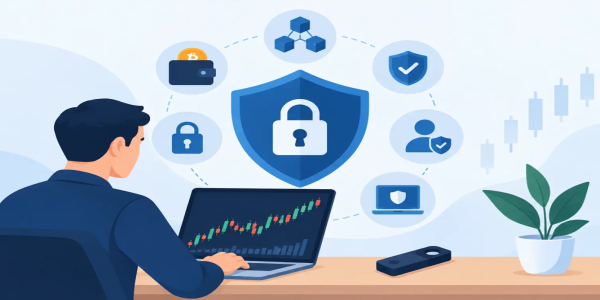
10 Best Blockchain Security Habits for Traders
Build safer crypto habits without slowing your trades. Learn the best blockchain security habits for wallets, transfers, devices, and safer daily access.
A crypto transaction can move in seconds, and that freedom comes with a hard truth: there is rarely a reset button. The best blockchain security habits protect your funds without forcing you into slow, complicated routines. For active traders, privacy-focused users, and anyone building financial independence with digital assets, security is how you keep control after the trade is complete.
Best Blockchain Security Habits Start With Ownership
Blockchain networks do not care who intended to receive a transaction. They only verify whether the correct credentials approved it. If someone gets your private key, seed phrase, or wallet access, they can act as you. If you send funds to the wrong address or approve a malicious contract, support teams may have no way to reverse the result.
That does not mean crypto has to feel dangerous. It means your habits need to match the speed and independence that make crypto useful in the first place. Think of every wallet, trading account, device, and transaction as part of your personal security perimeter.
The goal is not to become paranoid or turn every trade into a 30-minute process. The goal is to make costly mistakes difficult and routine actions safe.
1. Treat Your Seed Phrase Like the Master Key It Is
Your seed phrase is not a password recovery hint. It is the master key to a self-custody wallet. Anyone with those words can often restore the wallet on another device and move the assets inside it.
Write the phrase down offline and store it somewhere physically secure. A fire-resistant, water-resistant backup is worth considering for meaningful balances. Do not save it in screenshots, notes apps, cloud drives, email drafts, or chat messages. Those options are convenient until a compromised phone, synced account, or careless screen share exposes everything.
Keep the phrase private even from people you trust. Legitimate platforms, wallet providers, and support agents will never need it. A request for your seed phrase is not a support step. It is a takeover attempt.
2. Separate Trading Funds From Long-Term Holdings
Keeping every asset in one wallet creates a single point of failure. A better approach is to separate funds by purpose: a spending or trading wallet for frequent activity, and a dedicated storage wallet for holdings you do not plan to move often.
Your active wallet should contain only the amount you need for current trades, transfers, or on-chain activity. If you connect it to a new decentralized application or accidentally approve a risky transaction, your potential loss is limited. Your longer-term wallet stays isolated from daily experiments and rapid market decisions.
The right setup depends on how you trade. A high-frequency trader needs faster access than a long-term holder, while a P2P user may need a separate wallet for incoming payments. The principle stays the same: do not expose your entire balance every time you take action.
3. Use Unique Passwords and Real Two-Factor Authentication
A strong password is long, unique, and never reused across your email, exchange accounts, wallets, and social platforms. Password reuse is one of the easiest ways for a breach on an unrelated website to become a crypto loss.
Use a reputable password manager if it fits your workflow. It reduces the temptation to recycle simple passwords and helps you spot fake login pages because the manager will not autofill credentials on the wrong domain.
For two-factor authentication, an authenticator app is generally stronger than text-message codes. SMS can be vulnerable to SIM-swap attacks, where a criminal convinces a mobile carrier to transfer your number. If a platform supports hardware-based security keys, they can add another layer for accounts holding serious value.
Your email deserves the same protection. It is often the reset channel for everything else, so use a unique password and strong two-factor authentication there first.
4. Verify Every Address, Network, and Amount Before Sending
Most crypto losses are not dramatic hacks. They are rushed transfers. A single wrong character, unsupported network, or incorrect token selection can send funds somewhere they cannot be recovered.
Before confirming a transaction, compare the full recipient address - not just the first and last few characters. Clipboard malware can replace a copied wallet address with an attacker’s address, and it is designed to be missed at a glance. For large transfers, send a small test amount first and wait for confirmation.
Network selection matters just as much. The same asset can exist on multiple blockchains, and sending it through the wrong network may create a recovery problem or permanent loss. Confirm what network the recipient accepts, whether a memo or destination tag is required, and what fees apply before you send.
Speed is valuable, but a 15-second verification habit is faster than trying to recover funds that are already gone.
5. Be Suspicious of Urgency, Giveaways, and Unsolicited Help
Scammers sell urgency. They may claim your wallet is at risk, offer a limited-time reward, impersonate customer support, or send a message saying you have been selected for a giveaway. Their aim is to get you to reveal credentials, connect a wallet, sign a message, or send a payment before you think clearly.
No legitimate opportunity requires you to send crypto first to receive more crypto later. No legitimate support agent needs remote access to your device, your private key, or your seed phrase. And no real security alert should force you to act through a random direct message.
Use official platform channels that you navigate to yourself. Do not trust search ads, social-media replies, or links sent by strangers. A polished profile and familiar logo do not prove anything. Impersonation is cheap; recovering assets is not.
6. Keep Your Devices Clean and Your Sessions Controlled
Your phone or computer is the control room for your financial activity. Keep its operating system, browser, wallet app, and security software updated. Updates can be inconvenient, but they often patch vulnerabilities that criminals actively target.
Avoid signing into trading accounts or wallets on public Wi-Fi unless you understand the risks and have protections in place. More importantly, do not use public computers for crypto activity. Shared devices can contain keyloggers, malicious browser extensions, or saved session data.
Review browser extensions regularly. Remove anything you do not recognize or no longer use. Extensions can read page content, alter what you see, and sometimes interfere with wallet interactions. A minimal browser setup for financial activity is often safer than a browser crowded with shopping tools, games, and unknown add-ons.
When you finish, log out of accounts you do not need open. Lock your device with a strong passcode or biometric protection, and make sure lost-device tracking and remote wipe features are enabled.
7. Read Wallet Approvals Before You Sign
A wallet signature is not always harmless. Some signatures confirm a login, while others grant a smart contract permission to spend tokens from your wallet. Unlimited approvals are especially risky because they can allow a contract to access more than you intended.
Read the request in your wallet before approving it. If the message is unclear, the website is unfamiliar, or the requested permission seems broader than necessary, stop. You do not have to sign every prompt just because a page tells you to.
Periodically review token approvals and revoke permissions you no longer need. This is particularly useful after trying new decentralized apps, minting digital collectibles, or participating in short-term token activity. Keeping your wallet permissions lean is like removing old keys from a key ring.
8. Protect Your Privacy Without Losing Track of Your Records
Privacy and security support each other, but they are not identical. You can limit unnecessary exposure of your balances and activity while still maintaining records for yourself. Keep a private log of major purchases, transfers, wallet addresses, and transaction IDs. It helps with portfolio tracking, tax preparation, and troubleshooting.
Do not post screenshots that reveal balances, QR codes, transaction details, email addresses, or partial recovery information. Bragging about a profitable trade can attract unwanted attention. Quiet control is usually safer than public proof.
If you use multiple wallets, label them privately by purpose so you know which one is for trading, long-term storage, or P2P activity. Organization prevents mistakes without requiring you to disclose more than necessary.
Make Security a Trading Advantage
The strongest security setup is the one you will actually use every day. Start with the habits that reduce the biggest risks: secure your seed phrase offline, protect email and accounts with unique credentials, separate your holdings, and slow down before every transfer or signature.
As your activity grows, make your security routine grow with it. Freedom in crypto is not just fast access to markets. It is the confidence that your assets, choices, and next move remain yours to control.
Share This Post
Recent Posts
-

-

7 Token Research Tools for Smarter Crypto Trades
01 Nov 2026
-

Stablecoin Settlement Options for Faster Trading
01 Nov 2026
-
Wallet Phishing Attack Example: Spot the Trap
01 Nov 2026
-
Wallet Backup Methods That Keep Crypto in Reach
26 Oct 2026